





 Portuguese
  English
  Spanish
  6 min of reading
  0 comments


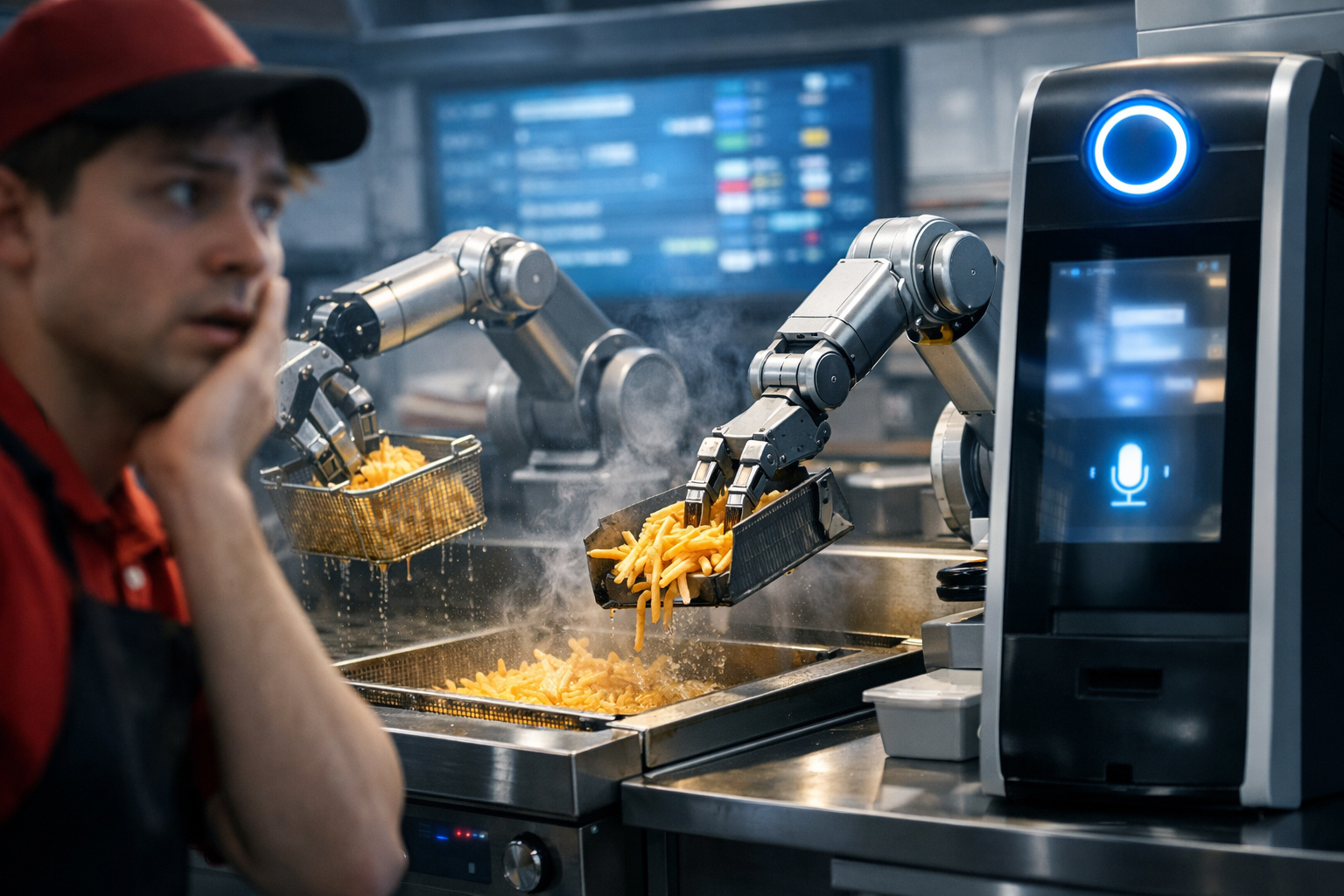
Robots and AI are already operating kitchens and service in fast food, and studies indicate that up to 70% of tasks can be automated in the sector.
Automated service: In 2023, technologies that just a few years earlier seemed experimental were beginning to gain real space in the kitchens of fast food chains in the United States. One of the most emblematic cases was that of White Castle, which expanded its partnership with Miso Robotics to bring Flippy 2 to operational units after testing the technology in the chain’s restaurants. Designed to take over the frying station, the system automates the preparation of items such as french fries and breaded foods in high-demand environments. The operation of the equipment combines artificial intelligence, robotics, and integration with the existing kitchen structure to perform repetitive tasks with more standardization and efficiency.
According to Miso Robotics itself, Flippy was developed to operate in different commercial layouts and connect to frying equipment, which helps explain why this type of solution has garnered so much attention in operations where speed, consistency, and productivity are decisive.
The central point of this transformation is that robots are no longer just prototypes, but tools integrated into the daily life of commercial kitchens.
-
Brazil raises the alarm: why a super typhoon in the Pacific is on Brazil’s climate radar

-
Psychology reveals that the most painful part of aging is not being alone but realizing that certain friendships only existed because you did all the emotional work to keep them alive.

-
A super typhoon on the other side of the world has just revealed what awaits Brazil in the coming months: a strong El Niño with a risk of flooding in the South, droughts in the Northeast, and intense heat in the Central-West and Southeast.

-
Engineers are pulling cold water from depths of up to 900 meters to transform the ocean into a cooling system that seems like science fiction, using underwater pipes and heat exchangers to make hotels and even entire hospitals operate with the natural cold from the seabed.

Although Flippy does not completely replace cooks, it takes on specific functions that traditionally required continuous human presence, reducing the need for operators dedicated to repetitive and standardized tasks.
Automated voice service is already beginning to replace human operators in the drive-thru
Another front of transformation occurs in customer service. The chain Wendy’s, one of the largest fast food chains in the United States, began testing a voice-activated artificial intelligence system developed in partnership with Google Cloud, capable of receiving orders by voice directly in the drive-thru.

This system uses natural language processing to interpret orders made in everyday language, including variations in accent, changes to orders, and even customer inquiries. The goal is to reduce service time, increase order accuracy, and decrease reliance on human operators.
The technology works similarly to virtual assistants, but adapted to the fast food environment, where speed and accuracy are essential. In initial tests, the company reported gains in efficiency and consistency in service. This advancement shows that automation is not limited to the kitchen but has also reached the direct point of contact with the customer.
Studies indicate that up to 70% of tasks in the sector can be automated
The adoption of these technologies does not happen by chance. Studies conducted by McKinsey & Company indicate that about 70% of activities in the food and service sector can be automated with existing technologies.
This does not mean that 70% of jobs will disappear, but rather that a large part of the tasks performed by these professionals can be executed by machines or digital systems. These tasks include standardized food preparation, equipment operation, order processing, and even part of customer service.
The distinction is important: automation affects tasks, not necessarily entire professions immediately. Still, the impact on the labor market is significant, as it reduces the need for labor in certain roles and requires new skills from workers.
Automation improves efficiency and reduces operational costs of networks
One of the main factors driving the adoption of robots and artificial intelligence in fast food is cost reduction. Automated systems can operate continuously, with a lower margin of error and without the need for breaks, which increases productivity.
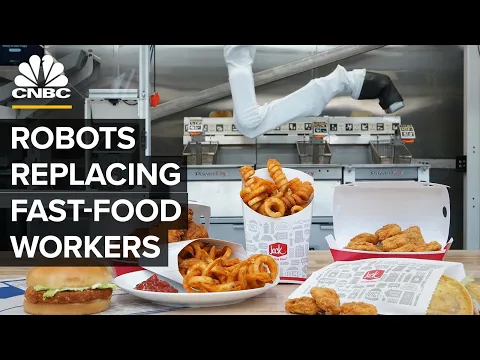

Moreover, the standardization provided by machines reduces variations in product quality, a critical aspect for networks that operate on a large scale and need to maintain consistency across different units.
In customer service, AI systems can reduce order errors and speed up customer flow, increasing service capacity without the need to expand teams. This set of advantages creates a direct economic incentive for the gradual replacement of human tasks with automated systems.
Change in the profile of kitchen workers is already underway
With the automation of operational tasks, the profile of workers in the food sector begins to change. Repetitive and low-complexity functions tend to decrease, while the demand for skills related to system supervision, equipment maintenance, and more specialized service grows.
In some cases, companies have adopted employee reskilling strategies, directing them towards roles that require greater human interaction, such as personalized service or operations management.
This indicates that transformation does not necessarily eliminate all jobs, but profoundly alters their nature. However, the speed of this transition can create challenges, especially for workers who do not have immediate access to training programs or who work in roles more susceptible to automation.
Global impact of automation in the food sector can be wide
The food sector is one of the largest employers in the world, especially in entry-level jobs. Any significant change in this segment has the potential to affect millions of people.
Although automation does not eliminate all roles, it can reduce the total number of workers needed to operate restaurants, especially in large-scale chains.
Furthermore, the adoption of technology tends to accelerate as costs decrease and systems become more accessible, expanding the reach of this transformation beyond the United States. What starts in large chains can quickly spread to smaller restaurants and other countries.
Current limitations of technology still prevent total replacement
Despite advancements, automation still faces significant limitations. Many tasks in the kitchen require adaptation, human judgment, and the ability to handle unforeseen situations, aspects that are still difficult to replicate accurately by machines.
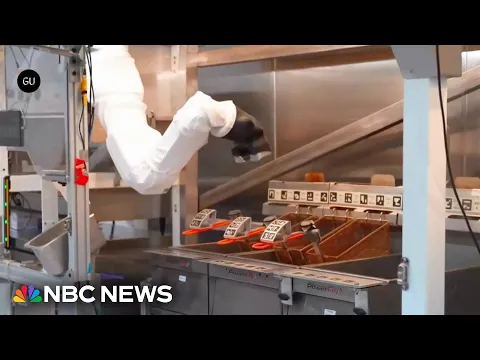
Additionally, customer service involves elements of human interaction that, in many cases, are still valued by consumers. These factors indicate that the complete replacement of human workers is not immediate but occurs gradually and selectively.
Technology is advancing rapidly, but still relies on humans for supervision, decision-making, and complex interaction.
The future of kitchens may be hybrid between humans and machines
The most likely trend, according to experts, is the formation of hybrid environments where humans and machines work together. Robots take on repetitive and physically demanding tasks, while humans focus on roles that require creativity, adaptation, and interaction.
This model can increase the efficiency of operations while maintaining the necessary flexibility to handle variations in the work environment. The result is a redefinition of the worker’s role, not necessarily their complete elimination.
The advancement of robots in kitchens raises an inevitable question about the future of work and what is your opinion on this transformation
The growing presence of robots and artificial intelligence systems in kitchens and fast food services represents a structural change in the food sector.
By automating tasks that previously relied exclusively on humans, these technologies bring into question the future of traditional professions and the role of labor in highly standardized environments.
If up to 70% of tasks can be automated, the impact on the job market could be profound, even if it occurs gradually.
In light of this scenario, a central question arises: are we facing an evolution that will improve efficiency without eliminating jobs, or a transformation that, over time, may significantly reduce the human presence in kitchens?







Seja o primeiro a reagir!