






 Portuguese
  Spanish
  3 min of reading
  0 comments


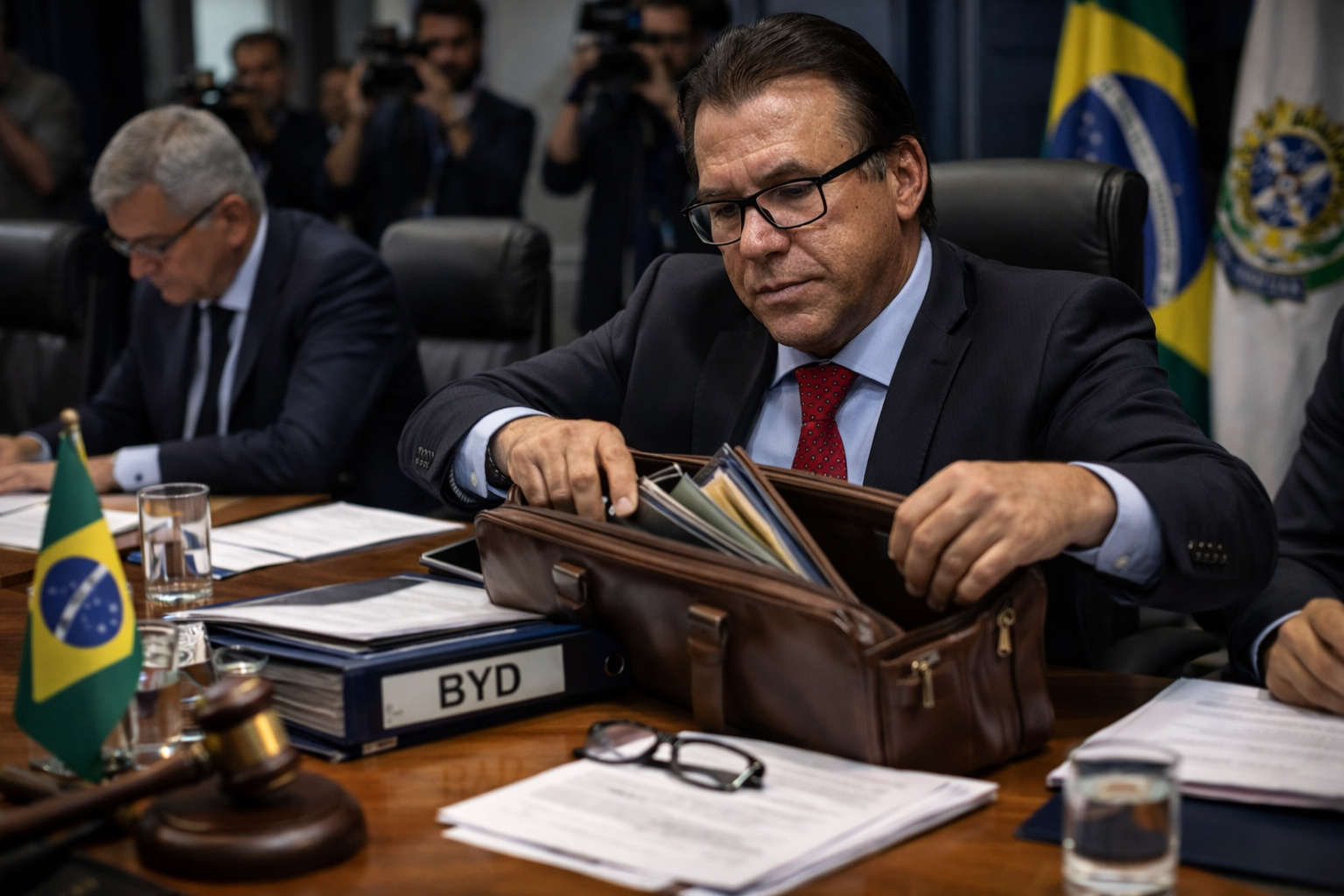
Understand how the inclusion of BYD in the blacklist, the judicial decision, and the dismissal of Secretary Luiz Felipe Brandão de Mello intensified the institutional conflict in the Ministry of Labor
A significant administrative decision with institutional impact was recently made in Brazil, attracting national attention.
The Ministry of Labor dismissed the Secretary of Labor Inspection, Luiz Felipe Brandão de Mello, after the inclusion of BYD in the so-called blacklist of analogous to slavery work, according to information released by g1 in April 2026.
The automaker was included in the registry on April 6, 2026, and shortly after, removed on April 8, following a provisional court decision that suspended its stay on the list.
-
The urgent need to implement a severe cut in public spending and a massive increase in taxes, in addition to drastically compromising the quality of basic services and the purchasing power of the population, could result in social unrest in the country, with the population leading protests, strikes, and frequent disturbances.

-
FIRJAN’s mega plan of R$ 526.3 billion for Rio de Janeiro aims to revive Brazil’s largest industry, with two-thirds of the investments going to oil and gas.

-
China signals an increase in beef imports, Brazil has already consumed 70% of the 1.106 million ton quota and seeks to renegotiate the tariff that jumps from 12% to 55%, while demand from the US also skyrockets.
-
Food inflation rose 302% in 20 years in Brazil, but the supermarket changed: purchasing power yielded 87% more mortadella and 31% less fruit, and ultra-processed foods took over the cart.



According to sources interviewed by g1, the secretary allegedly disregarded an instruction from Minister Luiz Marinho to delay the inclusion of the company, which intensified the internal conflict.
Entities criticize dismissal and point to possible interference
Furthermore, the Bahia Labor Auditors Union and Anafitra expressed strong reactions to the dismissal.
The entities stated that the case occurred under circumstances indicating possible undue interference in the technical performance of labor inspection.
According to representatives of the category, the decision may represent a sign of institutional retaliation.
According to auditor Rodrigo Carvalho, the dismissal of an authority for complying with the law is considered extremely serious.
Still, he emphasized that the measure undermines the autonomy of the inspection and compromises a public policy built over decades.
Recent history reinforces tension in the Ministry
At the same time, the episode occurs amid a scenario already marked by tensions between the federal government and labor auditors.
Previously, in 2025, Minister Luiz Marinho made unusual revisions in investigations conducted by auditors.
Consequently, some companies were not included in the blacklist, including a division of JBS.
According to sources, Luiz Felipe Brandão de Mello opposed these decisions, which worsened the internal environment.
Thus, the refusal to follow instructions in the case of BYD was considered the decisive point for his dismissal.

BYD Case Exposes Irregular Working Conditions
Previously, in December 2024, authorities rescued 163 Chinese workers at the BYD factory construction site in Camaçari, Bahia.
According to the Public Labor Ministry of Bahia, the workers were in conditions considered degrading.

Among the identified problems were overcrowded accommodations, lack of hygiene, and armed surveillance that restricted freedom of movement.
Additionally, passports were withheld, and contracts included exhausting work hours without weekly rest.
One worker reported that an accident with a saw may have been caused by extreme fatigue.
The MPT-BA also pointed out that the visas were incompatible with the activities performed in the country.
Company Response and Million-Dollar Settlement
Subsequently, BYD stated that the irregularities were committed by a subcontracted company hired for the construction.
Thus, the automaker decided to terminate the contract with the responsible construction company.
Additionally, some of the workers were transferred to hotels in the region.
At the end of 2025, the Public Labor Ministry reached a settlement of R$ 40 million with the automaker and the involved contractors.
Still, the company stated it remains committed to Brazilian legislation and human rights.
How the Dirty List of Slave Labor Works
Finally, the dirty list of labor analogous to slavery is updated every six months by the federal government.
According to the Ministry of Labor, inclusion occurs only after the conclusion of an administrative process, with no possibility of appeal.
Moreover, being on the list can have significant impacts, such as restrictions on access to credit and damage to business reputation.
Thus, the inclusion and subsequent removal of BYD reignited the debate about the autonomy of labor inspection in the country.
In this scenario, the tension between technical decisions and political influence raises a central question: to what extent can this relationship compromise the fight against analogous to slavery work in Brazil?


Be the first to react!