





 Portuguese
  English
  Spanish
  4 min of reading



The Ministry of Agriculture and Livestock (Mapa) reported on Wednesday night (22) that it temporarily suspended exports of Brazilian beef to China due to a confirmed case of “mad cow disease” in Marabá, Pará.
According to the Minister of Agriculture and Livestock, Carlos Fávaro, the measure takes effect starting this Monday, 23. The suspension of exports of Brazilian beef is part of the official sanitary protocol. The ministry also informed the World Organisation for Animal Health (WOAH) and sent samples from the animal, a 9-year-old bull, to a reference laboratory in Alberta, Canada, where it will be confirmed whether the case is atypical.
In an interview with CNN Brazil, Fávaro explained that there is no forecast for the resumption of exports of Brazilian beef to the Asian country: “We cannot predict how many days, but protocols are being followed. I want to believe that before President Lula’s visit to China, scheduled for March, the issue will be resolved.”
Government Investigates Suspected Case of Mad Cow Disease
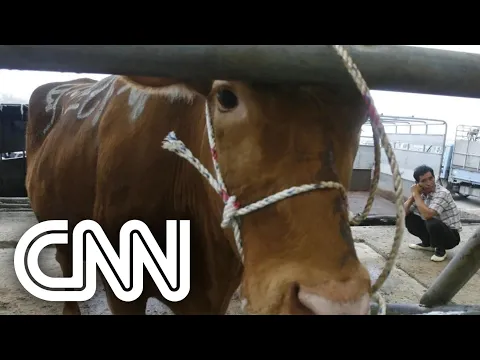

The minister assured that all necessary measures are being taken immediately to ensure the recognized quality of Brazilian beef for both Brazilian and global consumers.
-
China advances into Mexico’s transportation with an electric bus that has a range of up to 530 km, bringing a complete line to the country in 2026 and transforming its partnership with Yutong into one of the most strategic in Latin American mobility.

-
With 1,500 new buses financed by an international agreement, El Salvador is preparing the largest renewal in the history of its public transportation, a plan of $179 million with vehicles from the Chinese company Yutong that could replace practically the entire fleet of the country.

-
American Airlines starts selling trips as if they were flights, with check-in and baggage check at the airport, but on short routes, passengers board luxury buses connecting cities to major hubs in the U.S.

-
São Paulo surprises the world with a colossal railway network project that promises over 1,000 km of tracks, R$ 194 billion in investments, and 40 projects connecting the capital to the interior with fast and sustainable trains.

However, the Ministry assured that there are no risks to public health in the domestic market due to this case. Domestic consumers can continue purchasing Brazilian beef with peace of mind. The ministry only warned about adhering to recommendations for proper food preparation before consumption.
Many uncertainties still linger over the future of Brazilian beef exports to China. Meanwhile, Mapa remains vigilant about the situation, hoping for a quick resolution so that trade ties between the two countries can normalize as soon as possible.
Agriculture Minister Clarifies Possible Atypical Case of “Mad Cow Disease” and Laboratory Analysis in Canada
An alert was issued on Wednesday 22 by Adepará (Agency for Agricultural Defense of the State of Pará), which reported the initial registration of 1 suspected case of “mad cow disease” on a small farm in southwestern Pará, with 160 heads of cattle. The Minister of Agriculture and Livestock, Carlos Fávaro, stated that there is still no confirmation if the case is of the atypical form of the disease, which does not pose a risk of transmission to the herd and humans.
However, to clarify the situation, Fávaro emphasized that it is necessary to obtain a laboratory result from samples sent to a laboratory located in Alberta, Canada. The minister also stated that “there is no risk of contamination” and that the government is following suitable protocols for isolating the property and culling the affected animals.
Fávaro highlighted the importance of practicing preventive measures against foodborne diseases and reiterated that “there are no reasons for concern” regarding the consumption of beef. According to him, Brazilians can trust the expertise of veterinary technicians from the Ministry of Agriculture, as well as Brazil’s prohibition on the consumption of animal-derived feed.
More details are still needed to determine the exact type of disease recorded in Brazil. Meanwhile, the Federal Government has implemented preventive measures to prevent the spread of the disease among cattle and humans.
Brazilian Beef Exports Suspended
Brazil suffered a significant impact in the agriculture and livestock sector this week after the Ministry of Agriculture confirmed the investigation of a possible case of “mad cow disease” in Pará. The announcement led to the temporary suspension of exports of Brazilian beef to China and resulted in a sharp drop in the shares of major sector companies such as Minerva, BRF, Marfrig, and JBS.
According to the Minister of Agriculture and Livestock, Brazil is complying with protocol formalities with China and other supplier countries. Although this is a necessary process, it has caused losses to sellers who depend on exports to sustain themselves. The announcement has also raised concerns about the quality of domestic products.
The news of a possible case of “mad cow disease” in Pará was met with great concern by Brazilian slaughterhouses, as their shares plunged as a result. Minerva was the most affected, with a drop of 7.92% in the first hours after Carnival.
Despite the negative impact on the Brazilian economy, the government has sought ways to ensure the health of animals through stricter examinations and tighter sanitary controls. This is important to guarantee that domestic products are safe for human consumption and to avoid future financial losses.
Thus, Minister Fávaro emphasized that the government aims to provide security to all involved in the food market. He stressed that all measures taken are due to transparency and respect for international standards. Despite the challenges faced by the Brazilian agricultural sector, it is important to remember that the country continues to be globally recognized for its production of healthy food and beef safe for human consumption.








Seja o primeiro a reagir!