Portuguese
  Spanish


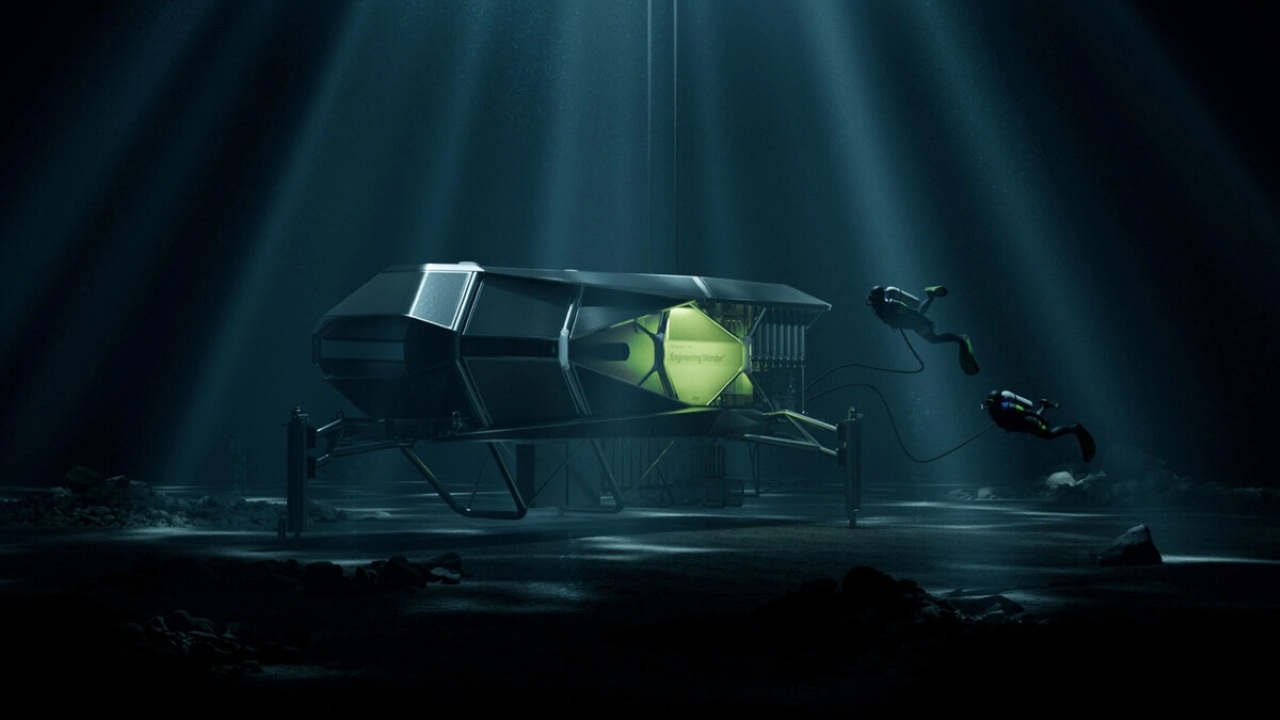

New 12-Meter “Marine House” Allows Human Stays of Over 7 Days on the Ocean Floor and Revolutionizes Oceanic Research with DEEP Technology.
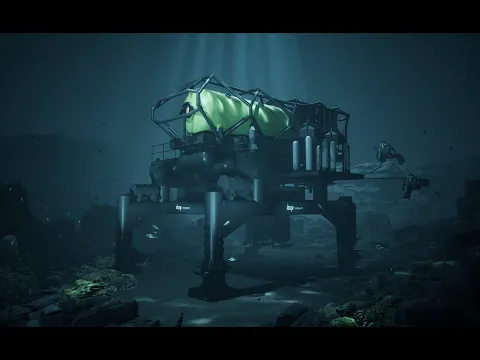
On October 30, 2025, the British company DEEP officially presented, at an event held in Miami, United States, the Vanguard, a 12-meter underwater structure designed to function as the first modern “marine house” capable of supporting scientists living on the ocean floor for over seven consecutive days. The information was confirmed by international outlets such as Phys.org and Sharjah24, as well as technical material made available on DEEP’s official website. The Vanguard is not a submarine, nor an improvised laboratory: it is a pressurized submerged habitat, with advanced life support technology, lighting, environmental monitoring, and sufficient internal space for researchers to live, work, sleep, and conduct experiments without surfacing.
The presentation is considered by experts as the greatest advancement made since the underwater habitat programs of the 1960s and 1970s, such as Aquarius Reef Base, and inaugurates a new era of human oceanic research.
A “Marine House” Designed to Stay on the Ocean Floor
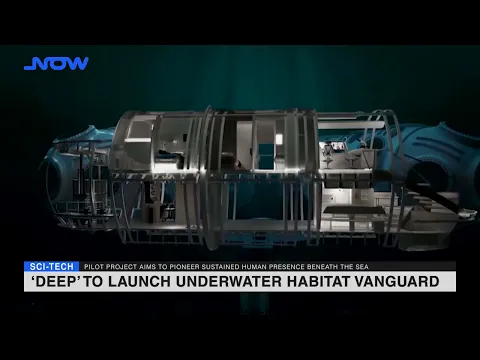

The Vanguard impresses with the design and technical specifications released by DEEP:
-
South Korea Tows 18 Concrete Blocks Weighing Up to 48,000 Tons Over 36 km to Construct a 3.2 km Underwater Tunnel Between Busan and Geoje, Installed Nearly 50 Meters Deep

-
Chinese Tianwen-2 Mission Targets Near-Earth Asteroid After 1 Billion Kilometer Journey to Collect Ancient Samples, Aiming to Uncover Clues About Water, Organic Compounds, and Solar System Origins Before Heading to a Comet

-
France Constructs 900-Meter Sea Wall in Brest, Expands Port by 14 Hectares for Marine Renewable Energy Hub
-
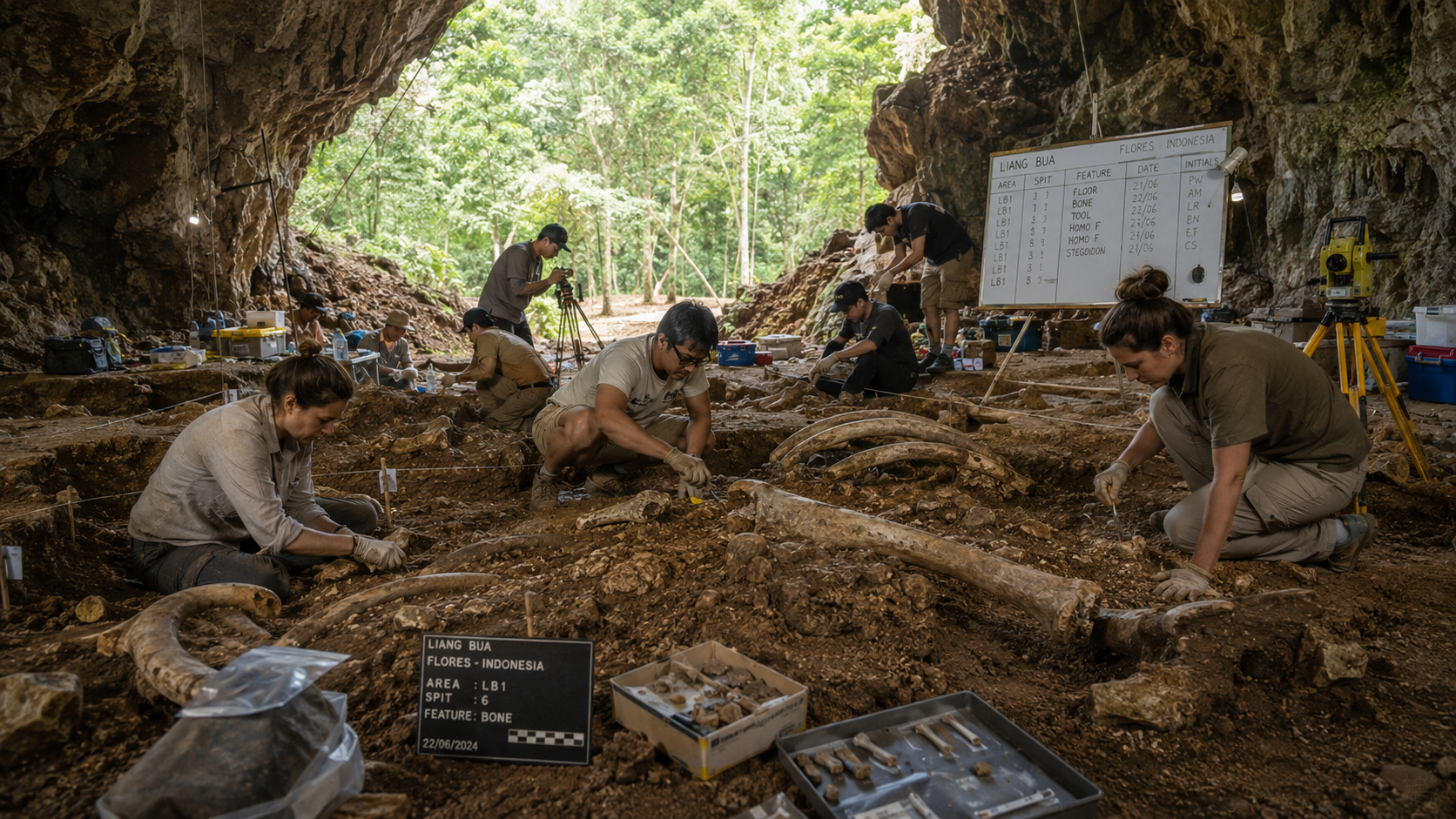
New Discovery Suggests Prehistoric “Hobbits” May Have Survived on Komodo Dragon Remains


- 12 meters in length
- 3.7 meters in width
- Tube module with two internal areas
- Advanced atmospheric control system
- Carbon dioxide and oxygen management
- Capacity to accommodate teams for long periods
- Underwater communication systems
- Autonomous lighting and climate control
- Structure capable of withstanding great pressure variation
Unlike traditional submarines or diving capsules, the habitat allows occupants to walk, move, and work standing up, making the stay below the surface more comfortable and efficient.
The goal is not just to support human presence, but to create a continuous research environment, where it is possible to observe ecosystems without interrupting collection cycles, dives, or biological analyses.
Why is the Vanguard Considered a Historic Leap?
The researchers cited in the reports state that the Vanguard offers something that no current system can: prolonged human presence on the ocean floor without relying on short-duration submarines.
This paves the way for:
- studies of animal behavior in complete cycles;
- monitoring of corals over entire days;
- continuous analysis of micro-organisms;
- testing of underwater technologies;
- observation of environmental changes minute by minute;
- experiments requiring total immersion in natural environments.
For marine scientists, geologists, ocean engineers, and climatologists, the ability to remain submerged for long periods means reducing costs, expanding data reach, and recording phenomena impossible to study in conventional dives.
Autonomy of Over a Week: The Challenge of Life Support
The most delicate point in underwater habitats is maintaining human life in a pressurized environment without risks, and DEEP claims to have solved this with a set of technologies also used in the space industry:
- redundant air filtration systems;
- continuous CO₂ control;
- recycling part of the internal humidity;
- power supplied by external energy modules;
- remote real-time monitoring;
- emergency systems attached to the hull.
This set allows teams to live on the ocean floor for more than seven days, something rare even in highly specialized facilities. The Aquarius Reef Base, for example, requires complex logistics and limits human stay to specific missions.
The Vanguard, on the other hand, was designed for continuous operations, able to be relocated or expanded according to the scientific mission.
Applications Beyond Marine Biology
Although the most evident image is that of scientists studying corals, DEEP’s “marine house” has applications in even broader areas:
- development of deep exploration equipment;
- testing of underwater robots;
- training of astronauts in a simulated gravity environment;
- research on climate change;
- monitoring of microplastics;
- studies on anthropogenic impact in sensitive areas;
- naval and offshore engineering.
DEEP itself stated, during the presentation in Miami, that underwater habitats could become common in long-term missions — functioning as advanced environmental observation stations.
The Return of Submerged Habitats After Decades of Pause
Submerged habitats were once a trend in the past: projects like Sealab, Conshelf, and Hydrolab marked generations of explorers. However, logistical complexity and high costs eventually halted this type of initiative.
The Vanguard symbolizes the rebirth of long-term underwater research, with lighter materials, more efficient systems, and costs much lower than the structures of the 1960s.
For oceanographers, the technology is especially important because 95% of the ocean remains unexplored, and drones, sonars, and submersibles cannot replace direct human presence.
A New Frontier for Global Oceanic Research
With the October 2025 presentation, DEEP positions itself as a leader in a market that is expected to grow rapidly in the coming decades. The search for data on climate change, acidification, species disappearance, impact of storms, and functioning of tropical reefs requires in-person observation, something that the Vanguard offers at an unprecedented level.
Experts consulted by the portals state that this new generation of habitats:
- can help predict environmental impacts with greater precision;
- increases response capacity to extreme events;
- brings science closer to hard-to-access environments;
- allows continuous observation — something impossible with traditional dives.
Thus, scientists from various countries already view the Vanguard as the first step toward a new era of human exploration of the oceans, comparable to the transition that occurred in space exploration when pressurized modules allowed for prolonged stays in orbit.