





 Portuguese
  English
  Spanish
  4 min of reading
  0 comments


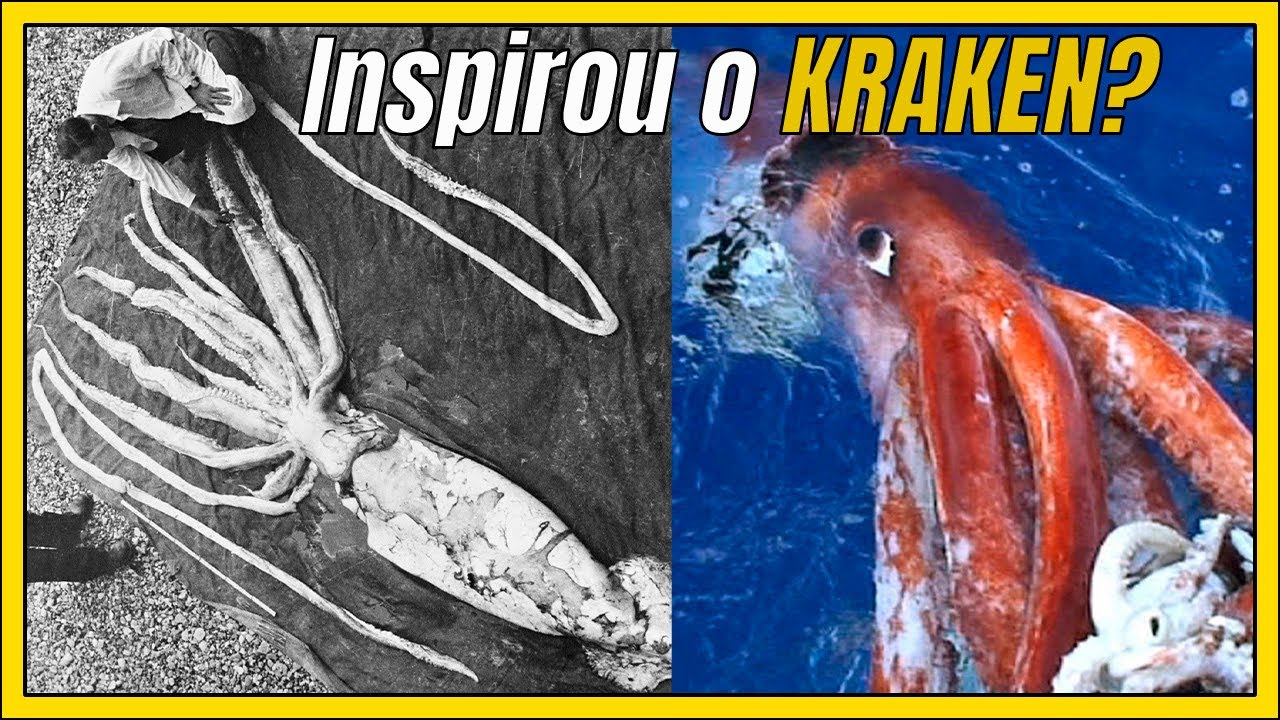
With Up to 15 Meters in Length and Weighing Over 500 Kg, the Colossal Squid Is the Largest Invertebrate Ever Documented and One of the Most Mysterious Animals on the Planet.
In the most remote and unexplored regions of the planet, where sunlight never reaches and water pressure can crush modern equipment, lives an animal that defies any common notion of size among skeletonless creatures. The colossal squid (Mesonychoteuthis hamiltoni) is not only large — it represents the maximum limit that an invertebrate has ever reached in the history of life on Earth.
Officially discovered in the early 20th century, this species spent decades shrouded in mystery. Unlike giant animals known from fossils or clear historical records, the colossal squid was revealed to science from fragments, remains found in the stomachs of sperm whales and accidental captures in deep-sea fishing nets in the Southern Ocean. Even so, the data gathered over the years has been enough to place it in a unique category: no other known invertebrate has reached such levels in mass, strength, and extreme adaptation.
Where the Largest Invertebrate on the Planet Lives: Colossal Squid
The colossal squid exclusively inhabits the deep and cold waters of the Southern Ocean, typically at depths ranging from 1,000 to over 2,200 meters. This is a hostile environment, marked by:
-
AI may be close to discovering new laws of physics, but scientists have found a frightening error: the technology reduces expensive simulations by more than 10 times and yet may overlook unprecedented clues hidden in the universe.

-
China has deployed snake-shaped robots to slide along power lines, where they have already inspected over 130 kilometers of cables using cameras and sensors to detect damaged wires, worn-out parts, and overheating.

-
Students create a Lego boat to collect plastic from beaches, focus on clean energy, and aim to combat marine pollution.

-
Scientists create an artificial photosynthesis system that “mimics” plants, transforms water and CO2 into solar fuel, and even works without relying on expensive batteries to control the energy.


- temperatures close to 0 °C,
- absolute darkness,
- pressure dozens of times greater than at the surface,
- low food availability.

This extreme isolation explains why direct sightings are virtually nonexistent. Most scientific knowledge about the species comes from juvenile or subadult individuals accidentally captured by fishing vessels operating in deep waters.
Real Size: Length, Weight, and Proportions
The largest specimens studied indicate numbers that place the colossal squid in a category of its own:
- estimated total length between 9 and 15 meters, possibly larger;
- weight exceeding 500 kg, with projections suggesting individuals close to 600 kg;
- extremely thick and muscular mantle, much more robust than that of the giant squid.
This detail is crucial. While the giant squid (Architeuthis dux) is famous for its length, the colossal squid easily wins in body mass, being considered the heaviest invertebrate ever documented by science.
Why It Is Larger Than the Giant Squid
There is a common confusion between the two animals, but biologically they are quite different. The giant squid can reach similar lengths, but it has:
- a thinner body,
- lower muscle density,
- less total mass.
In contrast, the colossal squid has:
- short and wide body,
- extremely dense musculature,
- greater energy storage capacity,
- clear adaptations for deep ambushes.
Therefore, in the scientific criterion of absolute gigantism, the colossal squid is at the top.
Extreme Anatomy: Eyes, Hooks, and Raw Power
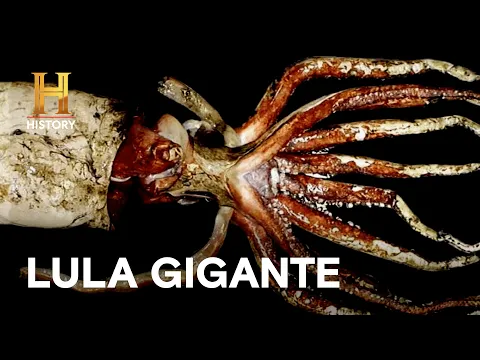
The colossal squid possesses some of the most impressive structures in the animal kingdom.
Gigantic Eyes
Its eyes can reach up to 27 centimeters in diameter, being the largest eyes ever recorded in any animal, living or extinct. This adaptation allows it to detect minimal shadows in almost total darkness, especially the silhouette of predators or prey.
Tentacles with Hooks
Unlike the common suckers found on other squids, the colossal squid has sharp rotating hooks on its tentacles. These hooks serve as anchoring weapons, capable of:
- piercing tough tissues,
- preventing the escape of large prey,
- causing deep wounds even to predators.
Powerful Beak
Its chitinous beak is comparable to that of large birds of prey in strength, capable of tearing thick flesh, including that of large fish and other cephalopods.
A Predator That Also Becomes Prey
Even with colossal size, the colossal squid is not invulnerable. Its main natural enemy is the sperm whale, the largest toothed predator on the planet. The circular markings found on the skin of these cetaceans are direct evidence of violent confrontations in the depths.
These clashes occur far from any human observation and represent some of the largest predator-prey battles in modern nature, involving animals weighing tons and with immense muscle power.
How Science Studies a Nearly Invisible Animal
The difficulty of accessing the habitat of the colossal squid means that each new specimen is treated as a rare scientific event. One of the most famous specimens was preserved whole in a museum, allowing detailed analyses of:
- nervous system,
- musculature,
- sensory organs,
- metabolism adapted to extreme cold.
Even so, the complete life cycle of the species is still unknown, including:
- average lifespan,
- reproductive patterns,
- population density.
A Symbol of the Limits of Life on Earth
The colossal squid is not just a biological record. It represents how far life can go without bones, sustained only by muscles, hydrostatic pressure, and extreme adaptations. On a planet where most “giants” rely on robust skeletons, it proves that evolution has found other paths to gigantism.
Its existence reinforces an unsettling idea: the largest living beings on Earth still live far from human sight, hidden in environments that modern technology barely reaches.
Even after more than a century since its identification, the colossal squid continues to be one of the least understood animals on the planet, despite its absurd size. Each new piece of data expands not only knowledge about the species but also about the biological limits of invertebrates.
It is not just the largest but a reminder that the deep ocean still holds giants capable of redefining everything we know about life.






-

-

-

-

-

-

26 people reacted to this.