Portuguese
  Spanish




FAO warns of avian flu spread in Latin America with over 4,700 outbreaks, raising concerns in Brazilian agriculture.
On April 28, 2026, the Food and Agriculture Organization issued a warning about the evolution of highly pathogenic avian influenza in Latin America and the Caribbean, highlighting that the virus remains active in the region and has already recorded over 4,700 outbreaks since 2022. The statement, echoed by specialized agricultural media, reinforces the need for continuous surveillance in animal protein-producing countries, including Brazil.
The alert does not indicate an immediate collapse but highlights a scenario of persistent risk. The disease has not disappeared after the initial global outbreaks and continues to circulate among wild birds, farms, and even other animals, keeping the sector in a state of constant alert.
Highly pathogenic avian influenza affects production, trade, and sanitary confidence
Avian flu, especially in its highly pathogenic form, is one of the most sensitive diseases for global agribusiness.
-
Producer receives news and had to cull almost the entire herd, bounced back with the help of compensation, and is now producing 450 liters of milk per day in SC.

-
Quail Eggs Reveal a “Secret Code” on Their Shells Explaining Unique Patterns and Colors

-
Rare Tropical Fruit Canistel, with Egg Yolk Color and Caramel Flavor, Gains Interest from Researchers and Small Producers in Brazil
-
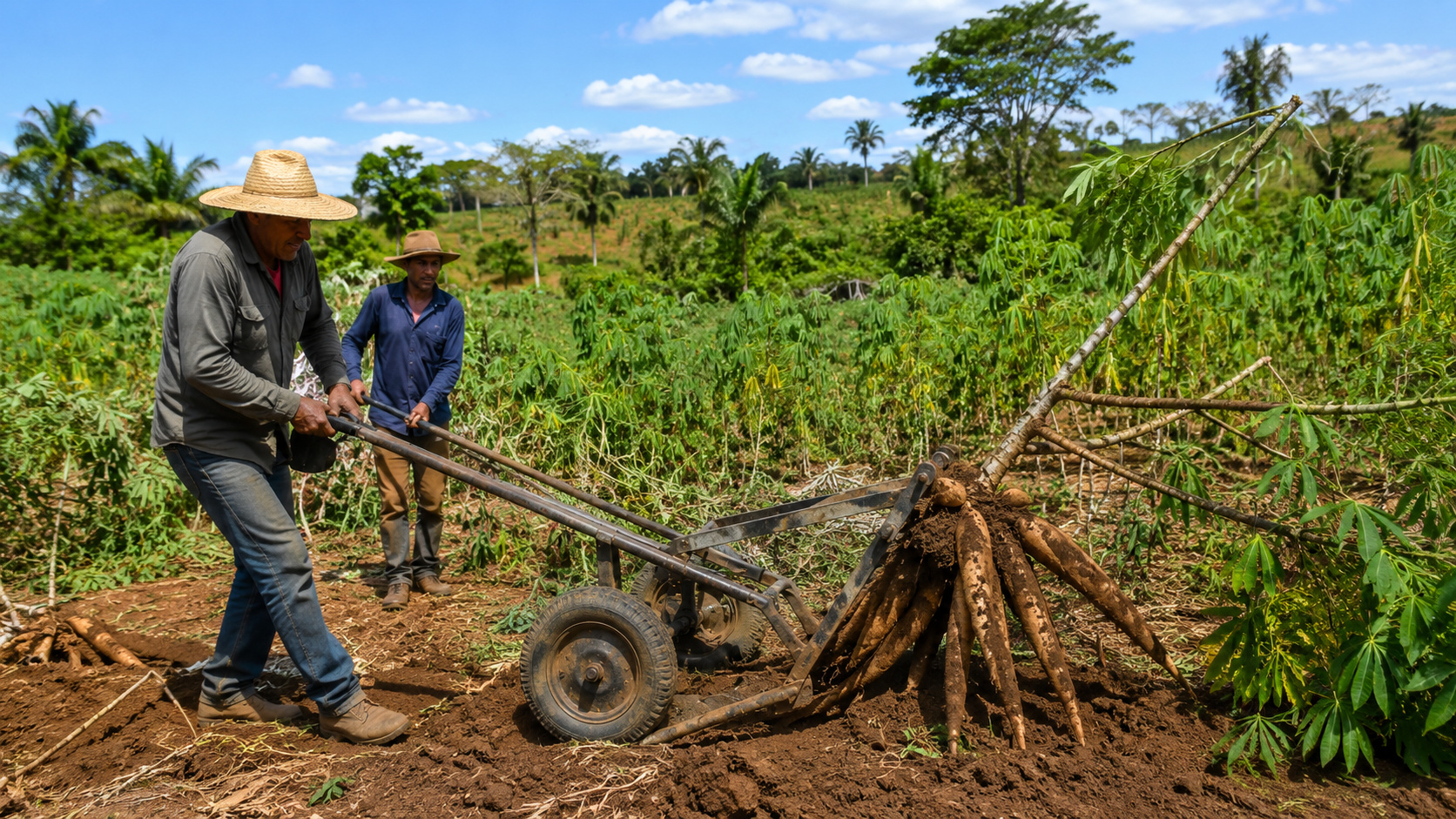
Brazilian Farmers Develop Wheeled Metal Lever to Ease Cassava Harvesting Without Heavy Machinery



It can cause high mortality in birds, require mass sanitary culling, and lead to immediate trade restrictions.


The impact is not limited to production but directly affects exports, as importing countries tend to impose barriers as soon as outbreaks are confirmed in exporting territories.
For a country like Brazil, which holds a global leadership position in chicken meat exports, the risk is considered strategic.
Brazil is one of the largest animal protein exporters and relies on sanitary credibility
Brazil is the world’s largest chicken meat exporter and one of the main suppliers of animal protein to markets such as China, the Middle East, and the European Union.
This position heavily depends on sanitary confidence, built over decades of rigorous control and absence of outbreaks in commercial production.

Any change in this status can have immediate impacts on contracts, prices, and export flow.
More than 4,700 outbreaks in the region show that the virus remains active and circulating
The number of outbreaks cited by the FAO reveals that the disease is not episodic. Since 2022, avian influenza has spread across different countries in the Americas, affecting farmed and migratory birds.
The presence in migratory birds is a critical factor, as it complicates total disease control, with the virus naturally crossing borders.
Additionally, records also include infections in other animals, increasing the complexity of the scenario.
Transmission by migratory birds increases the risk of entry into Brazilian territory
One of the main vectors of avian flu is migratory birds, which travel long distances between continents. These birds can carry the virus without showing severe symptoms and introduce it to new regions.
Brazil, being on important migratory routes, maintains constant monitoring of these populations, especially in coastal areas and regions with high concentrations of wild birds. This factor makes the risk of virus entry a permanent challenge.
The country maintains a structured sanitary surveillance system, coordinated by federal and state agencies. This system includes monitoring of wild birds, farm inspections, transportation control, and rapid response protocols.
Early detection is considered essential to prevent dissemination, allowing for actions such as area isolation and emergency sanitary measures.
Any confirmed outbreak can generate immediate impact on exports
In the international food trade, the presence of diseases such as avian flu often leads to rapid reactions from importing countries.
These reactions may include temporary suspension of purchases, regional restrictions, or the requirement for additional certifications.
This means that even a localized outbreak can have a broad effect on exports, depending on the response of trade partners.
Productive sector reinforces biosecurity measures on farms
Given the alert, producers are intensifying biosecurity measures. This includes access control to farms, disinfection of vehicles and equipment, health monitoring of birds, and restriction of contact with external environments.
These measures are fundamental to reduce the risk of virus introduction into intensive production systems.
Although the disease directly affects the poultry sector, its effects can spread throughout the entire agribusiness chain.
Protein prices may be affected, markets may adjust, and other sectors may feel indirect repercussions. Furthermore, the topic influences sanitary policies, investments, and commercial strategies.
FAO reinforces the need for continuous surveillance and international cooperation
The FAO alert highlights that avian flu control depends on cooperation between countries. Information exchange, protocol standardization, and joint monitoring are considered essential.
The cross-border nature of the disease demands a coordinated response, as no country can act effectively in isolation. The current scenario does not indicate an immediate crisis in Brazil, but it maintains a constant risk.
The continuation of outbreaks in the region shows that the disease remains active and can generate impacts at any moment, depending on its evolution. For a sector highly integrated into global trade, sanitary stability is one of the main assets.
The situation raises a direct question: will Brazil be able to maintain its position as a global leader in animal protein exports in the face of a virus that continues to circulate and cross borders without warning?