






 Portuguese
  Spanish


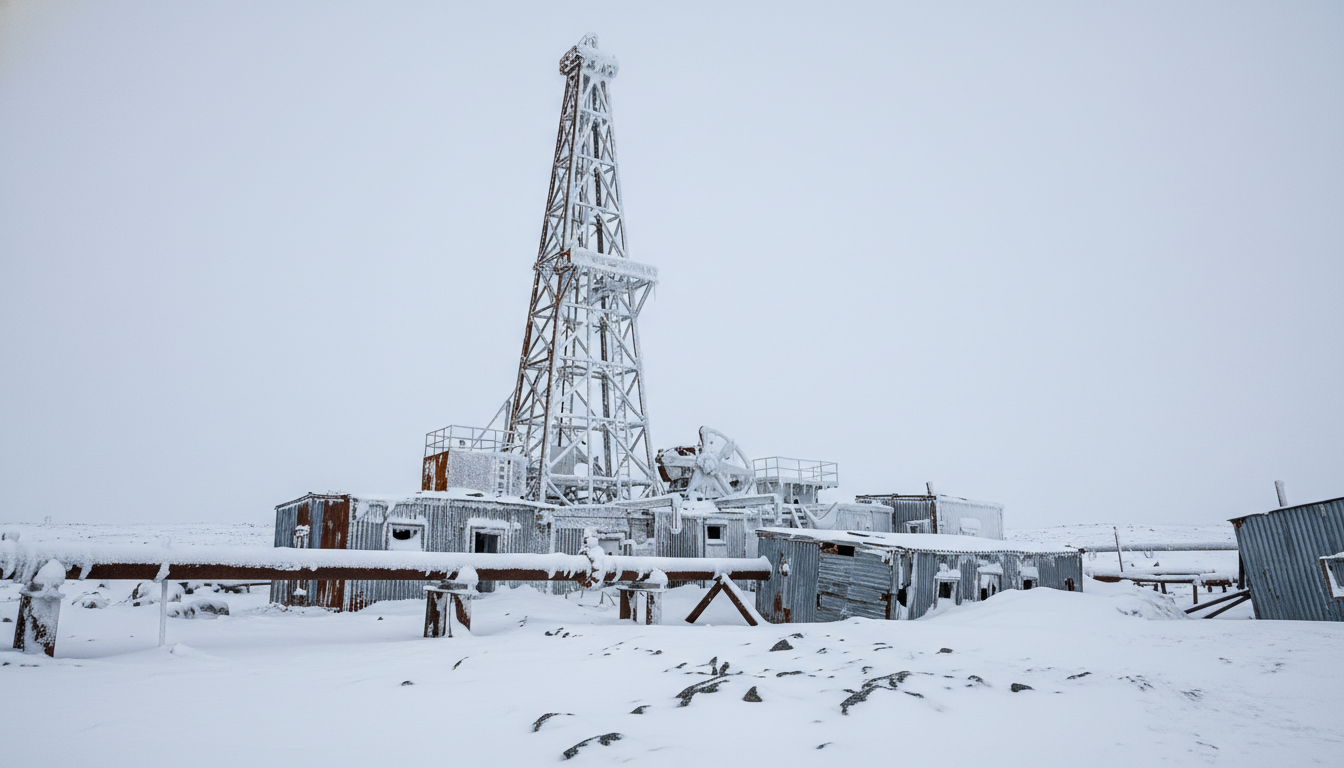


The Soviet Union spent 22 years drilling into the Earth’s crust and reached a depth of 12,262 meters — they found water where it shouldn’t exist, rocks that are 2.7 billion years old, and temperatures that melted the drill bits
In 1970, in a remote area of the Kola Peninsula, near the border with Norway, the Soviet Union began drilling what would become the deepest hole ever made by humanity.
The goal was simple in theory and absurd in practice: to drill into the Earth’s crust as deep as possible to discover what exists down there.
According to data compiled by the scientific literature of the project, the drilling reached 12,262 meters in 1989 — deeper than the Mariana Trench in the ocean. And what the scientists found challenged almost everything that geology books taught.
-
Canada Builds World’s Largest Electric Car Battery Repurposing Plant in 6 Weeks, Aiming to Power Grids, Factories, Hospitals, and Data Centers Before Recycling Lithium, Nickel, and Cobalt

-
Scientists Discover Ancient Life Marks in 180-Million-Year-Old Moroccan Ocean Rocks

-
Students from Brazil’s Paraíba develop low-cost reusable rocket with 3D-printed engine and Arduino-controlled parachute to disperse seeds for reforestation in remote drylands.

-
Brazilian Students Transform Passion Fruit Peels into Moisture-Retaining Material, Compete at World’s Largest Science Fair




Today, the hole is sealed with a 12-ton steel cap and abandoned in the Russian tundra. But the discoveries continue to be studied.
12 kilometers down: deeper than any ocean
The deepest point of the ocean, the Mariana Trench, is about 11,000 meters deep. The Kola hole reached 12,262 meters — over 12 kilometers of solid rock drilled vertically.
To put it into perspective, if you could stick Mount Everest into the hole, there would still be over 3 kilometers of space left.
And yet, the Soviets only managed to penetrate one-third of the Earth’s crust at the site. The Baltic Shield, the geological layer beneath the Kola Peninsula, has an estimated thickness of 35 kilometers.
The hole has a diameter of only 23 centimeters at the surface and narrows progressively to less than 10 centimeters at the bottom. It is a straw 12 kilometers long stuck into the Earth.

At 180°C, the drill bits melted — and the granite turned to paste
Scientists expected to find temperatures of around 100°C at 12 kilometers. They found 180°C — almost double.
At this temperature, the 2.7 billion-year-old granite that makes up the bottom of the hole behaved like plastic material. Instead of breaking under the drill, the rock deformed, collapsed, and engulfed the equipment.
Drill bits were regularly lost. The drilling column weighed 200 tons and needed to be lubricated with pressurized mud to avoid jamming.
When a drill bit came loose at 10 kilometers deep, there was no way to retrieve it. Engineers had to restart from intermediate points, diverting the drilling like a tree that creates branches.
The extreme heat was the main reason for the halt in 1992. The original goal was 15,000 meters, but physics won over ambition.
Water where it shouldn’t exist — and hydrogen gas bubbling from the rock
One of the most surprising discoveries was the presence of water at extreme depths. Geological models of the time said there would be no water below a certain depth — the pressure would be too great.
They were wrong. The water was there, likely trapped in microfractures of the rock for billions of years.
Even more unexpected was the hydrogen gas. Drillers found hydrogen bubbling from the rock like a boiling pot. No one expected natural hydrogen reservoirs at that depth.
This discovery gained renewed relevance in 2026 when energy companies began investigating geological hydrogen as a source of clean energy. The Kola hole, made in 1970, may have found one of the first indications of what is now considered the “next energy revolution.”

Rocks that are 2.7 billion years old — and an unexpected connection to the Moon
At 2,993 meters deep, scientists found rocks with a chemical composition surprisingly similar to the samples brought from the lunar soil by the Apollo missions.
The similarity supported theories that the Moon formed from terrestrial material — ripped away by a colossal impact 4.5 billion years ago.
At the bottom of the hole, the granite was 2.7 billion years old. These are rocks that formed when the Earth had no oxygen in the atmosphere, when the only living beings were aquatic microbes.
Touching these samples is touching the childhood of the planet.
The race for depth: Cold War underground
The Kola hole was not just science. It was propaganda. The Soviet Union wanted to prove it could go deeper than any other country — literally.
The Americans had the Mohole Project in the 1960s, which attempted to drill into the oceanic crust. It was canceled due to lack of funding. The Germans did the KTB, which reached 9,101 meters. Respectable, but 3 kilometers short of the Soviets.
To this day, no country has surpassed the 12,262 vertical meters of Kola. Oil wells like Sakhalin-I in Russia have reached 12,345 meters of total length, but drilled diagonally — the vertical depth is much smaller.
The vertical depth record of Kola remains unbroken since 1989.
A 12-ton cap and abandonment in the tundra
With the collapse of the Soviet Union in 1991, funding dried up. Drilling stopped in 1992. In 1994, the project was officially terminated.
In 2005, the hole was sealed with a welded 12-ton steel cap. The facilities around it were abandoned. Today, the structure rots in the tundra of the Kola Peninsula, covered in snow and rust.
No country has attempted a purely scientific drilling of this scale since. Japan plans to use the Chikyu ship to drill into the oceanic crust down to the mantle, but the goal is only 3,000 meters — four times less than Kola.

What the Kola hole teaches about the future of energy
The discovery of water and hydrogen at extreme depths was a curiosity in 1989. In 2026, it is potentially revolutionary.
Companies like Fervo Energy are drilling 4.8 kilometers to extract geothermal heat. If Kola showed that there is heat and fluids at 12 kilometers, the geothermal potential of the Earth is much greater than what is currently being explored.
The natural hydrogen found in Kola is the same that energy startups are seeking in 2026 in Australia, the USA, and Africa. If the Earth produces hydrogen naturally, it may not be necessary to manufacture it with electricity.
The deepest hole in humanity was sealed 20 years ago. But the questions it raised — about what exists beneath our feet, about unlimited energy beneath the crust, about life where there shouldn’t be life — remain unanswered.
Will any country have the courage to drill deeper?


A venture like this was attempted years back when man made an attempt to build into the heavens. Seemed like a brilliant idea but the problem was it negated God’s will. In this case the Bible makes it clear that the soul of the departed ones descends or ascends so it’s obviously a restricted area for Man. This apparently explains why any attempt to drill to Earth’s core fails everytime.
Hell is real!!! Jesus is the only way of escape
Thanks for sharing, James. The article focuses strictly on the engineering and geological aspects — the project halted because at 12,262 meters the rock reached 180°C and began behaving as plastic, exceeding what 1980s drilling technology could handle. High-temperature, ultra-deep drilling remains one of the hardest unsolved problems in geophysics.
180 c or F is not hot enough to melt metals. Temps might have been 1800 F. There is CDN Shield bedrock that is close to 3 billion yrs old at earth’s surface. This whole article reads like bad science fiction. Especial BS from Soviet Union Russia that has lied for centuries.
Steven, thanks for the sharp observation. You’re right that 180°C alone wouldn’t melt metals — the extreme pressures at Earth’s core fundamentally change how materials behave at those depths. And great point about the Canadian Shield bedrock. Appreciate the detailed feedback!
180c will not melt hardened drill bits nor their steel infrastructure. I highly doubt that temperature increase would even affect the margin of error on the toughness and expected life cycle of any of it. The plasticity of the rock would be the culprit.
Good point, C M. You’re right that 180°C alone wouldn’t melt the drill bits — the main issue at that depth was the combination of extreme heat and pressure changing the rock’s behavior. At those temperatures, the rock became more plastic and ductile rather than brittle, which made it close around the borehole and deform the drilling equipment instead of fracturing cleanly. The heat also degraded the drilling mud and lubricants far faster than expected. It was the geology fighting back, not the steel melting.