






 Portuguese
  Spanish


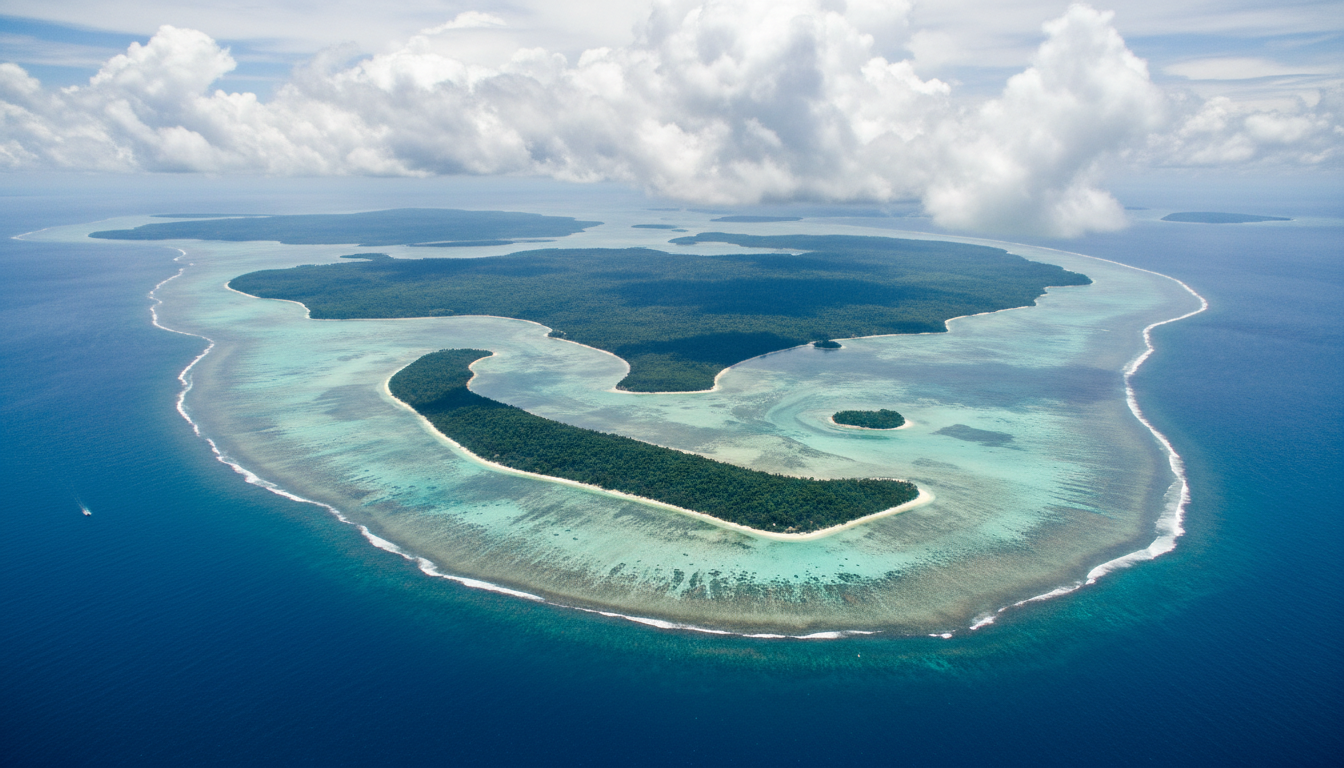


In a dredging operation that intended only to extract sand for an artificial island, an Indonesian company brought to the surface over 6,000 fossils from an ecosystem that existed 140,000 years ago — including two Homo erectus skulls, the first human record from the lost continent of Sundaland
Between 2014 and 2015, an Indonesian company dredged over 5 million cubic meters of sand from the bottom of the Madura Strait, between the islands of Java and Madura.
The objective was simple: to build an artificial island near the port of Surabaya.
No one expected what came along with the sand.
-
Ninja’s New Combi Multicooker Revolutionizes Cooking with Superheated Steam and Air Frying, Offering 14 Functions and Full Meals in 15 Minutes

-
From Humble Beginnings to Industry Leader: How Dudalina Became Brazil’s Top Shirt Exporter with $416 Million in Revenue
-
Brazilian Brothers Turn $100 Investment into Wildlife, Latin America’s Most Valuable Game Studio Worth $3 Billion, with Global Hits like “Sniper 3D”
-
Brazilian Multinational WEG and Graal Network Install 47 Fast Chargers on Major Highways, Enhancing Electric Vehicle Infrastructure




Mixed with the sediments were over 6,000 vertebrate fossils — extinct elephants, hippos, tigers, freshwater sharks, and ancestors of Komodo dragons.
And, among all of them, two cranial fragments of Homo erectus dated to 140,000 years ago.
According to a study published in the journal Quaternary Environments and Humans, led by archaeologist Harold Berghuis, this is the first fossil record of hominins from the submerged lands of Sundaland.

A continent the size of Europe that disappeared beneath the sea
Sundaland was a vast expanse of dry land that connected the islands of Southeast Asia to the mainland.
During the ice ages, sea levels were 100 to 120 meters lower than today.
This exposed an enormous continental shelf, uniting Borneo, Sumatra, Java, Bali, and the Malay Peninsula into a single landmass.
When the ice melted about 10,000 years ago, the sea rose and swallowed everything.
What are now islands separated by ocean were, at the time, continuous land with rivers, forests, and plains.
Scientists call this region a “lost continent” because its history is literally underwater.
An extremely fertile ecosystem beneath the waves
The more than 6,000 recovered fossils reveal a rich and diverse ecosystem.
Among the identified animals are Stegodon — extinct relatives of elephants —, hippos, buffalo, turtles, and giant monitor lizards.
These monitor lizards were ancestors of today’s Komodo dragons.
There were also freshwater sharks, which indicates the presence of fast-flowing rivers.
Some turtle fossils show cut marks made by stone tools — evidence that humans processed these animals for food.
It is the first time such marks have been found in Southeast Asia for this period.

Homo erectus: the human who lived on the lost continent
The two skulls found belong to an adult and a juvenile Homo erectus.
This human species arrived in the Java region 1.8 million years ago — it is the famous “Java Man”.
The fossils from the Madura Strait date back 140,000 years, a period when Homo erectus was already in decline.
Researchers believe these individuals had “detailed knowledge of their surroundings and knew how to make the most of their resources”.
About 60,000 years ago, Homo sapiens arrived in the region.
The two species may have coexisted for thousands of years.
From Sundaland, Homo sapiens crossed to Australia and New Guinea 50,000 years ago, becoming the ancestors of Australian Aborigines and Melanesians.
A river valley hidden beneath the ocean
The exact location of the discovery corresponds to the bed of an ancient valley of the Solo River, which today crosses Central Java.
During the MIS6 glaciation, between 190,000 and 130,000 years ago, the river carved out this valley.
When the climate warmed, the valley was filled with sediments.
And when the sea rose, everything was covered by the waters of the Madura Strait.
The fossils remained sealed under the seabed sand for over 100,000 years — until a dredge brought them back to the surface.

Similar to European Doggerland, but much older
Europe has its own “lost continent”: Doggerland, now submerged in the North Sea.
It connected Great Britain to the rest of Europe during the last glaciation.
Mesolithic humans lived there until about 8,000 years ago.
Sundaland is comparable in scale, but the human records are much older.
The Homo erectus of Sundaland lived 140,000 years ago — almost 20 times earlier than the inhabitants of Doggerland.
A 150,000-year-old molar reveals another human species in the same place
Besides Homo erectus, there is evidence that Denisovans also lived in Sundaland.
A molar from a girl, dated to 150,000 years old, was found in the region.
Denisovans are an extinct human species known primarily from DNA extracted from fossils in Siberia.
Their presence in Southeast Asia indicates that Sundaland was a meeting point for multiple human species.
What still needs to be discovered
The fossils were found accidentally during a commercial dredging operation.
This means that the original geological context was partially destroyed.
Researchers used luminescence dating (OSL) to estimate the age, but additional techniques would be needed to confirm.
There was no planned excavation at the site — everything came along with the sand.
Archaeologist Harold Berghuis and his international team highlight the need for underwater expeditions to map what else exists beneath the Madura Strait.
The seabed of Southeast Asia may hold thousands of archaeological sites that have never been explored.
Sundaland is a lost continent not because it disappeared — but because we haven’t yet learned how to look for it properly.





They are continually finding lost civilizations and lands to prove ancient man was more adventurous 12,000 years ago than they are now.
Advanced…
Yes, “advanced” fits — late Pleistocene humans had developed boat technology, complex tool kits, and crossed dozens of kilometers of open water to reach Australia by roughly 50,000 years ago. Underwater dredging finds like this one keep filling in that picture.
Interesting reflection, John. The 6,000+ Pleistocene fossils dredged at Patimban suggest a coastline humans crossed when sea levels were ~120 m lower (Last Glacial Maximum, around 20,000 years ago). Whether “more adventurous” or simply adapting to dramatic geographic change, the migration was real and well documented in the seabed record.