






 Portuguese
  Spanish


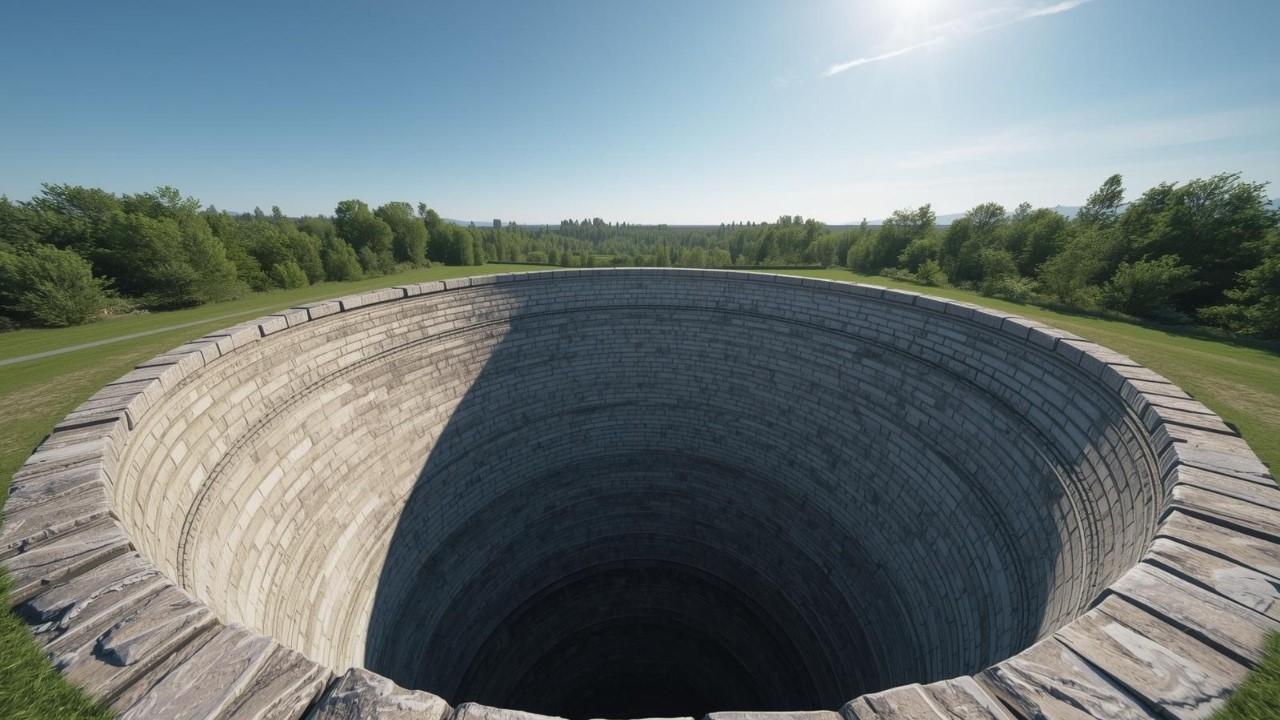


Shenditake 1 Well Reaches 10,910 Meters in China, Crossing 12 Geological Formations and Revealing Layers Over 500 Million Years Old.
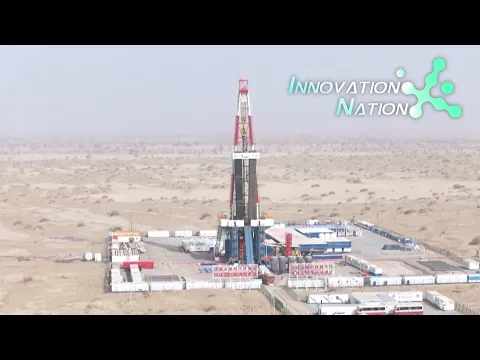
In February 2025, the China National Petroleum Corporation (CNPC) announced the completion of the Shenditake 1 well, located in the Taklamakan Desert, Tarim Basin, Xinjiang region, in northwestern China. According to information released by the Chinese state agency and compiled by outlets such as the official portal SCIO (State Council Information Office, February 2025), the drilling reached an impressive 10,910 meters in depth, becoming the deepest vertical well ever drilled in Asia.
The project not only broke regional records but also exposed, on a large scale, the current limits of deep drilling engineering. Over more than 580 days of continuous operation, technical teams faced extreme temperatures, crushing pressures, and mechanical challenges that increase exponentially with each kilometer drilled.
The final result goes beyond engineering: the well crossed 12 distinct geological layers and reached rock formations over 500 million years old, opening a new window for the study of the Earth’s interior in one of the most inhospitable regions of the planet.
-
Giant Robots Build Entire Neighborhood of 100 3D-Printed Homes in the U.S., Showcasing Technology’s Impact on Construction Industry

-
Helsinki Residents Receive Water That Travels 120 Kilometers Through a Hidden Rock Tunnel from a Lake Before Treatment

-
Brazil’s Sertão Region Nears Completion of Latin America’s Longest Artificial River, Transforming Water Access in Drought-Prone Ceará
-
Pre-mixed stabilized mortar set to revolutionize construction in 2026: extends usability to 36 or 72 hours, boosts productivity, and minimizes waste in building projects.



Taklamakan Desert Hosts One of the Most Complex Projects Ever Executed by the Energy Industry
The choice of location was not random. The Taklamakan Desert is known as one of the most hostile environments in the world, with temperatures that can exceed 50°C at the surface, frequent sandstorms, and almost total absence of natural infrastructure.
Even in this extreme scenario, the Tarim Basin is considered one of the most promising regions in China in terms of energy resources, with potential oil and gas reserves at depths far exceeding the global average.
Conventional drilling rarely exceeds 5,000 to 7,000 meters, but the Shenditake 1 project was designed specifically to explore deeper and less known layers. This required a combination of advanced technologies, high-precision logistics, and long-term planning.
The complexity of the environment combined with the depth transformed the project into a true underground engineering laboratory under extreme conditions.
Each Meter Drilled Exponentially Increases the Technical Difficulty of the Operation
One of the most revealing data points of the project lies in the drilling speed. Although the well was completed in about 580 days, the last 910 meters took approximately 300 days to drill, highlighting the dramatic increase in difficulty at greater depths.
This behavior is expected in deep drilling and occurs due to a combination of physical and mechanical factors:
As depth increases, geological pressure intensifies, potentially exceeding 100 megapascals, equivalent to thousands of tons compressing each square meter of the structure. Simultaneously, temperature also rises, often exceeding 200°C at great depths, which directly affects equipment performance.

Drilling bits suffer accelerated wear, fluids lose stability, and metal components face extreme physical limits, requiring frequent replacements and continuous adjustments.
This scenario turns the last kilometers of drilling into an extremely slow, costly, and technically challenging operation.
Structure Crosses 12 Geological Formations and Reveals the Deep History of the Earth
Upon reaching 10,910 meters, the Shenditake 1 well crossed 12 different geological formations, each representing distinct periods in the Earth’s history.
Among the identified layers are:
- Recent sediments formed over millions of years
- Compacted layers of sandstone and limestone
- Deep structures with much older rocks


The most relevant data is that the drilling reached formations over 500 million years old, belonging to extremely ancient geological periods, predating the formation of many current continents.
These layers function as natural archives of geological evolution, containing information about climate, chemical composition, tectonic activity, and the formation of natural resources over hundreds of millions of years. This type of direct access to the deep subsurface is rare and extremely valuable for science.
Temperature and Pressure at Depth Push Materials to Physical Limits
Operating at depths greater than 10 kilometers subjects any known material to extreme conditions.
Temperature increases, on average, by about 25°C to 30°C per kilometer, which means that at depths close to 11 km, the environment can exceed 250°C, depending on the geothermal region.
At the same time, geological pressure increases proportionally to the weight of the overlying layers, creating an environment where:
- Equipment can deform
- Fluids can evaporate or decompose
- Metal structures can experience accelerated fatigue
These conditions make deep drilling one of the most challenging industrial activities in the world, comparable, in technical terms, to space exploration or deep-sea operations.
Objective Goes Beyond Oil and Includes Scientific Exploration of Earth’s Interior
Although the project is linked to the energy industry, its impact goes beyond the search for oil and gas. Drilling at this depth allows for:
- Direct study of the Earth’s crust structure
- Analysis of thermal gradients
- Investigation of ancient geological formations
- Assessment of potential deep reservoirs
Furthermore, projects like Shenditake 1 help develop technologies that can be applied in other areas, such as:
- Deep geothermal energy
- Underground carbon storage
- Mineral exploration at great depths
The well functions as a real data collection point about the planet’s interior, something that theoretical models cannot always reproduce accurately.
China Intensifies Tech Race to Master Extreme Deep Drilling
The completion of Shenditake 1 also has strategic implications. China has been investing heavily in developing its own technologies for energy exploration, reducing external dependence and expanding its industrial capacity.
Projects like this are part of a larger strategy of:
- Energy security
- Technological dominance
- Expansion of domestic reserves
By reaching almost 11 kilometers in depth, the country approaches historical records set by projects such as the Kola Superdeep Borehole, in Russia, which reached 12,262 meters.
This race for depth is not merely symbolic, but represents a real technical capability to access resources and knowledge at extreme levels of the Earth’s crust.
Deep Drilling Reveals the Real Limit of Human Engineering in the Subsurface
The advance to 10,910 meters exposes a fundamental point: there is a physical and economic limit to underground exploration.
Each additional meter drilled requires:
- More time
- More energy
- More equipment replacements
- Higher operational cost
At a certain point, the cost-benefit ratio becomes critical, which explains why few projects in the world exceed the 10-kilometer mark.
Shenditake 1 shows that current engineering can reach these limits, but still faces significant barriers to going beyond efficiently.
What this extreme drilling reveals about the future of underground exploration
The completion of the Shenditake 1 well does not end the story, but points to the future of deep exploration. With the advancement of technologies, new projects may seek:
- Even deeper drilling
- Exploration of extreme geothermal energy
- Access to rare mineral resources
- More detailed study of the Earth’s crust
However, the challenges remain enormous, both from a technical and economic standpoint. Deep drilling continues to be one of the most complex frontiers of modern engineering, requiring constant innovation and high investments.
Given this advance, how far will human engineering be able to reach into the Earth’s interior?
The case of Shenditake 1 raises an inevitable question: to what extent will it be possible to advance even further into the planet’s interior?
History shows that each technical advance expands known limits, but also reveals new obstacles. Temperature, pressure, cost, and material limitations continue to be real barriers. At the same time, the search for energy, knowledge, and resources keeps this race active.
Given this, the debate remains open: is humanity close to the maximum limit of terrestrial drilling, or are we still only at the beginning of the real exploration of the planet’s interior?







This is cool, but does this not hurt the planet?
While China improves on their infrastructure and science, other countries are spending billions fighting wars or claiming rigged elections. Who’s really the weakest link?
We seem to be hell bent on letting the air out of the balloon!