Portuguese
  Spanish


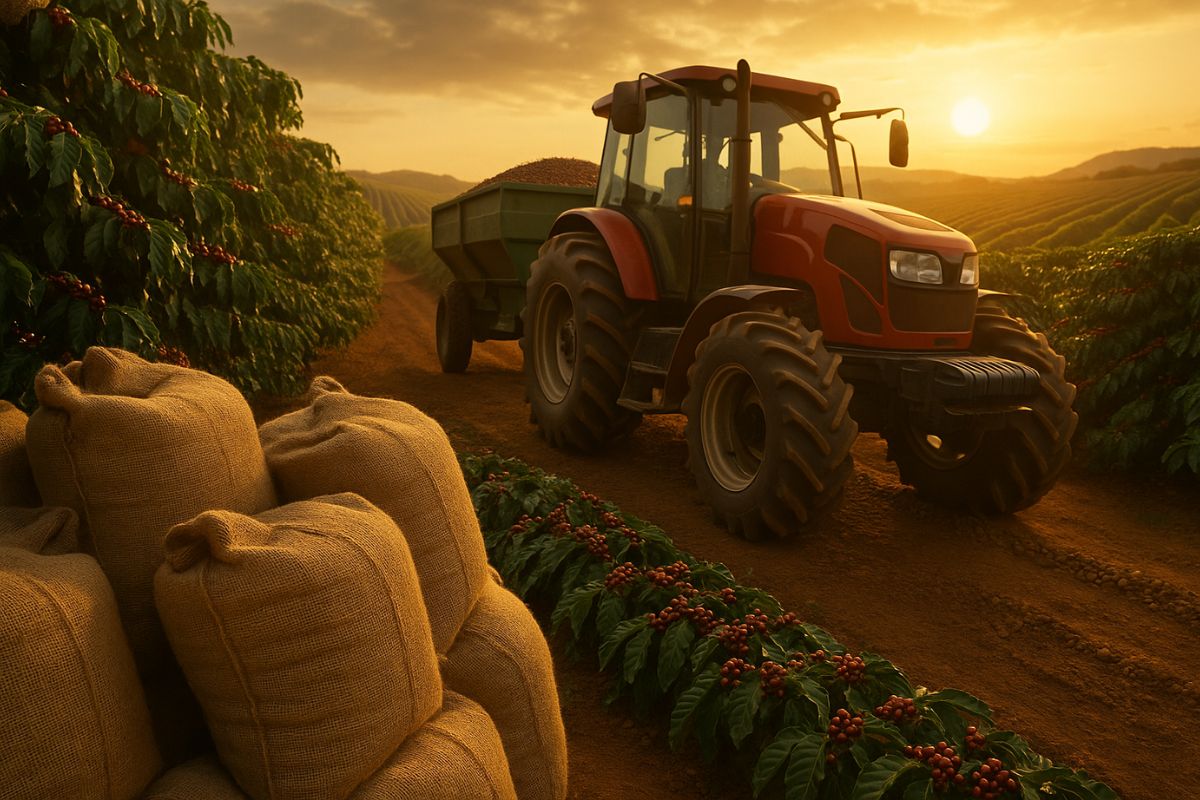


Property Located in Minas Gerais Concentrates the Largest Production of Arabica Coffee in the Country, with State-of-the-Art Technology.
The largest coffee farm in Brazil belongs to the Terra Forte group and houses over 2.8 million coffee plants, establishing itself as one of the main production hubs in the world. The property, named Fazenda Campo Verde, is located in Campo do Meio (MG) and is managed by producer João Faria da Silva, known as the “King of Coffee.”
João Faria commands an agricultural empire of seven farms, where 18 million arabica coffee plants are cultivated. The annual production exceeds 3.2 million sacks.
Where is the Largest Coffee Farm in Brazil?
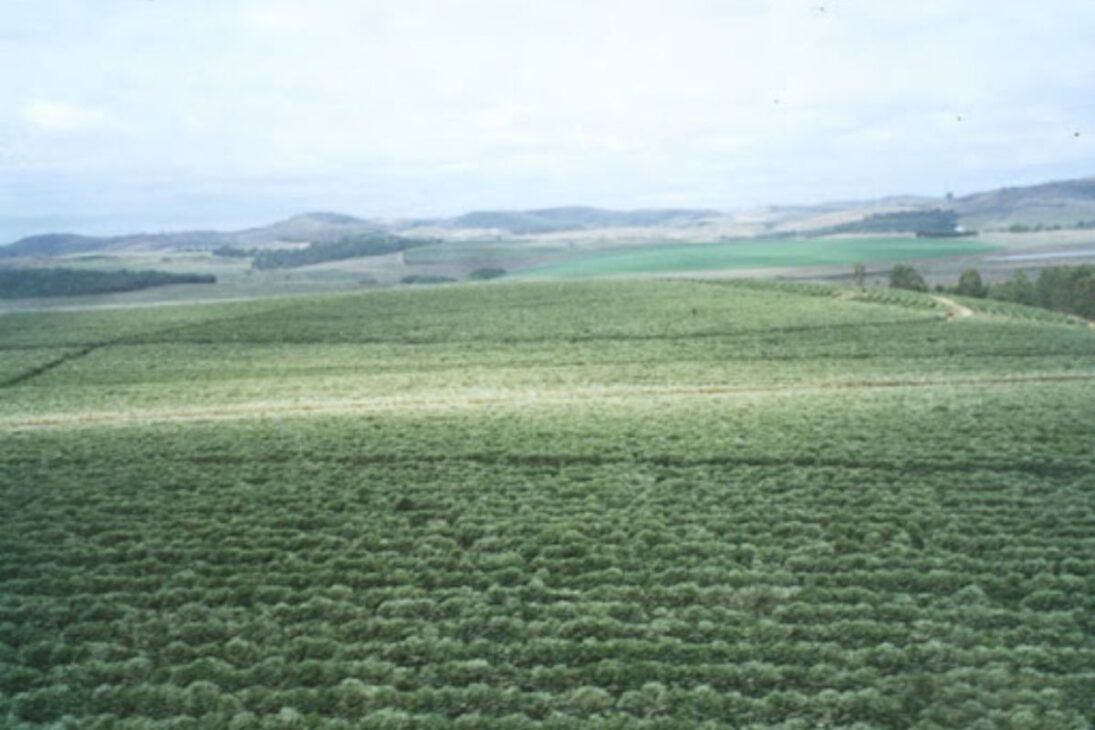
The Fazenda Campo Verde occupies a total area of 1,056 hectares, of which 920 hectares are cultivated with coffee. The property is a benchmark in productivity, with an emphasis on the Mundo Novo, Catuaí, Acaiá, Obatã, and Icatu varieties, as detailed:
-
Quail Eggs Reveal a “Secret Code” on Their Shells Explaining Unique Patterns and Colors

-
Rare Tropical Fruit Canistel, with Egg Yolk Color and Caramel Flavor, Gains Interest from Researchers and Small Producers in Brazil
-
Brazilian Farmers Develop Wheeled Metal Lever to Ease Cassava Harvesting Without Heavy Machinery
-
Study of Brazil’s Tietê River Finds 25 Pesticides in Water, Including Cancer-Linked Substance Near Source


- Mundo Novo: 485 ha — 1,420,000 plants
- Catuaí: 270 ha — 570,000 plants
- Acaiá: 130 ha — 675,000 plants
- Obatã: 10 ha — 56,000 plants
- Icatu: 25 ha — 133,000 plants
- Total: 920 ha — 2,854,000 plants
In addition to this unit, the group owns six other properties: Igurê, Macuco, Novo Horizonte, Samambaia, São José do Indaiá, and São Sebastião, spread across the main coffee regions of the country. In total, João Faria manages 6,000 productive hectares, with a reprocessing structure in São João da Boa Vista (SP) and Poços de Caldas (MG).
How Did the Empire of the King of Coffee Emerge?
João Faria is from the third generation of coffee growers and built his empire with a clear strategy: reinvesting all profits into land acquisition. “I have never taken money from the farms,” he stated in an interview. This management model led Terra Forte to be considered one of the largest coffee exporters in the world, combining family tradition with state-of-the-art technology and robust logistics.
The unit in Poços de Caldas is one of the most modern in Latin America, with the capacity to reprocess 18,000 sacks per day and store 600,000 sacks. Meanwhile, the plant in São João da Boa Vista reprocesses 3,500 sacks daily and stores another 130,000, making Terra Forte’s infrastructure one of the most competitive in the sector.
Why is Fazenda Campo Verde So Important?
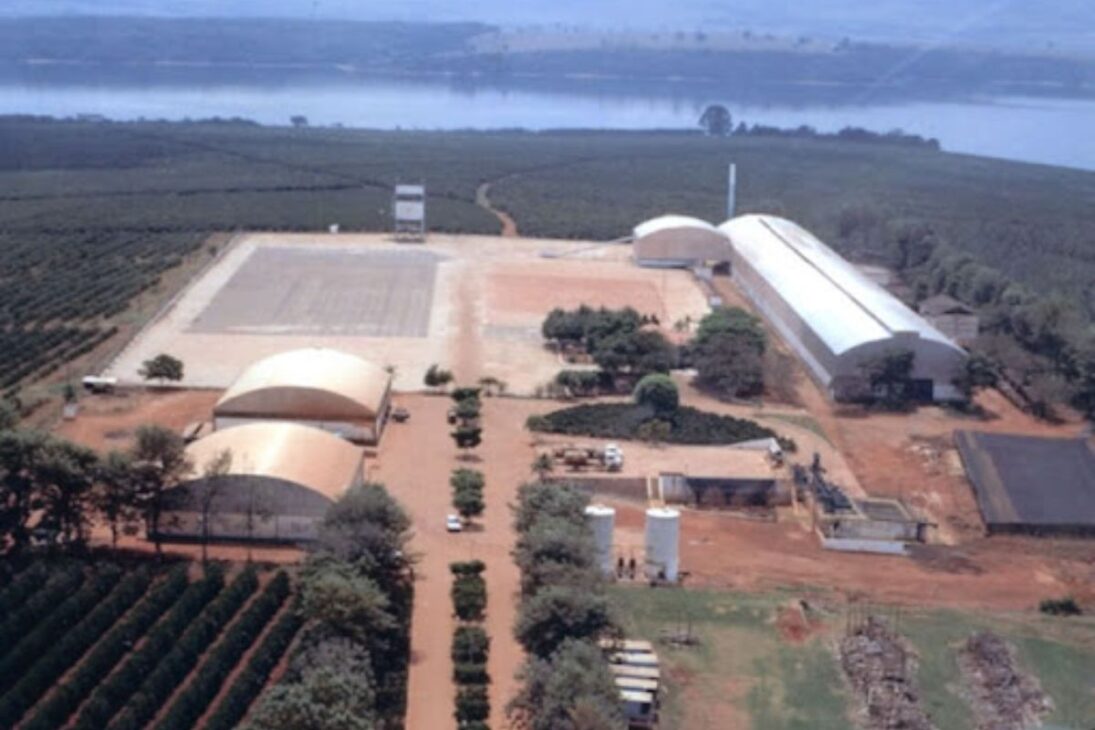
Besides its size and production volume, the farm plays a central role in the safety of the global arabica coffee supply chain. In a scenario of climate instability, labor shortages, and currency fluctuations, properties like Campo Verde represent a sustainable and resilient model of large-scale production.
For experts, the business model adopted by João Faria serves as a benchmark for the modernization of Brazilian agribusiness, reconciling scale, innovation, and social responsibility. The farm also adopts environmental practices.
And you, do you think giant farms like this strengthen or concentrate the coffee market too much? How do you see Brazil’s role in global production? Share your opinion in the comments; we want to hear from those who live in the countryside and those who consume coffee every day.