Portuguese
  Spanish


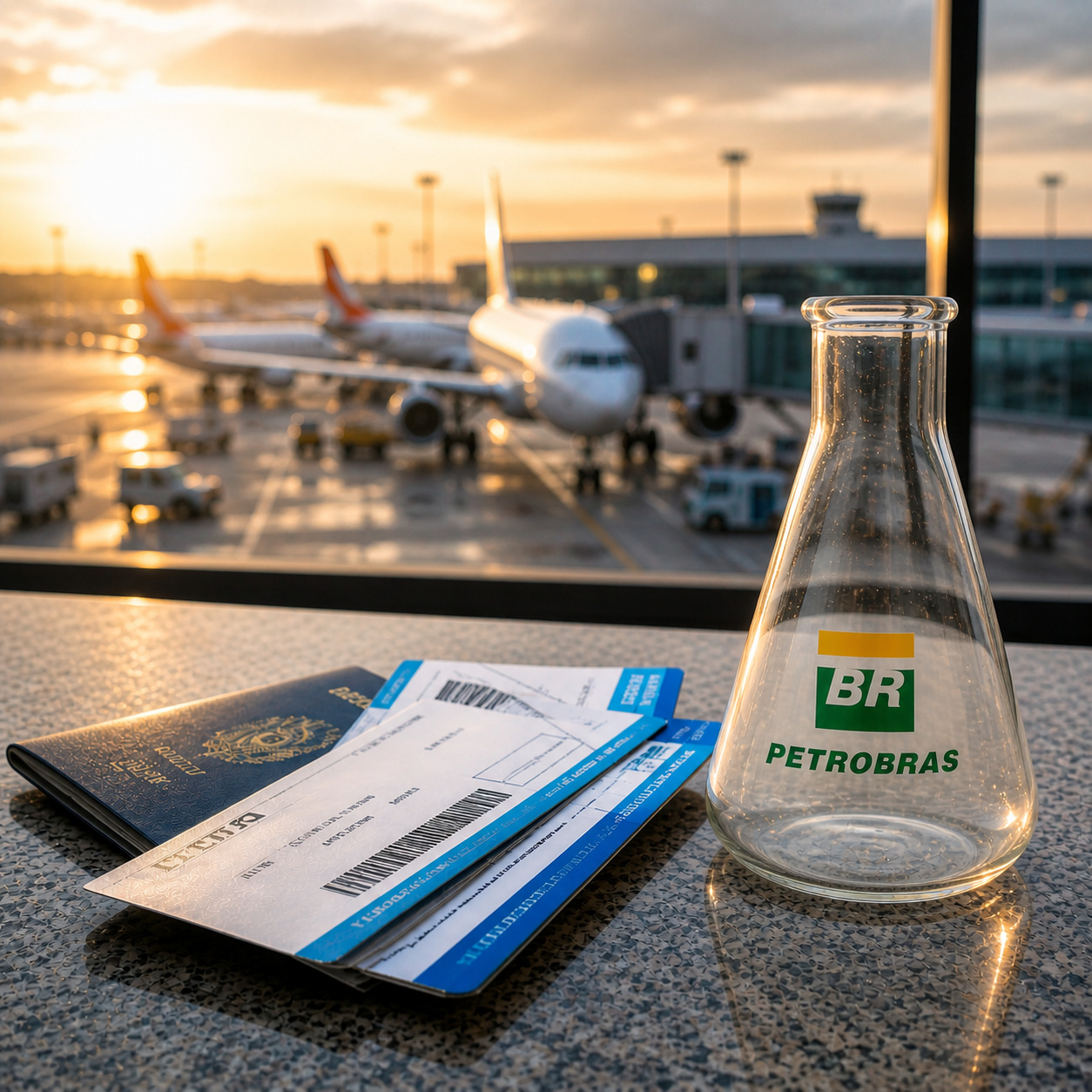

Petrobras’ aviation kerosene price hike pressures airfares; see how this impacts travelers and when prices are expected to rise
Petrobras announced this Friday (1st) an 18% increase in aviation kerosene, rapidly changing the scenario of the Brazilian airline sector. The readjustment, which represents about R$ 1 more per liter, came into effect at the beginning of May and is already putting direct pressure on airfare prices.
This move did not happen in isolation. In April, the state-owned company had already promoted an even more significant increase of 55%, accumulating a substantial rise in a short period. For those planning to travel, this indicates that travel costs are expected to gradually increase in the coming weeks.
Experts point out that fuel is one of the main components of airline costs. Therefore, any significant readjustment tends to be passed on to the consumer, albeit gradually.
-
Corn ethanol attracts R$ 23 billion in 21 new plants and prepares for a nearly 50% jump in Brazilian production by 2027, even with high interest rates.

-
A newly opened terminal in the middle of the Amazon has begun transporting soy and corn through Amapá, eyeing the queue of ships that is congesting the ports in the South.
-
Tesla injected an additional $250 million into the German factory, doubled the battery cell target, and opened its own production line for startups.
-
A 180-meter ship with a deck the size of a football field was christened to carry 25,000 tons of giant energy modules around the world.


Why aviation kerosene weighs so heavily on airfare costs
Aviation kerosene is one of the most expensive inputs in airline operations. In many cases, it can represent between 30% and 40% of airlines’ total expenses. This explains why price changes directly impact the final cost of airfares.
Furthermore, Petrobras’ pricing policy provides for monthly revisions, always at the beginning of each month. This model has existed for over 20 years and seeks to balance internal values with those practiced in the international market.
In practice, this means that Brazilian consumers are exposed to global oil variations. When there are international crises, such as geopolitical conflicts, the impact quickly reaches the pockets of those planning to travel.


Traveling amidst rising fuel prices requires attention to the new airline sector scenario
For those planning to travel, the moment requires more caution. The recent increase not only makes the direct cost of airfares more expensive but also alters the sector’s dynamics.
Airlines tend to adopt strategies to compensate for increased costs. Among them:
- Reduction of aggressive promotions and offers;
- Adjustments to flight frequency;
- Review of less profitable routes;
- Gradual increase in fares.
These changes may not be immediately perceived, but they begin to appear in the weeks following the readjustment.
Another important point is that demand for travel remains relatively strong, which facilitates the passing on of costs. In other words, even with higher prices, many people still need to travel, whether for work or leisure.

IBGE data shows temporary drop, but airfare trend is upward
Despite the scenario of increasing aviation kerosene, the most recent IBGE data indicated a 14.3% drop in the average price of airfares in the IPCA-15 for April.
This data may seem contradictory, but it has a technical explanation. Economist Luciana Rabelo, from Itaú, highlighted that the prices collected by IBGE reflect surveys conducted up to two months in advance. In other words, April’s values did not yet capture the effects of Petrobras’ recent increases.
In practice, this means that the observed drop is temporary. The trend, according to analysts, is for prices to start rising from May, following the increase in fuel costs.
This type of lag in indicators is common and can create a false sense of short-term stability.

Installment payment of the readjustment tries to soften impact, but does not prevent increase in airfares
Given the rising scenario, Petrobras announced a measure to mitigate short-term effects: the installment payment of the aviation kerosene readjustment.
Distributors and buyers will be able to divide the impact into up to six installments, with payment scheduled to begin in July 2026. The initiative was adopted within an exceptional context, marked by geopolitical tensions that raised oil prices.
According to the company, the measure seeks to preserve demand and prevent a sharp drop in the airline sector. Still, specialists are clear in stating that the increase in airfares will be inevitable.
Installment payment can alleviate the immediate impact, but it does not eliminate the structural increase in costs.
International factors drive up aviation kerosene prices and affect those who plan to travel
The recent increase in aviation kerosene is directly linked to the international scenario. The escalation of the conflict involving Iran, which began at the end of February, contributed to the rise in oil barrel prices.
This type of event has a global effect and directly impacts countries that follow international price parity, such as Brazil. Thus, external decisions end up influencing the cost of domestic airfares.
Furthermore, international markets tend to adjust prices more frequently. According to Petrobras, the readjustments observed outside Brazil were even more intense, which indicates that the impact could be even greater.
For those planning to travel, this reinforces the importance of monitoring not only the national scenario but also global events.
What to expect from prices for those planning to travel in the coming months
The scenario for the coming months points to a gradual increase in airfares. With the cost of aviation kerosene rising, airlines are expected to adjust their fares progressively.
Some already expected effects include:
- Lower availability of promotional tickets;
- Price increases on more sought-after routes;
- Higher fares during peak demand periods;
- Reduced competitiveness on less busy routes.
For those who need to travel, it’s ideal to plan ahead. Buying tickets in advance can help avoid higher prices.
It’s also worth considering alternatives such as flexible dates and secondary airports, which may offer more affordable fares.
Planning will be decisive for traveling cheaper amidst the rise
Given this scenario, planning becomes essential. The 18% increase in aviation kerosene, combined with the previous 55% rise, creates an environment of constant pressure on prices.
To minimize the impacts, some strategies can make a difference:
- Monitor prices frequently;
- Take advantage of mileage and loyalty programs;
- Avoid peak periods;
- Compare different airlines and routes.
Traveling will still be possible, but it will require more organization and attention to detail.
Consumers who adapt more quickly to market changes tend to find better opportunities, even in a rising scenario.
A new scenario for traveling with more expensive airfares in Brazil
The increase promoted by Petrobras marks an important change in the airline sector. The impact of aviation kerosene on airfares is expected to intensify in the coming weeks, directly affecting Brazilians’ pockets.
With higher costs and the influence of international factors, traveling becomes a decision that requires more planning and analysis. The trend is towards a market more sensitive to fluctuations and less predictable.
Still, with information and strategy, it is possible to reduce the impacts and continue to seize opportunities. Understanding how pricing works and monitoring Petrobras’ movements can be an important advantage for those who wish to travel without compromising their budget.
With information from VEJA.