






 Portuguese
  Spanish


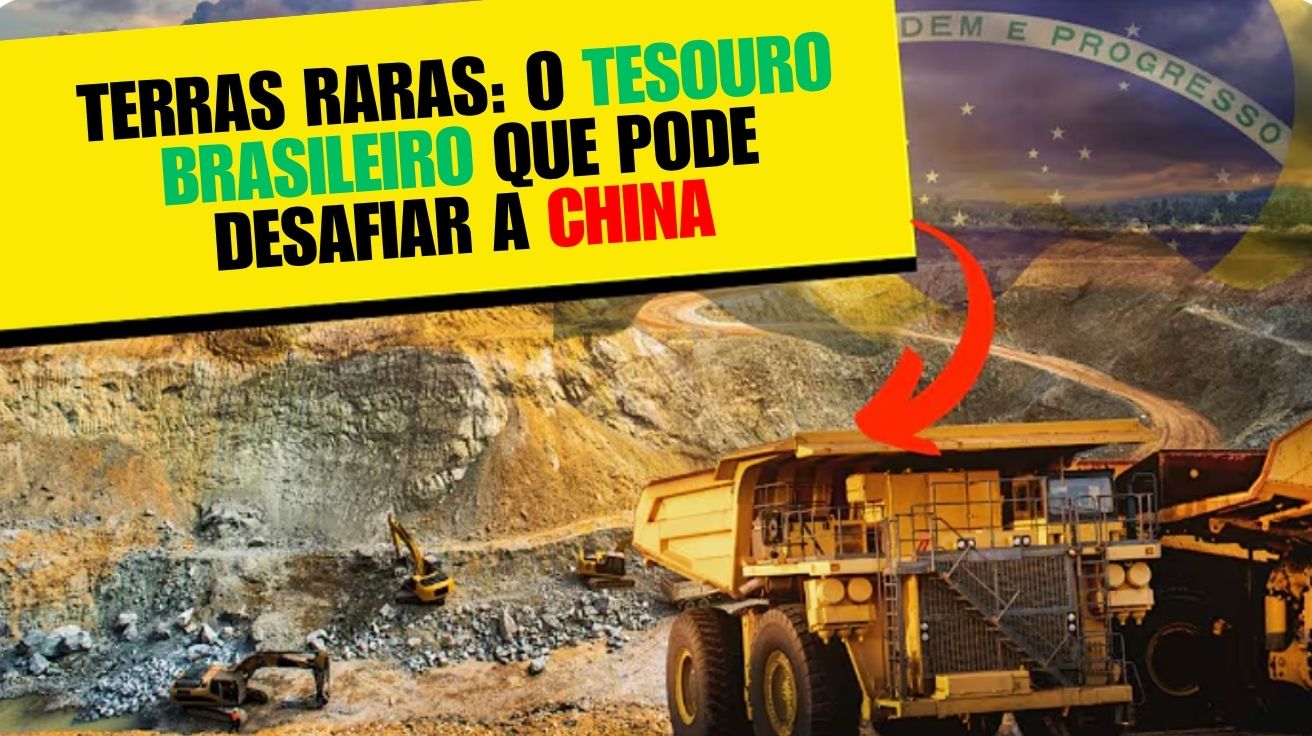


International Companies Intensify Investments in Rare Earths in Brazil, Attracted by Unexplored Mineral Potential and Global Search for Alternatives to Chinese Dominance. New Projects Advance with Public Support, Expanding Brazilian Leadership in the Strategic Sector of Critical Minerals.
Foreign companies are in a true race to explore rare earths in Brazil, driven by the growing global demand for these essential minerals and the urgency of diversifying suppliers outside China.
The country holds about 23% of the world’s reserves, second only to China, according to the United States Geological Survey.
The Brazilian government plans to announce on Thursday (12) a list of strategic mining projects eligible for financial support from the National Bank for Economic and Social Development (BNDES) and the Research and Projects Financing Agency (Finep).
-
As Engineering Jobs Decline in Brazil, Professionals Eye the U.S. with 186,500 Annual Openings and Salaries Up to $170,000

-
Brazilian Innovator Develops Concrete Blocks from Recycled Plastic, Eliminating Mortar and Reducing Construction Costs
-
World’s Most Powerful MRI Machine in France, Weighing 132 Tons and Generating 11.7 Tesla Magnetic Field, Offers Unprecedented Clarity of the Human Brain
-
Brazilian Woman Builds House with Recycled Plastic Bottles, Halving Construction Costs in the Process


This selection could mobilize almost R$ 5 billion, focusing on proposals aimed at the exploration and refining of rare earth elements.
Global Demand Presses for Sources Outside China
With China controlling about 90% of the world’s processing capacity for these minerals, countries like the United States, Germany, France, South Korea, and Japan are seeking more reliable suppliers for national security reasons.
This scenario has increased interest in Brazilian projects, mainly due to geological similarities with Chinese deposits.
“The world has realized that it cannot depend on a single country,” said Jose Luis Gordon, director of productive development, innovation, and foreign trade at BNDES.
Among the most promising projects are those of Aclara Resources, the Australian Viridis Mining and Minerals, and Meteoric Resources.
All have early-stage operations in the country and aim to transform Brazil into a sustainable production hub.
Projects Advance with International Support and Local Refining
Aclara Resources has already begun installing a pilot plant in Goiás, focused on extracting heavy rare earths such as terbium, dysprosium, and neodymium.
With an estimated investment of R$ 2.8 billion, the company intends to supply a future permanent magnet plant in South Carolina (USA), contributing to strategic sectors such as wind energy and electric mobility.
Viridis, in turn, operates in Poços de Caldas (MG) and is negotiating with state banks and development agencies from various countries.
Its goal is to diversify funders and establish a selective refining unit, still rare outside Chinese territory.
Meanwhile, Meteoric Resources bets on the competitiveness of its operational costs, considered close to those practiced in China, but with more environmentally sustainable techniques.
Production Chain Still Depends on Refining and Structuring
Currently, the only rare earth producer in Brazil operating is the Serra Verde Group, also based in Goiás.
The company has American investors and maintains sales contracts with Chinese buyers.
However, the group is in negotiations with Western countries to change this dependency profile.
Experts warn that, although Brazil has a geological advantage, the great challenge still lies in the structuring of the rare earth production chain in Brazil, especially in refining and creating a transparent pricing market outside China.
The consulting firm Wood Mackenzie estimates that current prices are inadequate to sustain Western production.
To make these projects viable, prices would need to at least double, in addition to having government incentives to mitigate the high risks for investors.
Sustainability Is a Competitive Differential of New Projects
The new wave of exploration seeks to differentiate itself from the Chinese model through environmentally correct practices.
The use of backfill instead of dams, waste treatment, and plans for rehabilitating degraded areas are part of the model proposed by mining companies.
“We are doing everything with environmental responsibility.
Brazil is a geological copy of China, but we want to be a reference in green mining,” said Ramón Barúa, CEO of Aclara, in an interview with the international press.
Public Support Can Accelerate Brazilian Mineral Independence
In addition to direct financing, BNDES is exploring the mobilization of resources from the National Fund for Climate Change and potential partnerships with institutions like the Japan International Cooperation Agency, provided that the projects include refining stages in Brazil.
The intention is to create internal added value and consolidate the country as a reliable supplier in the global scenario.
The progress of rare earth elements in Brazil represents not only a billion-dollar economic opportunity but also a strategic repositioning in the international geopolitics of critical minerals.
The combination of geological potential, governance, and sustainability could be the differentiating factor to break Chinese hegemony.
Do you believe that Brazil will be able to build a complete and sustainable supply chain for rare earths, gaining relevance in the global geopolitical and technological landscape?


Vai movimentar cinco bilhões que serão torrados em viagens, hospefagem e turismo internacional. Saude, educação, saneamento e segurança não importam. Estão dando de mão beijada nossas riquezas.
Jamais, o Brasil será competente o suficiente, por um motivo muito simples: não tem tecnologia de beneficiamento, por outro motivo mais simples: as pessoas escolhem suas profissões ou cursos pela exclusão das ciências exatas. Se tem matemática: “Deus me livre, tô fora” Este é o discurso mais “inteligente” dos bazucas. Nem vou falar que os investimentos pífios do Br em ciências, hein? É uma piada, todos sabem disso.
Veja que todas as mineradoras são estrangeiras e pior o dinheiro é do BNDES. Kkkkkk durma com esta poluição mental!
A empresa brasileira de geologia Fenrir Minerals do Brasil, promete colocar o Brasil frente a china. O foco da empresa está no semiárido, isso, no nordeste do Brasil. Estudos Geológicos não tão recentes,feito pela empresa, apontam um enorme depósito com teores médios de 14.6%. O que se comprovado os teores, colocaria o Brasil estrategicamente em primeiríssimo lugar no fornecimento de óxidos de terras raras leves e pesados