






 Portuguese
  Spanish


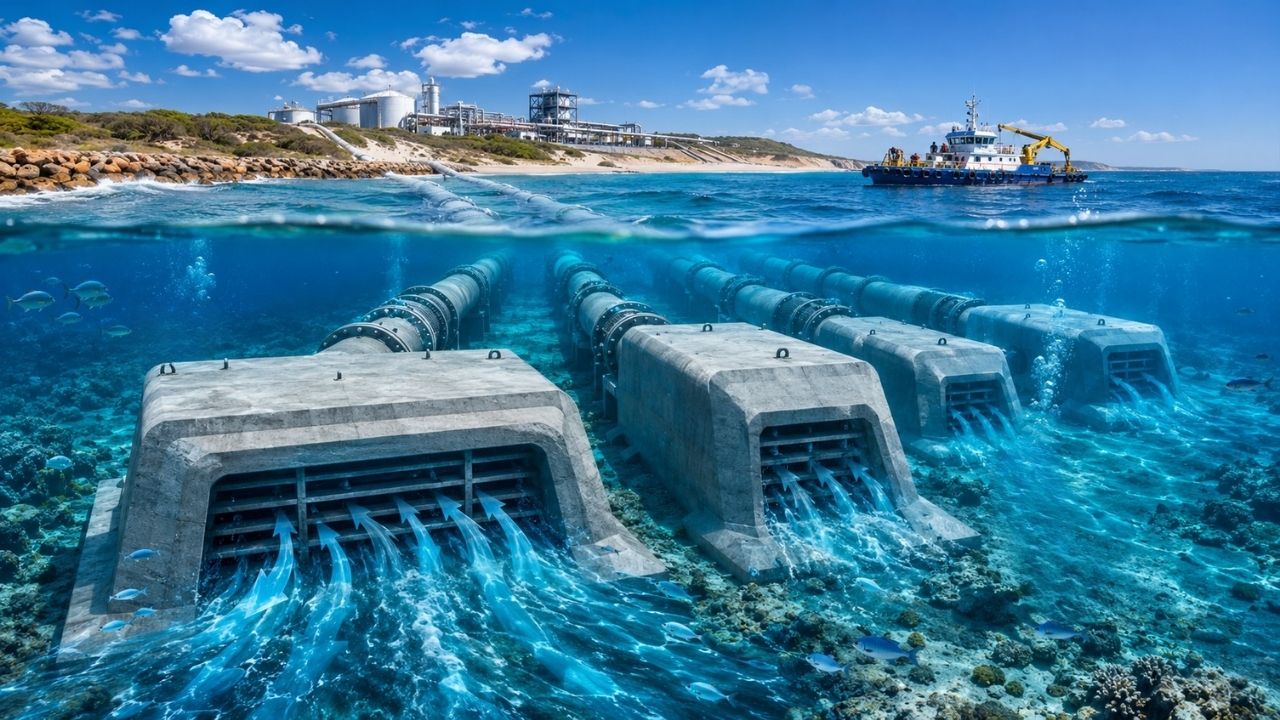


Desalination in Belmont advances with ocean intake on the seabed, pre-cast caissons 800 meters from Nine Mile Beach, tunnel under beach and seabed, and goal to transform saltwater into drinking water for the Lower Hunter, delivering 30 megaliters per day starting in 2028.
The desalination in Belmont, Australia, entered a decisive stage in 2026, with the advancement of maritime works that will install an ocean intake on the seabed, about 800 meters from Nine Mile Beach. The system will capture saltwater and take it to an onshore plant to produce drinking water.
According to the information, when completed in 2028, the $530 million plant is expected to produce up to 30 megaliters of drinking water per day, equivalent to 30 million liters daily. This volume represents about 15% of the average daily demand of the Lower Hunter, reducing dependency on rainfall and dams.
Concrete structures will be installed on the seabed

The offshore work includes the installation of a direct intake structure in the ocean. For this, pre-cast caissons will be used, concrete pieces positioned on the seabed to form part of the system that will draw in the saltwater.
-
Facing high rent, couple transforms parents’ garage into a fully functional apartment, creating a complete home at a fraction of the market cost.

-
MIT Scientists Develop Method to Transform CO₂ into a Construction Ally, Boosting Cement Strength by 13% in 24 Hours for More Sustainable Infrastructure

-
Canadian City Builds 8 Tiny Homes in 72 Hours for Homeless Youth, Plans 40 Affordable Houses for Female-Led Families Amid Housing Crisis

-
45-year-old Brazilian mother of 9 and grandmother of 12 receives 27 m² house made from recycled plastic, built in 15 hours with interlocking blocks and a recycled roof.


This ocean intake is the starting point of the desalination chain. The seawater will be captured offshore, conducted through a tunnel pipeline, and sent to the onshore treatment unit.
The ocean intake will be one of the central pieces of desalination in Belmont, as it is through this that the saltwater will begin its journey to the plant. Installed on the seabed, near Nine Mile Beach, the structure is designed to capture the necessary volume and allow the production of drinking water for the Lower Hunter.
The jack-up barge type maritime platform has already been positioned approximately 800 meters from Nine Mile Beach and the Belmont plant site. This structure allows maritime works to be carried out with more stability.
The most delicate point is that the operation takes place in an area shared by beach, sea, navigation, leisure, and marine life. Therefore, Hunter Water states that the stage will be carried out with a focus on safety and minimal interference possible.
Tunnel will connect the ocean intake to the onshore plant

After the installation of the intake structure, the project plans the construction of a tunnel under Nine Mile Beach and the seabed. This tunnel will be responsible for connecting the ocean intake to the desalination plant in Belmont.
The solution avoids a more direct intervention on the beach surface and creates an underground link between the sea and the treatment station. In practice, the saltwater will be captured in the ocean and transported beneath the sand and seabed to the plant.
Hunter Water describes this phase as one of the most complex and technical of the project. It is not just about digging a tunnel, but integrating maritime works, intake structure, piping, and potable water treatment.
It is heavy engineering to solve a simple problem: ensuring water even when the rains fail. The system aims to transform the ocean into a complementary supply source for the region.
Plant promises 30 million liters of water per day

The Belmont plant is designed to provide up to 30 megaliters per day when completed in 2028. Converted, this volume reaches 30 million liters of drinking water daily.
According to Hunter Water, this production should represent about 15% of the average daily demand of the Lower Hunter. The idea is to complement the current system and reduce dependency on reservoirs, dams, and rainfall patterns.
Desalination appears as protection against drought and climate variability. In coastal regions, this type of solution can gain ground when traditional sources face greater pressure.
Even so, the plant does not eliminate the need for water planning. It functions as another source in the system, adding to consumption management, watershed preservation, and efficient water use.
Belmont was chosen for its proximity to the ocean

Hunter Water states that Belmont was chosen for offering good integration with the existing water network and proximity to the sea. The fact that the land already belongs to the company also weighed in the decision.
This combination reduces obstacles for a project of this scale. A desalination plant needs to be close to the ocean, but also connected to a network capable of distributing the treated water to the population.
The company also states that the location should cause minimal impact on the community and the surrounding environment. This point is important because coastal projects often generate concern among residents, beachgoers, and marine-related groups.
The choice of location shows that a plant of this type does not depend solely on technology. It requires strategic location, integration with existing infrastructure, and care for the coastal environment.
Intake will have low speed to protect marine animals
The intake structure was designed with low speed, according to Hunter Water. The goal is to allow marine creatures to avoid being drawn into the system.
This care is central in desalination projects, because direct ocean intake needs to balance water security and environmental protection. The lower the impact on marine life, the greater the chance of project acceptance.
Another point mentioned is the disposal of brine, the more concentrated residue left after the salt removal process. In the Belmont project, it will be returned to the sea through the existing ocean outfall at the nearby wastewater treatment plant.
The promise of potable water without relying on rain comes with a clear environmental requirement: to capture, treat, and return waste in a controlled manner, without turning the water solution into a new coastal problem.
Community will be informed about exclusion zones and vessels


With the offshore platform in operation, Hunter Water states that it will continue to inform the community about offshore activities. This includes exclusion zones, vessel movements, and sea work.
The company says it is working with partner John Holland to complete the phase safely and with minimal disruption to beach users and marine life. Communication with navigation, recreation, and coastal use groups is part of this stage.
This dialogue is necessary because the work takes place in an area where different interests intersect. There are swimmers, fishermen, vessels, recreational users, and residents attentive to the impact of the intervention.
In maritime works, engineering does not happen in isolation from the community. Each movement at sea can alter local routines, even if temporarily.
Desalination enters the strategy against drought and variable climate
The Belmont plant is presented as a way to diversify the supply sources of the Lower Hunter. The region seeks to reduce exposure to drought periods and changes in rainfall patterns.
In this context, desalination gains strength by producing drinking water from the sea. It is a source that does not directly depend on reservoir volumes or the regularity of precipitation.
The project, however, requires high investment, complex construction, and environmentally monitored operation. Therefore, the decision to proceed with a plant of this size involves engineering, cost, water security, and public acceptance.
In the end, Australia bets on concrete structures on the seabed, a tunnel under the beach, and desalination technology to transform saltwater into supply.
Do you think coastal regions at risk of drought should invest more in such plants, or do the cost and impacts still call for caution? Share your opinion.





What happens to the backwash waste from the membranes Where is it dumped. What is the power usage?
Like Algave in Portugal
And Porto Santo Island.
What happens to the salt is it wasted or refined into enable salt.