





 Portuguese
  English
  Spanish
  5 min of reading
  0 comments


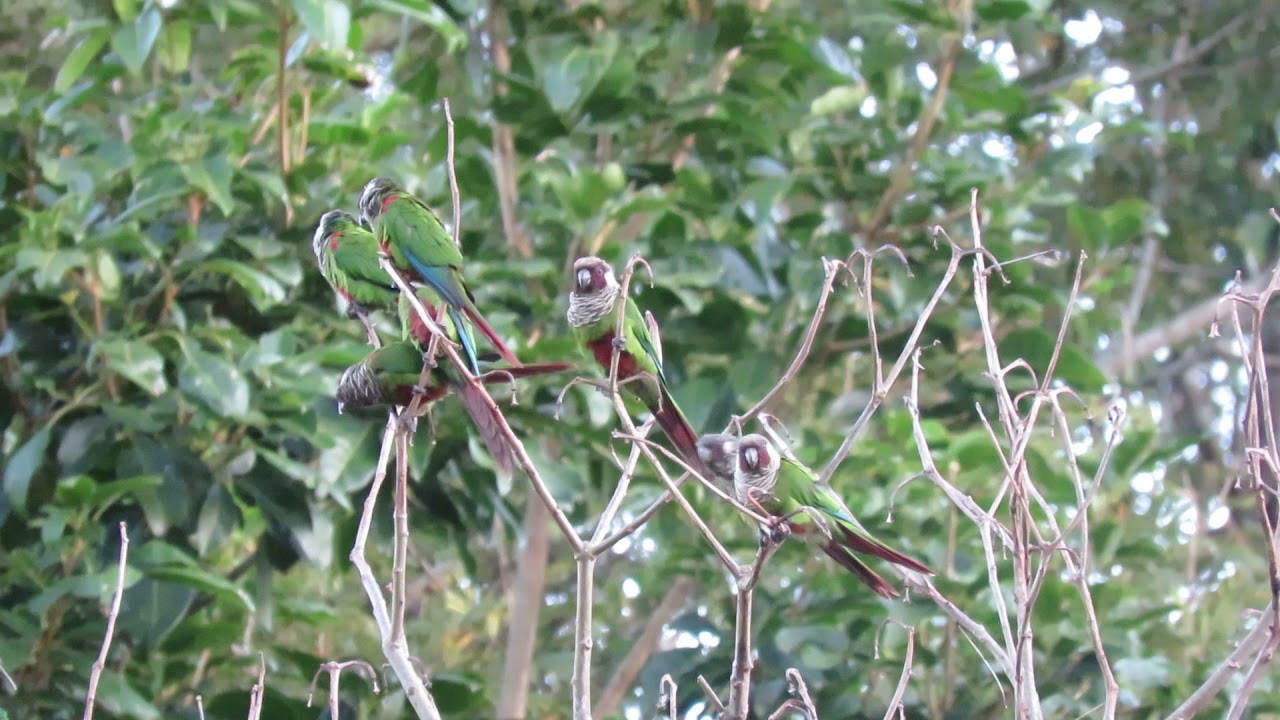
Rare bird returns to breed in the Northeast after more than a century without records in the region and marks historical advancement in conservation.
On March 27, 2026, at the Serra das Almas Natural Reserve, researchers affiliated with Caatinga Association recorded an event considered historic for Brazilian biodiversity: the birth, in the wild, of chicks of the dirty-faced parakeet, a species scientifically known as Pyrrhura griseipectus. According to information released by the organization itself, the most impactful data is that the species had not reproduced in the wild in the region for over 100 years, being considered locally extinct in this specific territory of the Caatinga.
This record ends an interval of more than a century without documented natural reproduction and represents one of the most relevant recent advances in the conservation of endangered birds in Brazil.
Species was not globally extinct, but had disappeared from the region
Despite the appeal of “return of an extinct species”, the case requires technical precision. The dirty-faced parakeet was never considered globally extinct, but rather a critically endangered species, with extremely reduced and fragmented populations.
-
7,000-year-old bonfire in southern Israel reveals a rare scene from the past and uncovers ostrich eggs prepared by nomads in the desert.
-
Gigantic megalithic mound of 42 meters emerges during housing construction in Lublin and reveals a Neolithic megadendron with a moat of nearly 30 meters.
-
The surprising fact: 1 in 3 Brazilians doubts the arrival of man on the Moon, while the majority still believes in the historic achievement, according to a Datafolha survey with more than 2,000 people.

-
Scientists have finally discovered where the plastic that disappeared from the oceans went, and the answer is frightening: it fragmented into such tiny particles that they became invisible and now there are 27 million tons of nanoplastic just in the North Atlantic.


Historically, the bird had already disappeared from various areas of the Northeast, including regions where it was once common. The absence of records for more than a century in Serra das Almas led to the classification of local extinction.
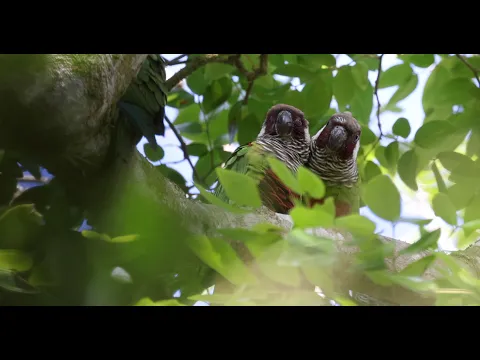

This type of regional disappearance is common in species pressured by habitat loss, illegal trafficking, and environmental degradation.
Reintroduction project started years ago was decisive
The return of the species to the region did not occur spontaneously. The process was a direct result of a structured conservation program initiated years earlier.
Starting in 2024, the Caatinga Association began a reintroduction project for the species into the wild, using individuals raised under controlled management. These animals were gradually introduced into the natural environment, with constant monitoring.
The reproduction recorded in 2026 is the first concrete evidence that the reintroduced population was able to adapt, survive, and initiate a new natural cycle.
Chicks were born in nesting boxes installed in the reserve
The reproduction record occurred through a monitoring system with artificial nesting boxes installed in the reserve area.
These structures are used to simulate natural cavities, places where birds usually nest. During monitoring, researchers identified dozens of eggs distributed in different boxes. In total, 33 eggs were recorded, which gave rise to the first chicks born in the wild in the region after more than a century.
This type of strategy is common in bird conservation projects, especially in environments where the availability of natural nesting sites is limited.
Species characteristics help explain its vulnerability
The dirty-faced parakeet is a small bird belonging to the parrot family, the same as parrots and macaws. Its natural distribution has always been restricted to the Brazilian Northeast, especially in Caatinga areas.
The species depends on specific environments to survive, with vegetation adapted to the semi-arid climate and seasonal food availability.
This ecological specialization makes the species extremely sensitive to environmental changes, such as deforestation and habitat fragmentation. Additionally, the trafficking of wild birds has historically contributed to the reduction of populations.
The Caatinga is one of the most threatened biomes in Brazil
The scenario where the species returned to breed is also a crucial factor in understanding the importance of the event. The Caatinga, an exclusively Brazilian biome, faces high levels of degradation. Agricultural expansion, intensive use of natural resources, and desertification have reduced areas of natural habitat.

The recovery of an endangered species within this context indicates that conservation actions can yield concrete results even in pressured environments.
The Serra das Almas Natural Reserve, where the record occurred, is a protected area that plays a strategic role in preserving regional biodiversity.
Reproduction of the dirty-faced parakeet in the wild indicates ecological restoration
The mere presence of a species is not enough to indicate population recovery. The most important indicator is the ability to reproduce in a natural environment.
The birth of chicks demonstrates that the reintroduced individuals were able to:
- find food
- establish territory
- form breeding pairs
- complete the reproductive cycle
This set of factors indicates that the environment has returned to offer minimum conditions for the species’ survival.
Continuous monitoring will be essential for the success of the project
Despite the progress, the process is still in its early stages. The consolidation of the population depends on continuous monitoring. Researchers continue to monitor the individuals, assessing survival rates, dispersion, and reproduction over time. The definitive success of the project will be measured by the population’s ability to sustain itself without direct human intervention.
This type of monitoring can take years or even decades, especially in species with slow population growth. The return of the species to Serra das Almas reinforces the role of science-based conservation initiatives and proper management. Projects that combine habitat protection, controlled breeding, and reintroduction have proven effective in different parts of the world.

In Brazil, where biodiversity is among the highest in the world, this type of initiative becomes even more relevant in the face of growing environmental pressures. The record of the reproduction of the dirty-faced parakeet in the wild after more than a century without occurrences in the region represents a significant milestone for the conservation of Brazilian biodiversity.
More than the return of a species, the event demonstrates that well-structured strategies can reverse processes of local disappearance and restore populations in natural environments.
In a global scenario of accelerated biodiversity loss, cases like this show that science-based interventions and planning can produce concrete results, even in challenging environmental contexts.









Seja o primeiro a reagir!