





 Portuguese
  English
  Spanish
  4 min of reading
  0 comments


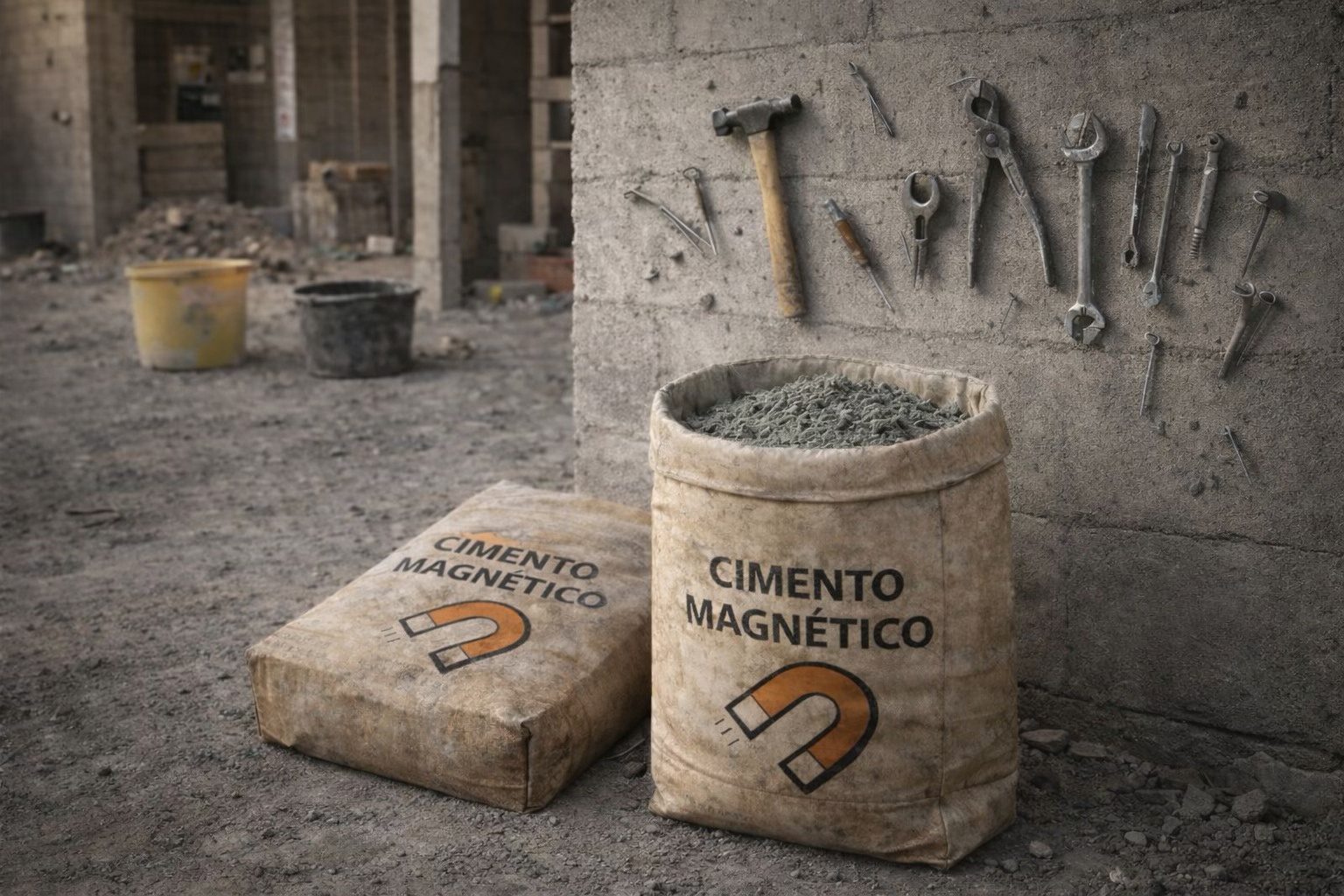
A Young Innovator Created Magnetic Cement That Can Transform Coating and Walls in Construction, Paving the Way for a New Era in the Engineering Industry. Learn How This Technology Works, Its Impacts, and the Future of Construction.
A revolution in construction begins at the wall of your house! Imagine no longer needing to drill holes in the walls to hang a picture, utensils, or tools, while also transforming any space with more flexible, smart, and integrated solutions. This is the prospect that a new type of magnetizable cement is bringing to the world of construction and engineering.
Created by ayoung Argentine inventor, this material promises to turn ordinary walls into functional surfaces, opening possibilities that go beyond simple traditional coating.
ARTICLE CONTINUES BELOWSee also
Discover the 5 types of structures in civil construction that can transform your project with greater safety, efficiency, economy, and architectural freedom.

Construction industry on alert: study projects how the end of the 6×1 scale can increase labor costs and raise property values

In just 5,660 kilometers of pipes crossing 13 countries, Africa is building the largest pipeline in its history — and the final destination is Europe.

China advanced on Brazilian highways through the back door and now participates in a concessionaire that bills R$ 1.7 billion per year, controlling over a thousand kilometers of roads in SP.
 View this photo on Instagram




Magnetic Cement: What Makes This Material So Different?
The innovative material has been named Ironplac and incorporates magnetizable components directly into the mixture of cement, allowing the surfaces that use it to act as true “interactive boards” for objects with magnets.

This means that, after being applied and cured, any magnetized item can be fixed, repositioned, and removed without the need for a hammer, screws, or plugs and without leaving unwanted marks.
This type of material falls into the category of advanced coatings with functional properties, aligned with other trends in engineering and construction that seek more versatile and efficient materials.
How It Works in Practice: From Traditional Construction to Smart Application
The application process of the magnetizable cement is similar to that of conventional plaster or finishing mortar.
It can be used in “wet” works (like plasters and rough coats) or in dry work systems, expanding its use in residential, commercial, industrial, and educational environments.
Once dry, the surface responds only to the presence of high-power magnets, such as those used in household supports and accessories, tools, boards, and decorative objects, without generating active magnetic fields or interfering with electronic devices.
Why This Matters for Engineering and the Construction Industry
The technology behind this magnetic cement is aligned with broader research on magnetizable materials applied to construction, such as the use of magnetic particles to reinforce the mechanical properties of concrete or other composites.
Scientific studies indicate that the presence of ferrous elements in cement can introduce measurable magnetic properties to the material, even influencing its interaction with external fields.
Moreover, the adoption of new materials in the construction industry is among the main global trends to make engineering more efficient and sustainable, such as integrating resources that expand functional utility without compromising structure.
Comparing with Other Innovations in Smart Coatings
This magnetic cement adds to other emerging solutions in the sector. For example:
- Ceramic tiles with magnetic coating already allow for quick assembly and installation without mortar in specific environments.
- Material technologies that regulate properties such as density, stiffness, and strength are increasingly being studied for hybrid applications in construction.
These trends show that modern engineering is evolving towards systems that combine structural performance with practical functionality and modularity.
The Creator Behind the Idea: A Young Vision for a Traditional Sector
The young Argentine inventor behind this solution studied industrial engineering and developed the material after observing common limitations in built environments, where even simple tasks, like hanging a picture, require permanent interventions on the walls.
His focus was to develop a composite that could be integrated into cement and allow versatility in organizing interior spaces.
The technology has undergone testing in real contexts, where it was possible to attach tools, decorative objects, and utensils with strong magnets, without the use of holes or plugs.
Where This Technology Can Go
The novelty is not yet commercially available, but it is already generating anticipation among engineers, architects, and companies in the construction industry.
The inventor is moving forward with international patent applications and seeking industrial partnerships and funding to scale production.
Materials experts anticipate that magnetic coatings and other smart materials could significantly change the way we design spaces, taking a step beyond traditional utility to solutions that combine function, aesthetics, and interactivity.
From Picture Frames in the Living Room to the Future of Construction
This magnetic cement is a clear example of how disruptive innovation can arise from simple ideas with wide applications, impacting both people’s daily lives and established practices in engineering and the construction industry.
The technology can not only eliminate the need for traditional tools but also open up space for more adaptable, flexible, and intelligent environments, a transformation that goes far beyond aesthetic coating.
Did You Enjoy This Revolution in Construction? Leave a Comment Below or Share This Article to Spread This Idea with Your Colleagues and Friends!








-

-

4 people reacted to this.