Portuguese
  Spanish


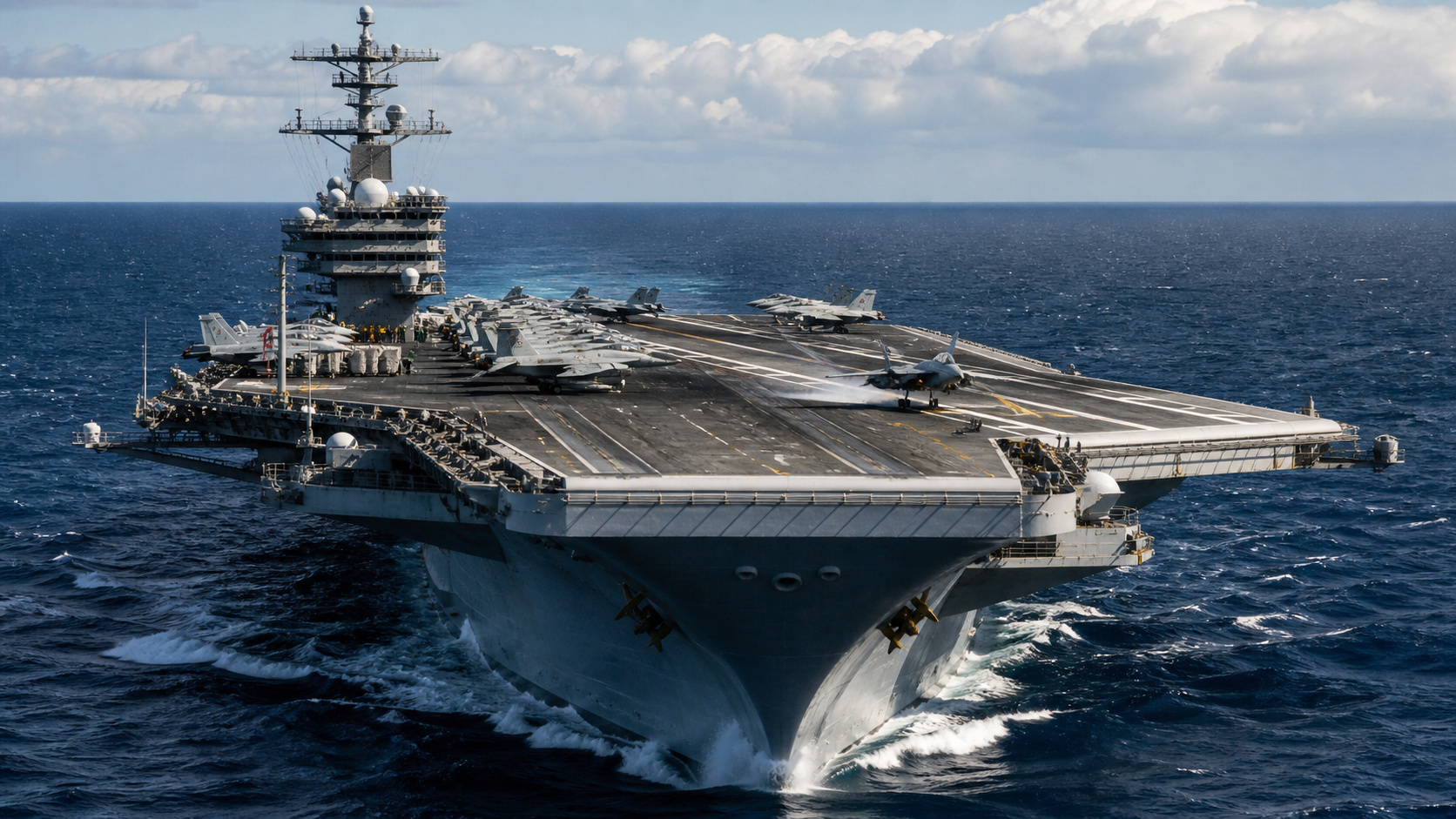

The aircraft carrier USS Dwight D. Eisenhower concluded sea trials ahead of schedule, moved closer to returning to active service, and reinforces the United States fleet at a time of high demand for naval presence in various regions of the world
The nuclear warship USS Dwight D. Eisenhower, an aircraft carrier weighing over 100,000 tons, concluded its sea trials ahead of schedule and moved closer to returning to United States Navy missions.
The information was released by the United States Navy, a military branch of the United States. The ship underwent 15 months of maintenance at Norfolk Naval Shipyard in Virginia, including repairs, upgrades, and modernization of important systems.
Known as IKE, the aircraft carrier is one of the major assets of the American fleet. Its return is important because this type of ship functions as a floating airbase, capable of transporting aircraft, crew, and military force to distant regions.
-
CMA CGM Launches World’s Largest Clean-Fuel Container Ship: 400 Meters Long, 24,212 Containers, LNG-Powered

-
Norwegian Barge Transformed into Floating Structure in Copenhagen Highlights Technical Challenges of Retrofitting Vessels

-
At 28, a Female Shipbuilder Restores a 30-Meter Yacht from 1962, Highlighting Women’s Often Overlooked Contributions in Shipyards
-
Belgian Port to Install Shore Power for Cruise Ships by 2027, Cutting Dock Emissions by Up to 5% and Meeting EU Regulations


15-month overhaul prepares IKE to return to active service
The USS Dwight D. Eisenhower underwent scheduled maintenance called Planned Incremental Availability. In simple terms, it was a major technical stop to prepare the ship for safe operation.
This phase included repairs, parts replacement, inspections, and upgrades. The objective was to keep the aircraft carrier in condition to fulfill modern missions and continue serving the fleet for longer.
Maintenance also helps preserve the warship’s lifespan. An aircraft carrier of this type can operate for about 50 years but needs to undergo thorough overhauls throughout that period.
With sea trials concluded ahead of schedule, IKE has taken an important step toward returning to operations. The ship’s next destination has not yet been revealed.
Tests concluded ahead of schedule help relieve pressure on the naval fleet
The early delivery is noteworthy because the United States Navy maintains ships spread across various regions of the world. When an aircraft carrier returns to the fleet, the pressure on other vessels can decrease.


IKE is important because ships of this size are not just for transport. They carry aircraft, crews, defense systems, and rapid response capabilities in tense situations.
The early completion also shows progress in the shipyard’s work. The project was the second aircraft carrier service completed on or ahead of schedule at the Virginia shipyard.
The USS George H.W. Bush, identified as CVN 77, completed maintenance in November 2024. This track record strengthens the fleet’s ability to keep ships available when demand increases.
More than 4,000 people per day worked on the nuclear aircraft carrier
The overhaul of the USS Dwight D. Eisenhower involved a massive operation. More than 4,000 people worked on the ship every day, including shipyard teams, military personnel, and contractors.
The project totaled over 25,000 man-days. The organization of tasks also allowed for saving approximately 2,000 man-days, without removing necessary maintenance steps from the process.
The United States Navy, a military branch of the United States, reported that the project superintendent, Cmdr. Jason Downs, credited the NNSY teams, the ship’s crew, and contractors for getting IKE ready to return to the fleet.
This type of service requires constant coordination. Many tasks took place with the ship at the pier, while the shipyard’s dry dock was undergoing a long-term upgrade program.
Propulsion, shaft, and internal systems underwent important inspections
Part of the maintenance affected areas essential for the warship’s operation. Teams installed a main seawater valve on an aircraft carrier that was in the water.
Inspections were also carried out on high-pressure turbine components. In simple terms, these pieces of equipment aid in the ship’s internal operation and need to be in good condition for long missions.
Another important point was the underwater inspection of the aircraft carrier’s shaft systems. The shaft is the part connected to the ship’s movement in the water, so any failure can affect operation.
These checks should help guide future dry dock work. This means the Navy will be able to better plan new maintenance stages when the ship needs to come out of the water.
Reinforced catapults increase safety in air operations
IKE’s catapults also received attention during the overhaul. This system is used to launch aircraft from the aircraft carrier’s deck.

A warship’s runway is much shorter than an airport’s runway. Therefore, the catapult provides the necessary thrust for the aircraft to take off safely.
Teams carried out inspections and structural repairs on this system. This work was considered important to increase the lifespan of the aircraft launch equipment.
The improvement in catapults has a direct impact on the ship’s mission. Without this system functioning well, an aircraft carrier loses part of its ability to operate aircraft at sea.
Fire during maintenance injured three sailors, but they returned to duty
During the maintenance period, there was a small fire in mid-April. Three sailors were injured in the incident.
The three returned to duty after the incident. The situation did not prevent the completion of maintenance or the early finalization of sea trials.
The case shows how an overhaul of this magnitude involves risks. Even while docked at the shipyard, a nuclear-powered aircraft carrier brings together complex systems, many teams, and simultaneous work.
Nevertheless, the project advanced and delivered the ship closer to its return to active duty. This result is significant because IKE remains a central asset of the American naval force.
IKE’s return gains significance in a scenario of global pressure for aircraft carriers
The USS Dwight D. Eisenhower is one of the main ships of Carrier Strike Group 2. This group brings together ships, aircraft, and teams prepared to act together in military missions.
Cmdr. Jason Downs summarizes the importance of the aircraft carrier for the United States. A warship of this size represents not only military strength but also strategic presence in sensitive regions.
With tests completed ahead of schedule, IKE is closer to reinforcing the fleet. Its return once again highlights a nuclear-powered aircraft carrier of over 100,000 tons, after 15 months of maintenance and a major modernization operation.
The return of the USS Dwight D. Eisenhower shows how the United States Navy tries to maintain its response capability in a scenario of high demand for ships. The early completion of tests, the reinforced catapults, and inspections of critical systems give new life to the aircraft carrier.
And you, do you think the return of a nuclear ship of this size increases military tension in the world or merely demonstrates the defense strength of the United States? Leave your opinion in the comments and share this publication with those who follow military technology and geopolitics.