





 Portuguese
  English
  Spanish
  4 min of reading
  0 comments



An Alarming Report Indicates That NASA Is Aging and Lacking Adequate Funding, Facing an Unsustainable Path for the Future of Space Missions
NASA, with its 66 years of history, is facing a crisis that could jeopardize its role as a world leader in space exploration. A report recently released by the National Academies of Sciences, Engineering, and Medicine, titled “NASA at a Crossroads,” warns that the agency is increasingly relying on aging infrastructure and is having difficulty retaining talent. This raises concerns that NASA is on an unsustainable path, unable to keep pace with its ambitions.
The report was prepared by a committee of aerospace experts after 14 months of work and 25 discussion sessions. It highlights that NASA, which was once a symbol of technological advancement during the Apollo era, now faces challenges that could compromise its future.
With the retirement of veteran engineers and the migration of others to private sector companies, the agency is losing some of its most qualified workforce. Furthermore, the maintenance of its buildings and equipment has been deferred, increasing the risk of failures in future operations.
-
Giant structures 14 meters beneath Egypt are revealed by satellites and expose a millennia-old secret buried in Buto.
-
Children have been making clay pieces for 15,000 years in Southwest Asia, and fingerprints preserved on 142 ornaments helped archaeologists prove this.

-
New semi-autonomous legged robot technology challenges the limitations of space exploration by operating almost without human intervention on the Moon.

-
Super toxic red mineral found in the double burial of two women aged 1,900 years near the banks of the Dnieper River in Ukraine.


The main author of the report, Norman Augustine, former CEO of Lockheed Martin, stated that NASA is failing to plan strategically. “The agency prioritizes short-term missions while neglecting what will determine its long-term success,” he said at a press conference on Tuesday.
Although the relentless nature of space operations demands focus on immediate missions, Augustine warns that NASA’s future could be at risk if changes are not made.
NASA Funding
One of the major obstacles highlighted by the report is inadequate funding. Although NASA’s budget has grown in recent years, it has not kept pace with rising costs as missions have become more complex.
Today, the agency has a budget of approximately US$ 25 billion, but according to the report, this is insufficient to cover the proposed set of missions. Augustine suggests that NASA could consider canceling or postponing some of these missions to focus resources on more strategic areas like technology and infrastructure development.
This is a recommendation that may be difficult to implement, especially since a significant part of NASA’s identity and prestige is tied to its spectacular missions.
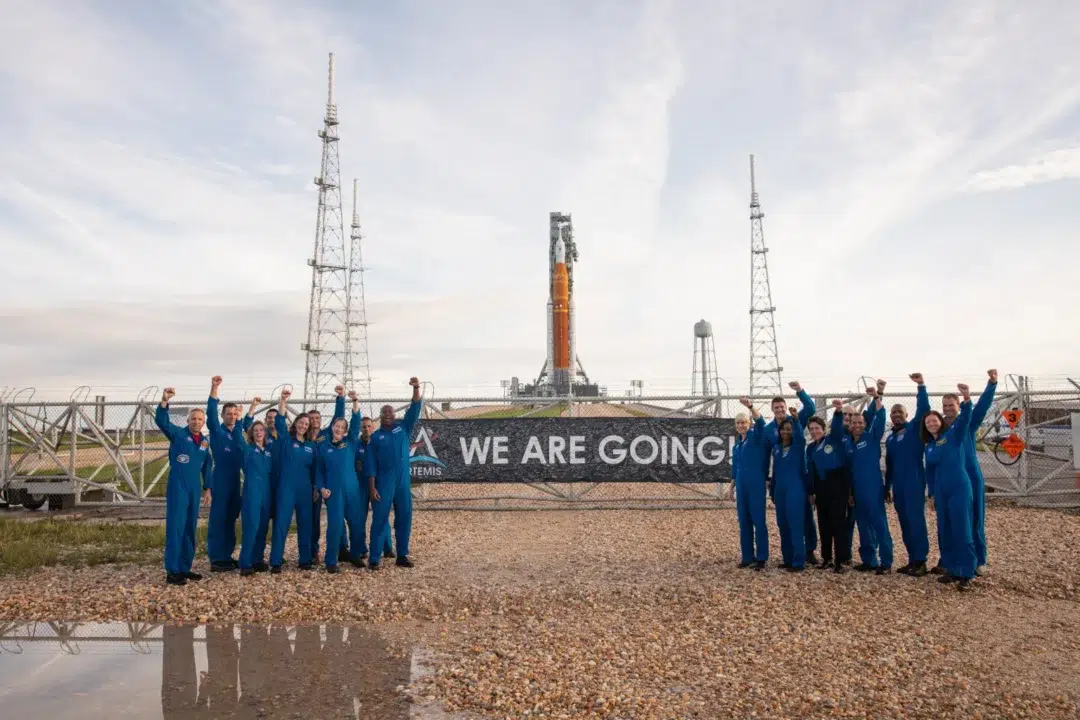
Programs like Artemis, which aims to return astronauts to the Moon in the coming years, and the eventual mission to send humans to Mars are ambitious milestones that keep the agency in the popular imagination and ensure political support. However, without adequate funding, NASA may be stretching itself beyond its capacity, jeopardizing the success of its ventures.

Talent Loss and Outdated Infrastructure
Another central point of the report is the concern over the loss of internal knowledge. NASA is becoming increasingly dependent on the private industry for the development of new technologies, which, according to Augustine, could have a negative long-term effect.
“The agency will struggle to hire innovative and creative engineers if it relies solely on overseeing the work of others,” he stated.
Furthermore, the departure of veteran engineers, many of whom are retiring or migrating to the private sector, poses a threat to the agency’s ability to continue innovating internally.
The infrastructure of NASA is another critical point. The report states that much of the agency’s buildings and facilities have exceeded their projected lifespan.
Lack of regular maintenance further exacerbates the problem, making the agency’s infrastructure vulnerable to failures at crucial moments. An example of this is the old buildings from the Apollo era, which are still part of the operational routine of NASA.
The China Factor
The rise of new players in the space arena, such as China, also poses a challenge for NASA. The Chinese space program has advanced rapidly and has already set ambitious goals, including building a space station and lunar missions.
This increases the pressure on NASA to remain competitive, but without long-term strategic planning and the necessary resources, its role as the leading space agency in the world may be at risk.
Bill Nelson, NASA administrator, acknowledged the challenges presented in the report. In an official statement, he thanked the Augustine committee for their work and stated that the agency is diligently working to implement the recommendations.
“We are committed to ensuring that NASA has the infrastructure, workforce, and technology needed for the coming decades,” Nelson said.

An Uncertain Future for NASA
The situation described in the report is not entirely new for NASA. On previous occasions, expert committees have warned about the lack of resources and the agency’s excessive ambitions.
In 2009, for example, a committee chaired by Norman Augustine himself, during the Obama administration, concluded that NASA did not have sufficient resources to carry out the proposed missions, such as the return of astronauts to the Moon.
At that time, the mission was shelved, only to be revived years later by the Trump administration and maintained by the Biden administration.
Lori Garver, former deputy administrator of NASA, praised the recent report, calling it “an excellent roadmap for future NASA leaders.”
She emphasized that the agency has consistently fallen about US$ 3 billion short of what is needed to execute its missions and that the new report comes at an opportune time for adjustments to be made.
Given a scenario of aging, underfunding, and talent loss, NASA’s future depends on strategic decisions that balance its ambitions with financial and operational realities.
If the agency cannot adjust its course, it may face a significant decline in its leadership role in space exploration, giving way to new international competitors.









Seja o primeiro a reagir!