Portuguese
 Spanish


MBRF Group expands its investment in Gelprime, in Paraná state, to reach 30,000 metric tons of collagen and gelatin a year by 2030. The expansion includes new production lines, about 300 jobs and a stronger international presence.
Known for brands such as Sadia and Perdigão, MBRF is investing in a business that goes far beyond meat and frozen foods. The group announced a R$500 million plan involving Gelprime, a collagen and gelatin manufacturer, aimed at increasing production and making the company one of the world’s five largest in the segment.
The goal is to reach annual capacity of approximately 30,000 metric tons by 2030, turning the plant in Ibiporã, in northern Paraná state in southern Brazil, into an operation with an even greater international reach.
Behind the expansion is a significant shift in the company’s strategy: using raw materials from the beef supply chain to produce higher-value ingredients for food, supplements, cosmetics and medicines.
-
Brazilian Industry Sees Investment Plans Fall to Their Lowest Level Since the Pandemic as Sales, Exports, and Hiring Set to Decline

-
Iron and steel crisis affects nine companies in 68 days, halts plants, cuts production, and results in hundreds of layoffs
-
Mondelēz, maker of Bis, Sonho de Valsa and Ouro Branco, wins approval for R$111.3 million Pernambuco plant expansion projected to create 160 jobs
-
After closing a mill and laying off around 90 workers, Suzano sells Rio Verde plant to Paraíba group planning to restart production

The investment was presented to the market in May 2026, and MBRF continued to discuss the plans in August, when Gelprime announced a new partnership to develop protein-enriched beverages.
Part of the R$500 million was used to acquire Gelprime
MBRF entered this market before announcing the industrial expansion.
In December 2024, the company, then known as BRF, signed an agreement to acquire a 50% stake in Gelprime. The transaction was completed in stages throughout 2025, making the collagen and gelatin manufacturer part of the group’s diversification strategy.
The acquisition’s base price was R$312.5 million, subject to contractual adjustments and an additional payment tied to the company’s performance.
A May 2026 report published by InvestNews said the R$500 million plan includes the acquisition price and another R$187.5 million for expanding production lines.
That means the announced amount is not entirely for purchasing equipment or building new facilities.
MBRF plans to increase Gelprime’s capacity with modern equipment and new production lines for products in growing demand from the food industry.
Priorities include functional collagen, used to improve the properties of certain processed foods, and hydrolyzed collagen, used to make supplements and protein-enriched products.
In its May announcement, the company said it expected to open a functional collagen production line in the second half of 2026. Another expansion, dedicated to hydrolyzed collagen, was planned to begin operating in 2027.
There is not yet enough public evidence to confirm that all the announced industrial project stages have been completed.
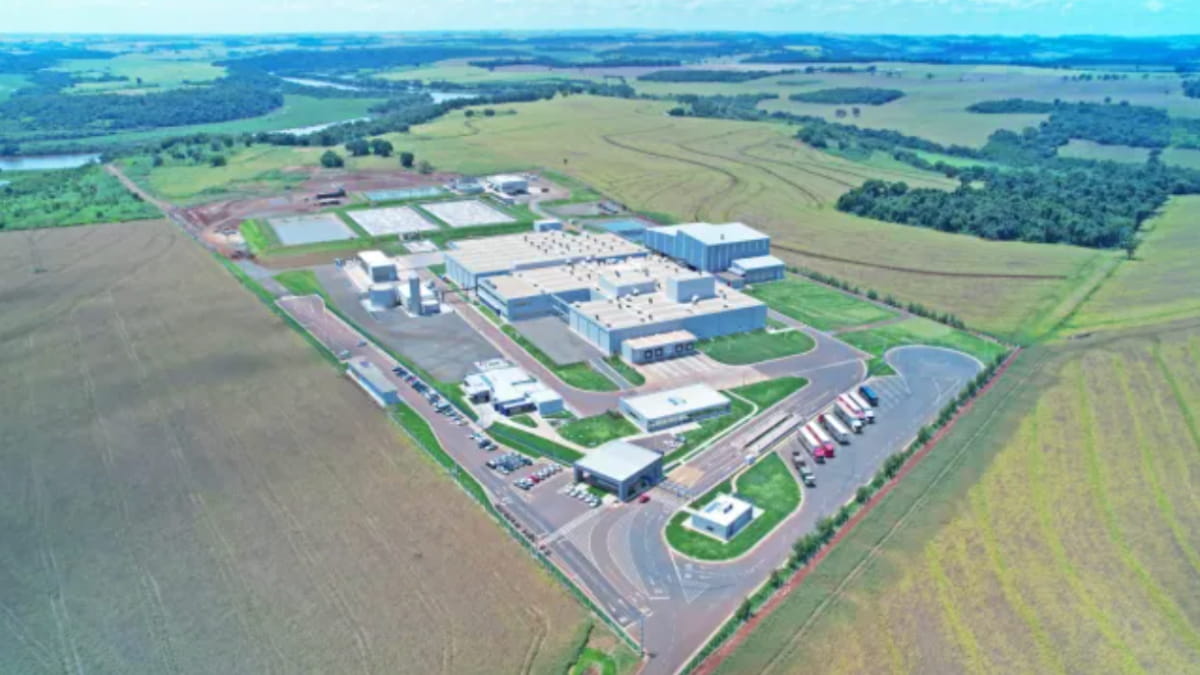
Paraná plant aims to produce 30,000 metric tons a year by 2030
Founded in 2019, Gelprime operates its industrial facility in Ibiporã, a municipality in the Londrina region.
The plant is part of a complex covering approximately 195,000 square meters, developed to manufacture ingredients from bovine raw materials.
The company uses this infrastructure to supply gelatin and collagen to various industrial segments, including pharmaceutical customers.
In October 2025, when MBRF announced progress on the acquisition, Gelprime had installed capacity of 9,000 metric tons a year. In 2026, company announcements began projecting that total production capacity would double and reach 30,000 metric tons a year by 2030.
The two figures reflect different stages of the expansion and, on their own, do not establish how much capacity was actually available in November 2026.
MBRF aims to make the operation one of the world’s five largest producers of collagen and gelatin.
The company also plans to compete for a place among the sector’s largest integrated industrial complexes, bringing different types of ingredients together at a single facility.
That position remains an ambition, not a leadership role the company has already secured globally.
According to MBRF’s communications, Gelprime exports its products to more than 20 countries, including the United States, Canada and Mexico, as well as markets in Europe, Asia and the Middle East.

From bovine processing to protein-enriched orange juice
The industrial bet takes on an interesting dimension when considering the end uses of the products Gelprime manufactures.
Collagen is a protein found naturally in animal tissues. Industrial processing of these raw materials can produce ingredients with different characteristics, depending on their intended use.
Gelatin, for example, is used to make candy, desserts and pharmaceutical capsules. Functional collagen, meanwhile, can contribute properties such as texture and water retention in certain foods.
Hydrolyzed collagen has other potential uses, particularly in protein-enriched food products.
One such application reached the Brazilian market in August 2026.
Gelprime partnered with juice maker Prat’s to develop an orange drink enriched with hydrolyzed collagen. The product provides 15 grams of protein per serving and contains 94.9% whole orange juice and 5.1% protein ingredient.
Development took about six months. The companies said one of the main challenges was adding the collagen without compromising the drink’s flavor, aroma or other characteristics.
The partnership illustrates why MBRF sees opportunities beyond traditional supplements. Similar ingredients can be used to develop coffees, ready-to-eat foods, beverages and other categories that have not typically included added protein.
Expansion is expected to create 300 jobs and intensify global competition for collagen
MBRF’s investment could also boost employment in northern Paraná state.
In its May announcement, the company said the expansion could generate approximately 300 new jobs in the Londrina area, in addition to the roughly 220 people working at Gelprime at the time.
The projection, however, does not mean 300 positions will open immediately. As of November 24, 2026, it was not possible to confirm how many of those jobs had been filled or whether a specific hiring process was underway for all the planned roles.
The industrial competition also involves other Brazilian groups.
JBS, through Genu-in, invested R$400 million in a gelatin and collagen peptide plant in Presidente Epitácio, in the interior of São Paulo state. The facility opened in 2022 with the capacity to produce 12,000 metric tons a year.
Internationally, competitors include companies with operations across several countries and installed capacity exceeding the level planned for Gelprime.
The expansion reflects the industry’s drive to develop higher-value protein ingredients and find new ways to use bovine raw materials.
A market study cited by MBRF estimated the global collagen peptide and gelatin segment at US$4.56 billion in 2020, with a projection of US$7.67 billion by 2030.
Gelprime’s next planned step is to expand its hydrolyzed collagen production line in 2027. The target of 30,000 metric tons a year remains set for 2030, contingent on the investments being carried out and industrial capacity actually expanding.