





Newcastle University says a group of 52 first-year archaeology students has unearthed gold jewellery, an inscribed lead sheet and a carved gemstone at a Roman site in Redesdale, Northumberland, on England’s northern frontier.
The finds were made during the university’s annual training excavation in summer 2026 and announced on November 18. The students were split into two groups, and each spent two weeks on site.
They worked alongside volunteers from the Redesdale Archaeology Group. The excavations were directed by The Archaeological Practice Ltd.
Archaeologists routinely recover objects from Roman military sites, but the university says the quantity and quality of this year’s finds surprised even experienced researchers.
-
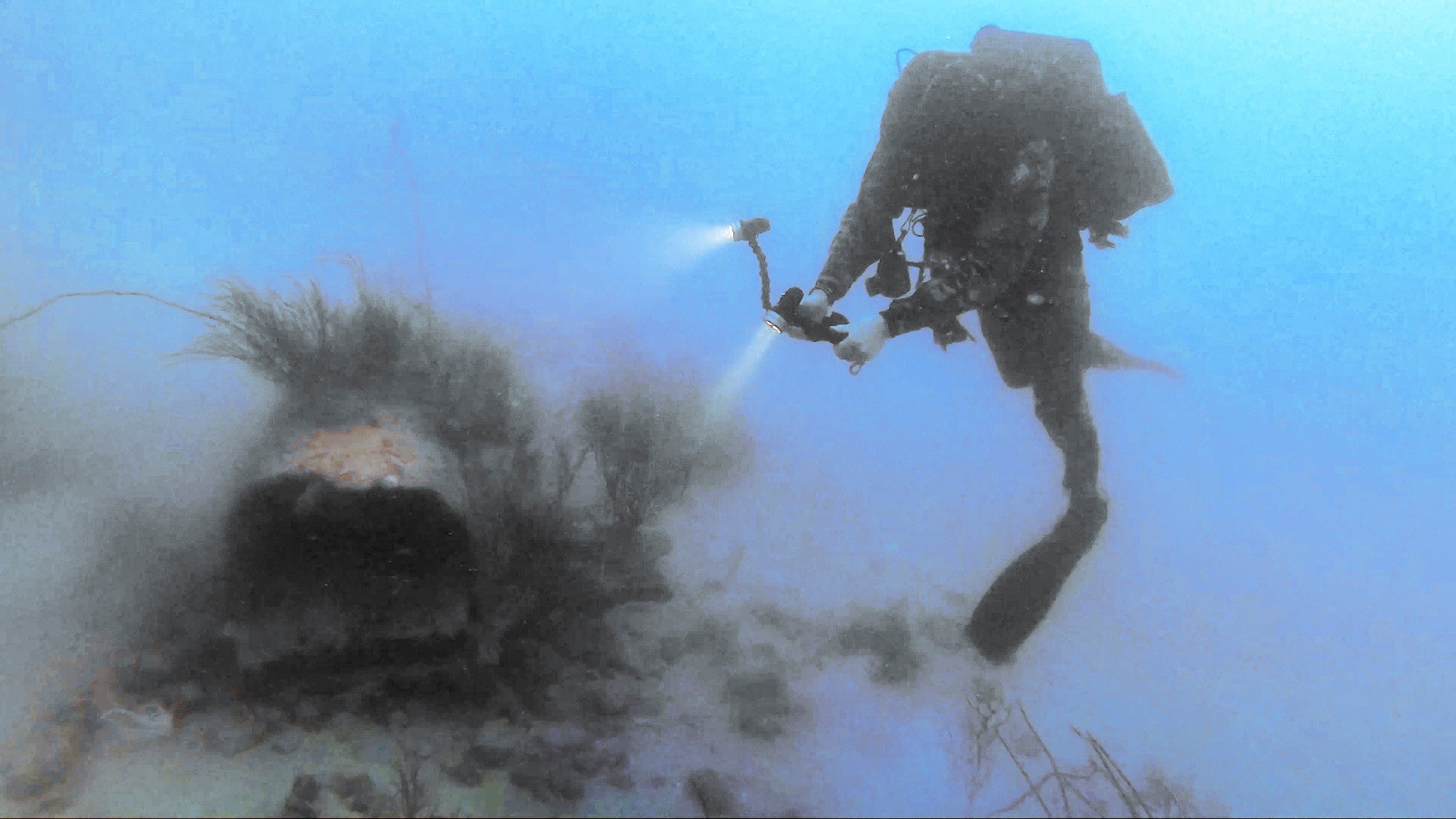
Queensland heritage officer Celeste Jordan called it remarkable luck that a navy team found HMCS Spitfire, the 19-metre gunboat that was Australia’s first home-built warship, 128 years to the day after it sank.

-
Hai Long chief Tim Kittelhake marked the moment all 73 turbines of Asia’s largest single offshore wind project, 45 to 70 km off Taiwan, went live on the grid with more than 1 GW for over a million homes
-
Archaeologist Artur Obłuski and a Sudanese-Polish team reached the original floor of the Great Church of Jesus in Old Dongola, a medieval cathedral 47 metres wide and about 21 metres tall that he says was bigger than the White House
-
Gelephu governor Lotay Tshering received a Guinness certificate after about 40,000 volunteers raised 108 Buddhist stupas, each about 15 metres tall, in nine hours along a river in southern Bhutan


A gold chain on day one
The most spectacular find came on the very first day. Student Elise Zallu uncovered a section of Roman gold chain about 7 centimetres long.
According to the university, the chain is so well preserved that, if it were complete, it could still be worn today.
“Finding the gold chain was really surreal, especially given it was the first day of my first dig,” Zallu said. “I didn’t expect to find anything like that my whole career, so it was definitely a surprise.”
‘An entire career without experiencing it’
Dr Eric Tourigny of Newcastle University’s School of History, Classics and Archaeology put the find in context.
“Finding a gold artefact is something many archaeologists can go an entire career without experiencing,” he said. “For a first-year student to discover a beautifully preserved Roman gold chain on their first day in the trench is truly remarkable.”
How the chain was made
The chain was made with the Roman loop-in-loop technique, a hallmark of high-quality goldsmithing. Instead of simple round links, each ring was pinched into a figure of eight, folded and woven through the next.
Objects like this were usually made from exceptionally pure gold. The university says they are often linked to elite jewellery, military amulets or fittings that belonged to high-ranking officers and their families.
A Latin inscription on folded lead
Also on day one, student Shannon Wood found a folded piece of lead with traces of a Latin inscription scratched into it in cursive letters.
Archaeologists think it is most likely a commercial seal tied to trade, taxes, ownership or the movement of goods through the Roman army’s supply network.
Another possibility is that it was a personal message or a curse tablet. Across the Roman world people scratched prayers, grievances and sometimes curses onto thin lead sheets before folding them and leaving them in sacred places. Further study is expected to show which it is.

A gilded cavalry fitting on day two
On the second day, student Megan Potter found a decorated Roman military fitting with traces of its original gilding. It has been identified as a peltate cavalry dangler.
The bronze mount would have hung from a military belt, a horse harness or possibly the lower end of a sword scabbard. Its crescent shape comes from the small shields carried by Classical warriors.
Although heavily corroded after nearly two thousand years in the ground, much of the gilding survives. The university says it may have belonged to a cavalry officer or another high-ranking individual.
Jupiter carved in carnelian
One of the last major finds came in the final week. Students Maisy Watmough and Zoe Yuill uncovered a carved orange carnelian intaglio, an engraved gemstone that would have been set in a ring and pressed into wax as a personal seal.
It shows Jupiter, king of the Roman gods, holding a sceptre and a small figure of Victory, with an eagle at his feet. It is the fourth intaglio found at the site: two turned up in the 2025 season and one in the nineteenth century.
“It was so exciting to find the intaglio,” said Watmough.
A man called Martinus
The students also recovered coins, spearheads, dress accessories, pottery and everyday objects, including many examples of Roman graffiti scratched onto pots.
One Samian ware bowl carries the name “MARTIN[I]” or “MARTIN[US]”. Several other fragments from this season seem to show the same name, which suggests ownership marks left by someone who lived or worked at the site.
Life on Rome’s northern edge
“These finds are exciting not only because of their quality, but because of the stories they tell,” said Richard Carlton, site director and visiting fellow in archaeology at Newcastle University.
The site has been studied by Newcastle staff, students and partners since the early 1990s. The current project began in 2021 and has explored two large enclosures, or annexes, with their defences, buildings, roads and traces of industry.
If a first-year student can pull Roman gold out of a Northumberland field on day one, what do you think is still waiting under the rest of the site?


