





 Portuguese
 Spanish


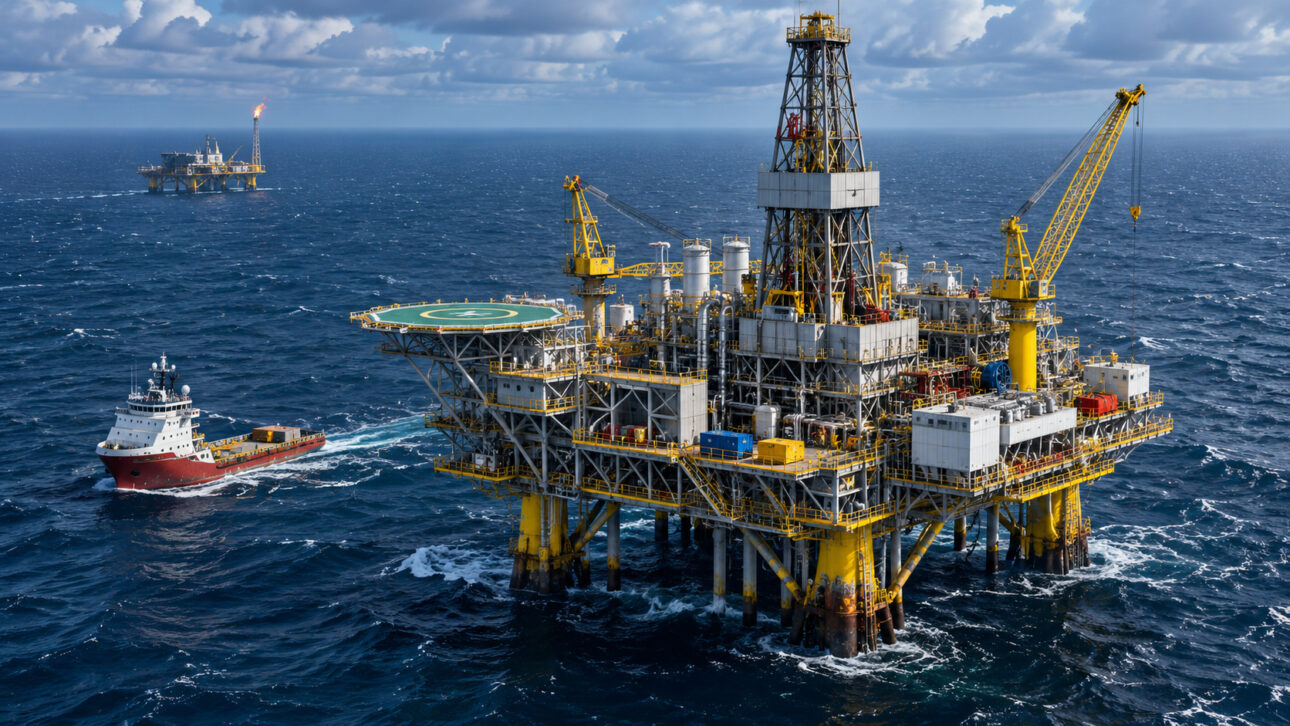
Sonangol and the ANPG announced hydrocarbons on Wednesday, November 18, 2026, at the Burututu-1 well in Block 5/06 of the Kwanza Basin, with 25 meters of pre-salt reservoir, a water depth of 259 meters and a total depth of 3,882 meters
Sonangol found hydrocarbons at the Burututu-1 exploration well in Block 5/06, offshore in Angola’s Kwanza Basin. The discovery was announced on Wednesday, November 18, 2026.
The announcement came in a joint statement from the National Agency of Petroleum, Gas and Biofuels (ANPG) and Sonangol Exploração & Produção, or Sonangol E&P.
The Ecofin Agency summarized the case on Thursday, November 19, in an article by Abdel-Latif Boureima.
-
ExxonMobil wins Mozambique approval for Rovuma LNG project, a nearly US$30 billion development designed to produce 18.6 million metric tons of LNG a year

-
Shell Launches Permanently Uncrewed, Solar-Powered Gas Platform 220 km off Malaysia, Capable of Producing 800 Million Cubic Feet Daily with a 207-km Pipeline
-
Oil and gas discovery at 2,289 meters deep surprises explorers in Ghana, reveals a reservoir type never before confirmed in the country and opens a new exploration frontier off Africa’s coast
-
Discovered in 1974, North Sea oil field has gone more than 50 years without producing a single barrel despite holding about 1 billion barrels underground; new technology could finally make development viable


Forbes África Lusófona, the Lusa news agency, and Prensa Latina also published details from the statement. Prensa Latina reported the news from Luanda that same day, Wednesday, November 18, at 3:53 p.m.
What the Burututu-1 well found
Burututu-1 was drilled in 259 meters of water and reached a total depth of 3,882 meters. Along the way, it identified 25 meters of reservoir containing hydrocarbons.
Forbes África Lusófona presents the three figures as preliminary data. Lusa, Prensa Latina, and Drilling Contractor report the same water depth, total depth, and reservoir measurements.
The ANPG describes the result as the first identification of hydrocarbons in pre-salt reservoirs in this concession.
The statement’s wording was quoted by Forbes África Lusófona in an article by Pedro Mbinza published on November 19.
The ANPG called the discovery a milestone for the region’s exploration prospects, Prensa Latina reported.
The statement refers to hydrocarbons, a term that covers oil and gas. Ecofin Agency, Lusa, and Drilling Contractor describe the find as an oil discovery.
Ecofin adds that Burututu-1 reached a geological zone that had seen little exploration to date. The agency therefore calls the result the first confirmed exploration success in this section of Block 5/06.
Who operates Block 5/06
Sonangol Exploração & Produção operates Block 5/06 and holds a 100% participating interest.
The Africa Oil+Gas Report highlights this point in an analysis published on November 20. Its headline says Burututu-1 strengthens Sonangol as an operator and advances the promise of Angola’s pre-salt.
The publication says Sonangol’s recent results at Pacassa SW, Katambi, and Burututu-1 put the state-owned company ahead of other state-owned oil companies in sub-Saharan Africa in operational capability.
The same article offers a caveat: there is no certainty that these discoveries will lead to first oil or gas under Sonangol.
Algeria’s Sonatrach is cited as the clearest example of a highly capable African state-owned company.
In the statement, Sonangol says the discovery reinforces the company’s commitment to exploration. Its stated goals are to replenish reserves and sustainably increase production operated by the state-owned company itself.
The drillship that drilled the well
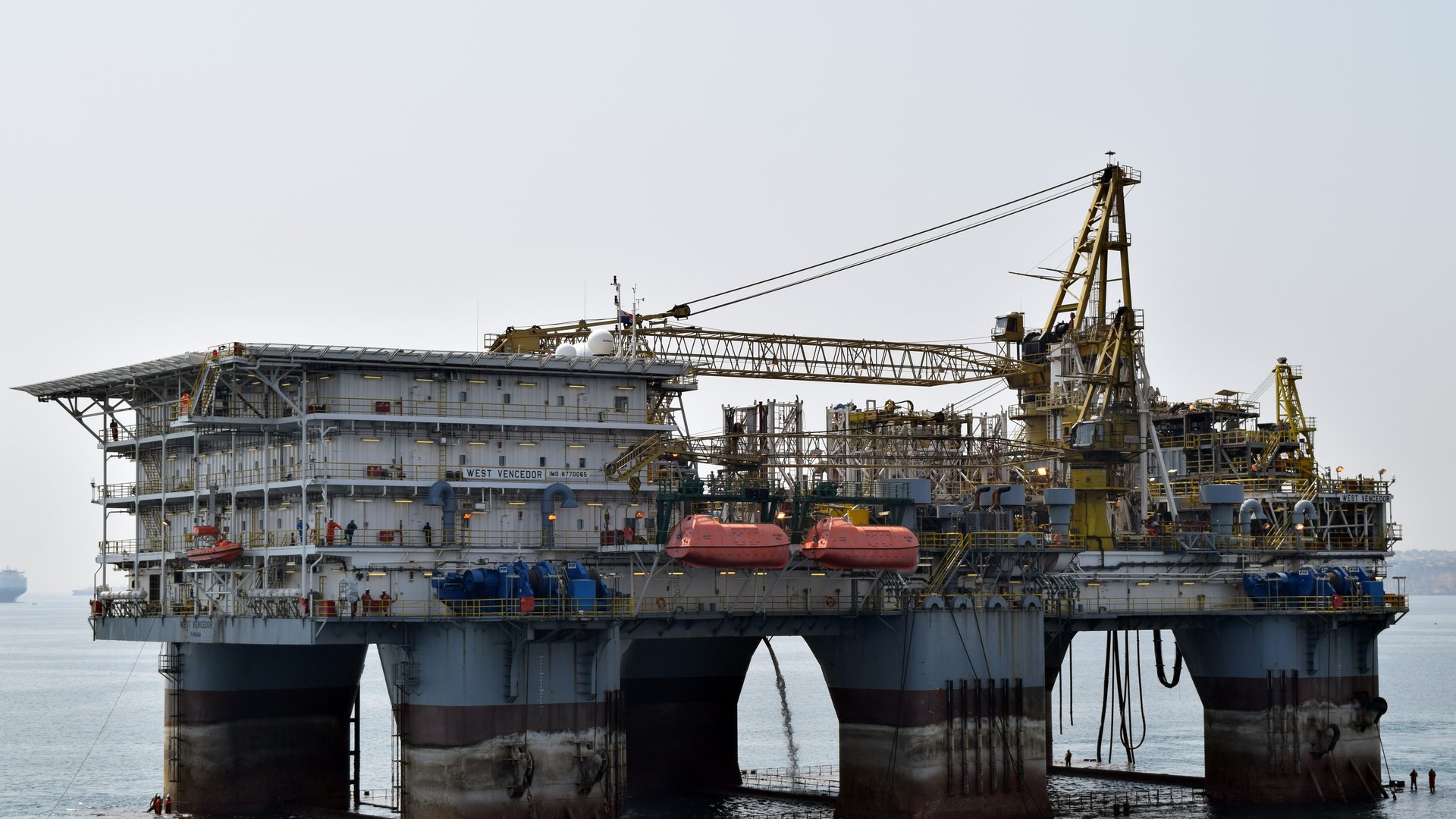
The Burututu-1 was drilled by Seadrill’s West Gemini drillship. The information was reported by Drilling Contractor in an article published November 18.
The rig’s contract with Sonangol Exploração & Produção is handled through Sonadrill. The company is a 50-50 joint venture between Seadrill and a Sonangol affiliate.
The same West Gemini drilled the Katambi-2 appraisal well in early 2026 in Block 24 of the Benguela Basin. That work was carried out for Sonangol and the ANPG.
Drilling Contractor describes Burututu-1 as the first hydrocarbon discovery in the concession’s pre-salt. The publication says the well found oil in those pre-salt reservoirs.
The 1.5 billion-barrel estimate for Block 5/06
Interest in Block 5/06 stems in part from an estimate Sonangol itself made in 2024. The state-owned company put the block’s oil initially in place at about 1.5 billion barrels.
Ecofin Agency emphasizes what that figure represents. It measures the oil believed to be underground, not proven reserves or barrels that can be extracted.
The 2024 estimate covers the block as a whole. Sonangol and the ANPG have not yet estimated the volume found specifically at Burututu-1.
Next steps for the ANPG and Sonangol
Preliminary data from Burututu-1 show geological and petrophysical characteristics that warrant further technical studies. That is the wording in the statement cited by Lusa.
The next step is the appraisal phase. The statement says it will be decisive in measuring the discovery’s potential more accurately.
The same assessment appears in reports by Forbes África Lusófona, Lusa, and Prensa Latina. All three reproduce the statement that the next phase will be decisive for Burututu-1.
The ANPG says the studies will examine the reservoir’s characteristics and how far the hydrocarbon-bearing formation extends. Only then will it be possible to determine whether Burututu-1 can support commercial production.
Ecofin sums up the current focus as measuring the discovery’s scale and quality, not producing oil. The result is promising, but there is no confirmed estimate of recoverable resources.
What the discovery means for the Kwanza Basin
Ecofin Agency sums up the impact in its headline: the new offshore discovery in Angola improves the outlook for the Kwanza Basin.
The joint statement says the discovery marks an important step for the Kwanza Basin’s exploration prospects. It also says the find could help improve understanding of the region’s oil potential.
Africa Oil+Gas Report says more than 95% of Angola’s current production comes from the deepwater Congo Basin.
The Angolan government is seeking major discoveries in the Kwanza pre-salt to keep the country among Africa’s leading oil producers over the long term. The report notes that discoveries in this pre-salt zone have been rare.
The Kwanza pre-salt has already seen well tests, however. In 2012, Maersk Oil’s Azul-1 well produced about 3,000 barrels of oil per day during a test.
Azul-1 was the first deepwater well to flow oil from the Kwanza pre-salt. It was drilled in 902 meters of water and reached a total depth of 5,330 meters.
Cameia, Golfinho and first oil expected in 2028
The same year as Azul-1, Cameia-1, drilled by independent U.S. company Cobalt Energy, demonstrated commercial viability.
During a formation test, Cameia-1 sustained a flow rate of 5,010 barrels per day of 44-degree API oil. The test also recorded 14.3 million cubic feet per day of associated gas.
Cobalt filed for bankruptcy in December 2017 and liquidated its assets. Sonangol resumed offshore exploration and brought in TotalEnergies to lead development of Cameia and Golfinho, in a project called Kaminho.
Kaminho is expected to begin production in 2028, with a projected peak of 75,000 barrels per day.
Other Sonangol wells in 2026
Burututu-1 is part of a broader Sonangol campaign to find new resources and strengthen its offshore exploration portfolio. Ecofin cites two other projects this year.
In March 2026, Sonangol stepped up drilling in Block 3/05 with the Pacassa SW exploration well. In August, it completed tests at the Katambi-2 gas well in Block 24.
Africa Oil+Gas Report records the discovery of Pacassa SW in August 2026 in the Lower Congo Basin, with Sonangol as operator.
The report describes Katambi-2, in the Benguela Basin, as a successful appraisal. Sonangol holds 100% of Block 24.
Oil’s importance to Angola
Angola continues to produce more than 1 million barrels of oil per day. The figure appears in a Lusa report republished on November 19 by Mozambique’s Diário Económico.
Oil remains the mainstay of the Angolan state’s revenues. The annual state budget proposal is based on this production pace, according to Prensa Latina.
The Cuban news agency adds that declining production from existing wells is forcing Angola to seek new sources to sustain this level.
Replacing reserves is one of the objectives Sonangol cites in its statement on Burututu-1.
What remains uncertain about Burututu-1
The size of the discovery will depend on the appraisal phase. Sonangol and ANPG have not yet estimated the volume of Burututu-1, and the focus now is on measuring the reservoir, not production.
The well’s commercial viability also depends on these studies. The 2024 estimate of about 1.5 billion barrels in Block 5/06 measures the oil beneath the block, not proven reserves.


