





 Portuguese
  English
  Spanish
  3 min of reading
  1 comment


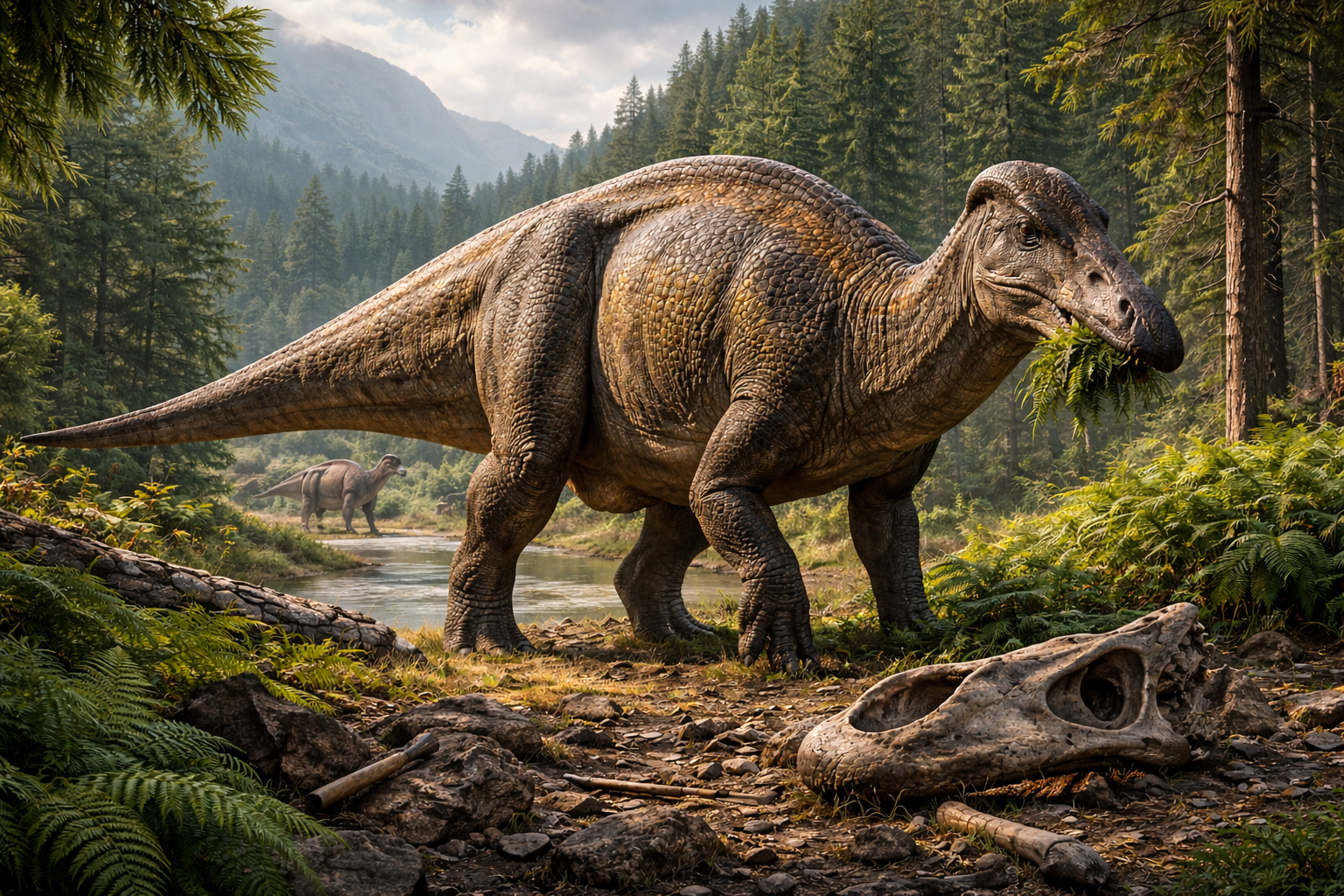


Detailed Reevaluation of Ancient Bones Reveals Unprecedented Dinosaur, Expands Fossil Record and Corrects a Long-held Interpretation
A significant paleontological discovery was recently confirmed, attracting international attention.
Fossils collected in 1916, in the northwest of what is now the state of New Mexico, USA, underwent a complete re-evaluation and, in doing so, revealed a new species of herbivorous dinosaur from the Late Cretaceous period.
For decades, this material was attributed to a known species, which consequently maintained an active taxonomic error for nearly a hundred years.
Now, after rigorous comparative analyses, researchers demonstrated that the bones belong to a distinct dinosaur, expanding knowledge about the so-called “duck-billed” dinosaurs.
Scientific Review Corrects Classification Maintained for Decades
Initially, the fossil was classified in 1935 by the paleontologist Charles Gilmore, who associated it with a previously described hadrosaurid.
At that historical context, the scarcity of comparative material limited more accurate analyses.
However, with the advancement of paleontology and the discovery of new fossils throughout the 20th century, it became possible to revise this identification.
Thus, researchers utilized modern methods of anatomical comparison and concluded that the specimen exhibits unique features that are incompatible with other known species.
Anatomical Features Confirm Unprecedented Species
The fossil assemblage includes an incomplete skull, isolated facial bones, and articulated cervical vertebrae, which are crucial for taxonomic analyses.
These elements exhibit consistent differences when compared to other hadrosaurids described later.
Therefore, scientists defined the material as the holotype of a new species, named Ahshislesaurus wimani.
Thus, the identification corrected a historical error and strengthened the scientific record of the Late Cretaceous.
-
Finer than a human hair and 200 times stronger than steel, graphene is moving out of laboratories and into construction sites, potentially creating buildings that bend without breaking, reduce carbon emissions by half, and are 3D printed like Lego pieces.

-
Honda creates technology that transforms desert sand into material for building roads that are more resistant and 2x more durable, potentially reducing costs by up to 60%.

-
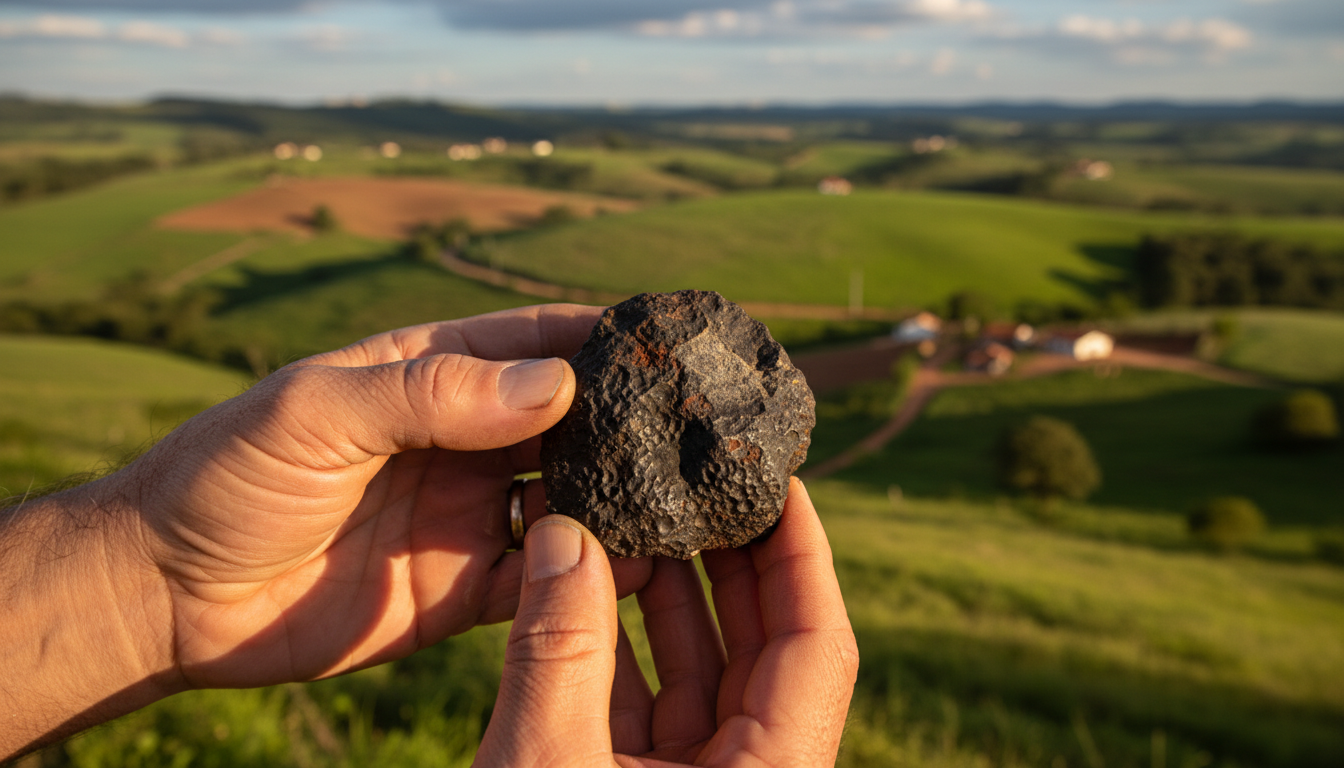
Stored for nearly 70 years in the backyard of a family in the interior of Minas Gerais, a fragment of a meteorite that fell in 1956 was divided at the Smithsonian Institution in the United States, and only now is the complete story of the fall being revealed.
-
China has just discovered oil in rock layers that no one thought could be explored at the bottom of the South China Sea, and the field with over 100 million tons could change the balance of energy power in Asia.

Importance of Hadrosaurs in the Late Cretaceous
Hadrosaurs dominated vast areas of North America from about 80 to 66 million years ago.
These herbivorous dinosaurs were abundant and, therefore, played a central role in prehistoric ecosystems.
By consuming large volumes of vegetation, they shaped the landscape and influenced the food chain.
For this reason, scientists often refer to them as “Cretaceous cows”, in reference to the ecological impact similar to that of large modern herbivores.
Dimensions and Environment in Which the Animal Lived
Estimates indicate that Ahshislesaurus wimani reached between 10 and 12 meters in length and weighed about 8 tons.
It lived in environments with rivers, wetlands, and abundant vegetation, common in the western North America during the Late Cretaceous.
In this setting, it coexisted with other herbivorous dinosaurs, large predators, and various forms of life.
Thus, the new species contributes to more accurate reconstructions of these ancient ecosystems.
Scientific Publication Consolidates the Discovery
Researchers from the United States and Slovakia conducted the study that officially describes the new species.
The work will be published in the Bulletin of the New Mexico Museum of Natural History and Science, consolidating the discovery.
As a result, the reclassification expands the known diversity of Late Cretaceous herbivorous dinosaurs.
This advancement shows how careful revisions transform ancient fossils into key pieces of the history of life on Earth.
How many other species remain hidden in scientific collections, waiting for a new analysis to rewrite the history of dinosaurs?






Podia falar qual era a espécie de hadrossauro que tinha sido descrita anteriormente.