Portuguese
  Spanish


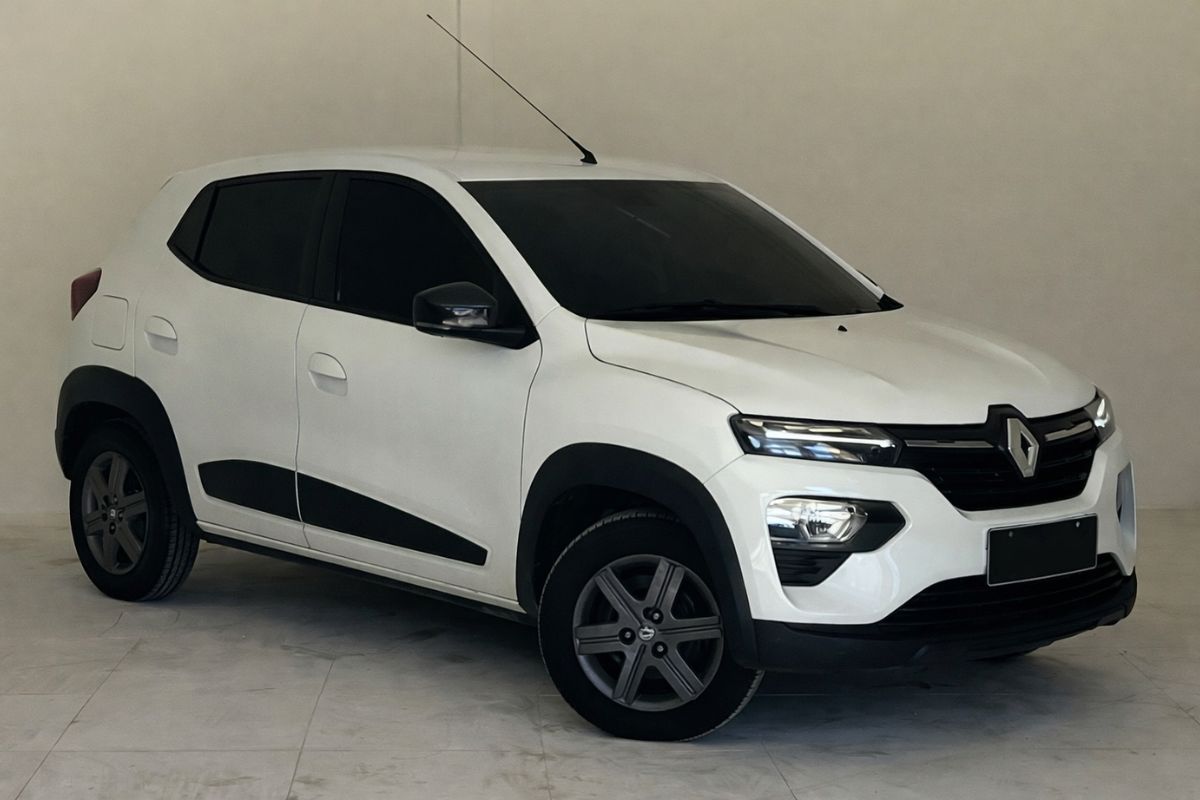

The Renault Kwid 2026 achieves 15.3 km/l in the city with gasoline thanks to the 1.0 SCe three-cylinder engine, weighing less than 820 kg and the Start & Stop system that turns off the engine at traffic lights, consolidating the compact as the most economical car in Brazil according to Inmetro data.
In a scenario of expensive fuels and tight budgets, a car that achieves more than 15 kilometers per liter in the city becomes a hard argument to ignore. The Renault Kwid 2026 reaches this mark thanks to a 1.0 SCe three-cylinder engine that Renault’s engineering combined with a weight of less than 820 kg and a Start & Stop system, resulting in a compact that consumes less gasoline in urban traffic than practically any other new car sold in Brazil. The model consolidates its position as one of the smartest options for those who need to drive a lot and spend little.
The numbers from Inmetro confirm what the steering wheel delivers in practice. The Kwid’s engine registers 15.3 km/l in the city and 15.7 km/l on the highway with gasoline, figures that place the compact at the top of national efficiency among combustion vehicles. With ethanol, the engine delivers 10.8 km/l in the city and 11.0 km/l on the highway. For those who calculate before refueling, the difference between the Kwid and a medium SUV that does 9 km/l in the city can represent hundreds of reais per month.
How the 1.0 three-cylinder engine of the Kwid manages to be so economical

The efficiency of the Kwid starts with the engine. The 1.0 SCe three-cylinder engine was designed to generate the necessary power for urban displacement with minimal fuel consumption.
-
1983 Chevrolet Runs Over 100,000 km Without Gasoline, Powered by Wood Chips, Reaches 125 km/h in Airport Test

-
Workshop Converts Giant Tractor Tire Tricycle into a Three-Wheel Drive Hybrid with 36,000-Watt Electric Motor Capable of Climbing Hills

-
Sales of Brazil’s Cheapest Electric Car Halted Before First Deliveries: E-Motors Suspends Emova Easy Due to Import Tax Increase and Rising Freight Costs

-
Nissan Discontinues Qashqai SUV Amid Cost-Cutting, Chinese Competition, and Product Line Review



Three-cylinder engines have fewer internal moving parts than four-cylinder engines, which reduces mechanical friction and, consequently, the energy expenditure to keep the engine running. Each cylinder less means less fuel burned in each rotation.
The engine operates at low regimes for most urban use, which means it rarely needs to rev high where consumption spikes.
The engine’s electronic calibration has been adjusted to prioritize economy at speeds of up to 60 km/h, which is the reality for those driving in Brazilian cities. The result is a powertrain that delivers what is necessary for daily use without wasting fuel on power that the urban driver will never use.
Why the weight below 820 kg makes such a difference in engine consumption
The physics is simple: less mass to move means less energy required, which translates to less fuel burned by the engine.
The Renault Kwid 2026 weighs less than 820 kg, a significant difference compared to competitors that often exceed the one-ton mark. The 200 kg difference between the Kwid and a medium hatchback is equivalent to carrying two adult passengers all the time, and this extra weight takes its toll at every traffic light, every start, and every hill.
The lightness does not compromise the structure because Renault uses high-strength steels in the vehicle assembly. The result is an agile car for urban maneuvers, capable of responding quickly to the accelerator without the engine needing to strain.
Compared to sedans or SUVs that weigh more than 1,200 kg, the Kwid requires significantly less energy to maintain the same speed, and this savings accumulates kilometer after kilometer.
How the Start & Stop system turns off the engine and saves fuel in traffic
The Start & Stop is the technology that automatically turns off the engine when the car stops at a traffic light or in traffic, and instantly restarts it when the driver releases the brake pedal.
In Brazilian urban traffic, where stops at traffic lights and congestion are constant, the engine spends a significant portion of the time running without the car moving, burning fuel just to maintain idle. The Start & Stop eliminates this waste.
The savings generated by the system vary depending on the route, but in cities with heavy traffic, the engine can be off for 20% to 30% of the total travel time.
In a fuel tank, this translates to extra kilometers that the driver gains without changing anything in their driving style. The technology, which was exclusive to luxury cars a few years ago, comes to the Kwid as part of the package that makes the compact the most economical in the country.
The operational cost of the Kwid beyond what the engine saves in fuel
The Kwid’s proposal goes beyond consumption. The vehicle was designed to have a low total operational cost, with competitively priced scheduled maintenance that avoids surprises in the owner’s budget over the years.
The extensive network of Renault dealerships in Brazil facilitates access to original replacement parts, which preserves engine efficiency and resale value in the used car market.
For app drivers or fleet operators, the Renault Kwid 2026 represents a faster return on investment than competitors with larger engines or higher weight. The monthly savings in fuel can offset a significant portion of the financing for a brand-new vehicle.
The suspension has been adjusted for Brazilian road conditions, supporting severe daily use without premature wear. Those seeking financial predictability find in the compact a reliable work tool.
For whom the Renault Kwid 2026 with 1.0 engine makes more sense
The ideal buyer profile is clear: those who drive a lot in the city and want to spend as little as possible at the pump. The 1.0 three-cylinder engine is not for those who need power on the highway or for those who carry the whole family on long trips.
It is for those who make 50, 80, or 100 kilometers per day in urban traffic and want every liter of gasoline to stretch the most. It is for the app driver who relies on savings to profit. It is for those who want a brand-new car without fuel eating into their budget.
In a country where gasoline exceeds R$ 6.50 per liter in many capitals, a car with an engine that achieves 15 km/l in the city is not just economical.
It is a financial decision that pays off with every full tank. The Renault Kwid 2026 proves that it is possible to have a modern car, with Start & Stop technology and efficiency certified by Inmetro, without having to spend a fortune at the pump every week.
Would you choose a car based on engine consumption or prioritize other factors like space and power? Does the Kwid with 15 km/l in the city convince you, or would you prefer to spend more for more comfort? Let us know in the comments. In times of expensive gasoline, fuel economy has become the top item on the list for those looking for a new car.