





 Portuguese
  English
  Spanish
  4 min of reading
  0 comments


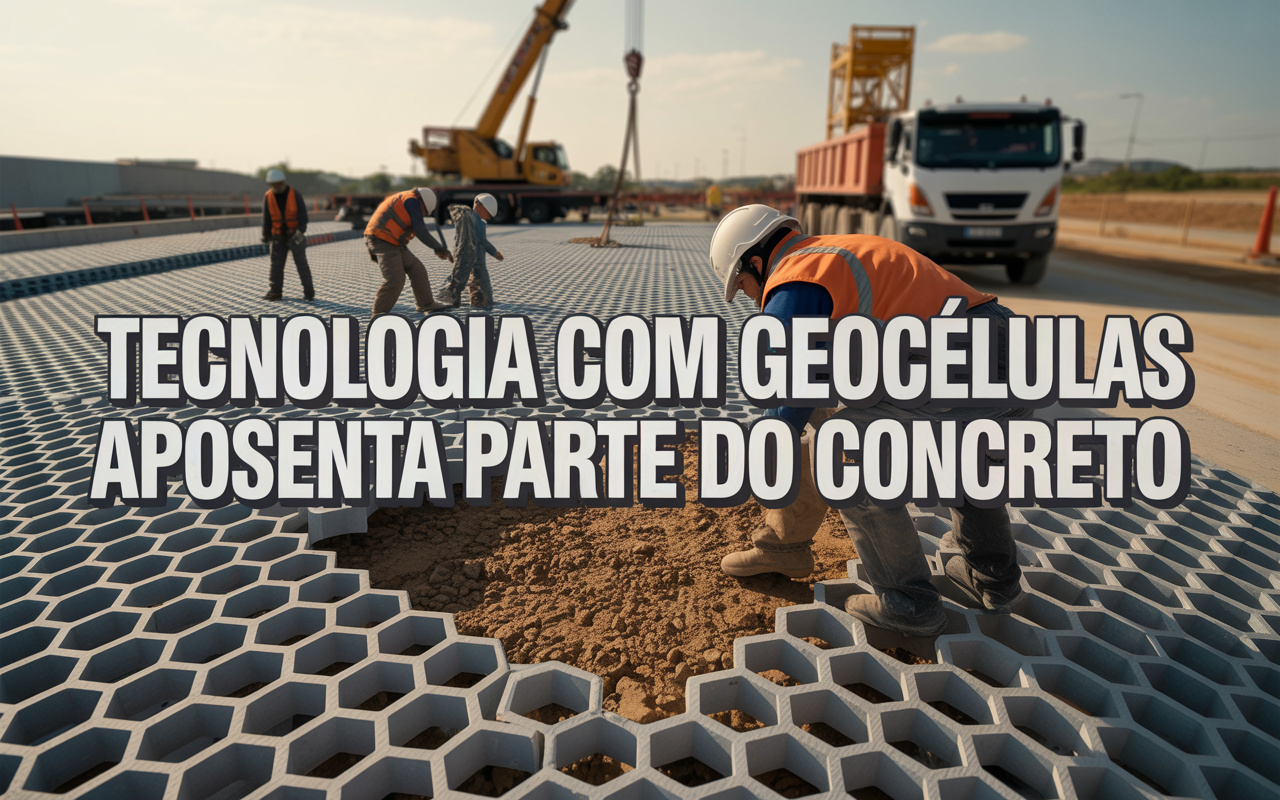
Geocells Reduce Concrete Use in Foundations and Pavements, Ensuring Lighter, Faster, and More Cost-Effective Works with High Durability and Sustainability.
The search for more sustainable and lighter materials is transforming civil engineering worldwide. One such innovation is the geocell system, three-dimensional modular structures made of high-density polymers that are replacing part of the concrete and gravel in foundations, slopes, pavements, and retaining structures. Inspired by the shape of beehives, geocells are composed of interconnected panels that, when filled with soil, sand, or gravel, form a stable and compression-resistant base. The technology, initially created for military use in the 1970s, is now one of the most promising solutions for green construction and modern infrastructure.
How Geocells Work and Why They Challenge Concrete
Geocells utilize the principle of cellular confinement, which distributes loads and pressures uniformly in the soil. Instead of pouring tons of concrete to stabilize a base, the engineer can use plastic cells as an “armor” that reinforces the natural soil.
Manufactured from high-density polymers (HDPE or Neoloy®), they offer high durability, chemical resistance, and thermal flexibility, making them ideal for aggressive environments like highways, ports, airports, and sloped areas. Additionally, they are easy to transport and assemble, reducing the need for large volumes of heavy materials on the construction site.
-
This star-shaped fortified construction, hidden near the border of Spain, may be the largest fortress on the planet.

-
Congonhas receives the monorail promised for the 2014 World Cup after more than a decade of delays and becomes the first airport in Brazil with integrated subway.
-
Goodbye, concrete: a new trend in civil construction reduces the weight of the structure by up to 30%, accelerates projects by up to 40%, cuts costs on steel and labor, and improves thermal insulation with EPS.
-
Russian engineers create an innovative propeller blade for aircraft that could completely change the way airplanes and helicopters operate.

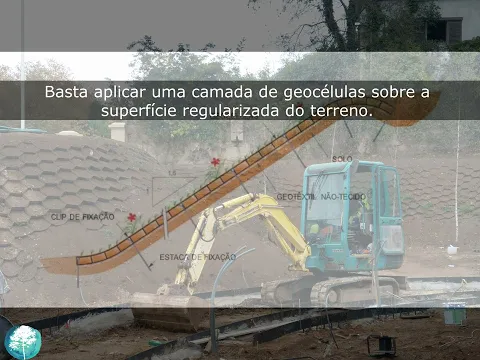

According to the Israeli company PRS Geo-Technologies, creator of the Neoloy® Geocell system, the use of this technology can reduce concrete and aggregate consumption by up to 50% and the total construction cost by 20%, depending on the type of application.
Applications in Large Works and Road Pavements
Geocells are already widely used in highways, railways, port areas, industrial yards, and tank bases. In civil construction focused on paving, they replace part of the gravel and concrete layers, distributing vehicle weight more efficiently. This allows for thinning the base and sub-base layers while maintaining the same structural performance.
In Brazil, the technology has been applied by companies such as PRÓ Geocell, Maccaferri, and Tensar in projects for infrastructure, mining, and sanitation. One of the most emblematic cases occurred during the duplication of BR-153 between Goiás and Tocantins, where geocells helped stabilize the soil and prevent differential settlements, reducing costs and execution times.
In addition to direct savings, installation requires fewer heavy equipment and simplified labor, which decreases operational risks and CO₂ emissions during construction.
Structural and Environmental Benefits from Using Technology in Civil Construction
The significant advantage of geocells is the balance between lightness and strength. They can increase the soil’s load-bearing capacity by up to 4 times, eliminating the need for deep excavations or oversized foundations.
Another benefit is the environmental performance. The cells are 100% recyclable and reusable and can be combined with local materials such as stabilized natural soil or sand, reducing the transport of inputs and logistical impact.
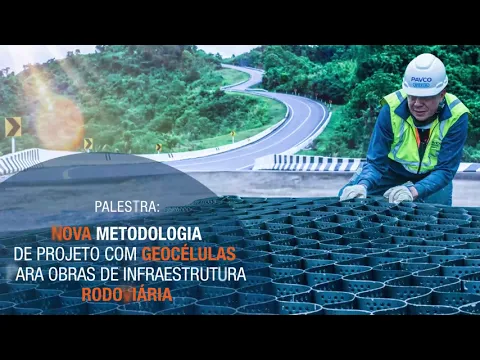
Studies conducted by Cambridge University and the American Society of Civil Engineers (ASCE) indicate that geocell systems provide a 30% reduction in CO₂ emissions and 20% in energy consumption compared to conventional concrete foundations.
Advancement of Technology in Brazil and New Investments
The Brazilian market is beginning to see geocells as a viable and strategic alternative for infrastructure works in regions with unstable soil. With increased investments in highways and sanitation, construction companies and concessionaires are testing the material in reservoir bases, retaining walls, and drainage.
Companies like Maccaferri are already producing geocells in the country with Italian technology, while national startups are studying versions made from recycled polymers, further reducing the environmental impact.
Engineers from the Military Engineering Institute (IME) and UFRJ are also conducting studies to standardize the use of the technology in shallow foundations and urban slopes, which should accelerate adoption in public works.
The Future of Lightweight and Sustainable Engineering
Geocells represent one of the most significant transitions in contemporary civil engineering: the replacement of rigid and heavy materials with modular, lightweight, and sustainable structures. They combine structural performance, cost savings, and agility — three factors that define the future of modern construction.
As the sector seeks low-carbon solutions and faster construction, the use of geocells is expected to expand rapidly in Brazil, especially in infrastructure and affordable housing projects.
If concrete shaped the 20th century, cellular confinement structures are ready to redefine the 21st century, creating smarter, more economical, and sustainable foundations where less truly is more.




-

-

-

-

-

30 pessoas reagiram a isso.