






 Portuguese
  Spanish
  4 min of reading
  0 comments


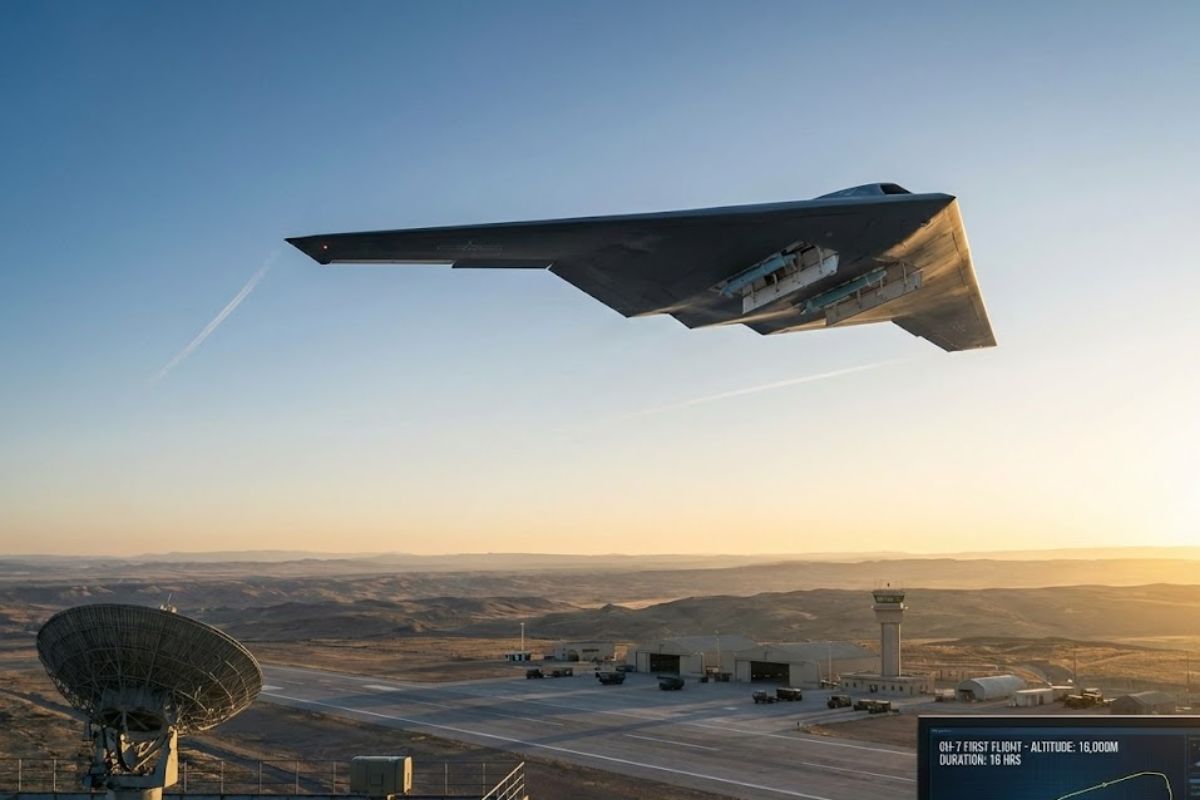
New Chinese Stealth Drone CH-7 Debuts in Inaugural Flight at Airfield in Northwest China on December 15, 2025, Reaches 16,000 Meters, 16-Hour Range, Eight Tons, Uses Flying Wing Design and Advanced Sensors for Long-Range Surveillance, Ground Observation, Data Support, and Communication
The new Chinese stealth drone CH-7 completed its first flight at an airfield in northwest China on Monday, December 15, 2025, under strong attention from the state media. Officially presented for the first time in 2018, the project underwent successive modifications before reaching its current flight testing stage.
During its debut in the skies, the aircraft was showcased as a new long-range surveillance weapon, capable of significantly reducing its visibility to radars, reaching an altitude of around 16,000 meters, and operating for up to 16 consecutive hours, combining high altitude, high speed, and long endurance for observation and communication missions in complex scenarios.
Inaugural Flight and Message of Air Power

During its debut, the new Chinese stealth drone CH-7 was presented by state broadcaster CCTV as a symbol of technological advancement in the country’s military aviation.
-
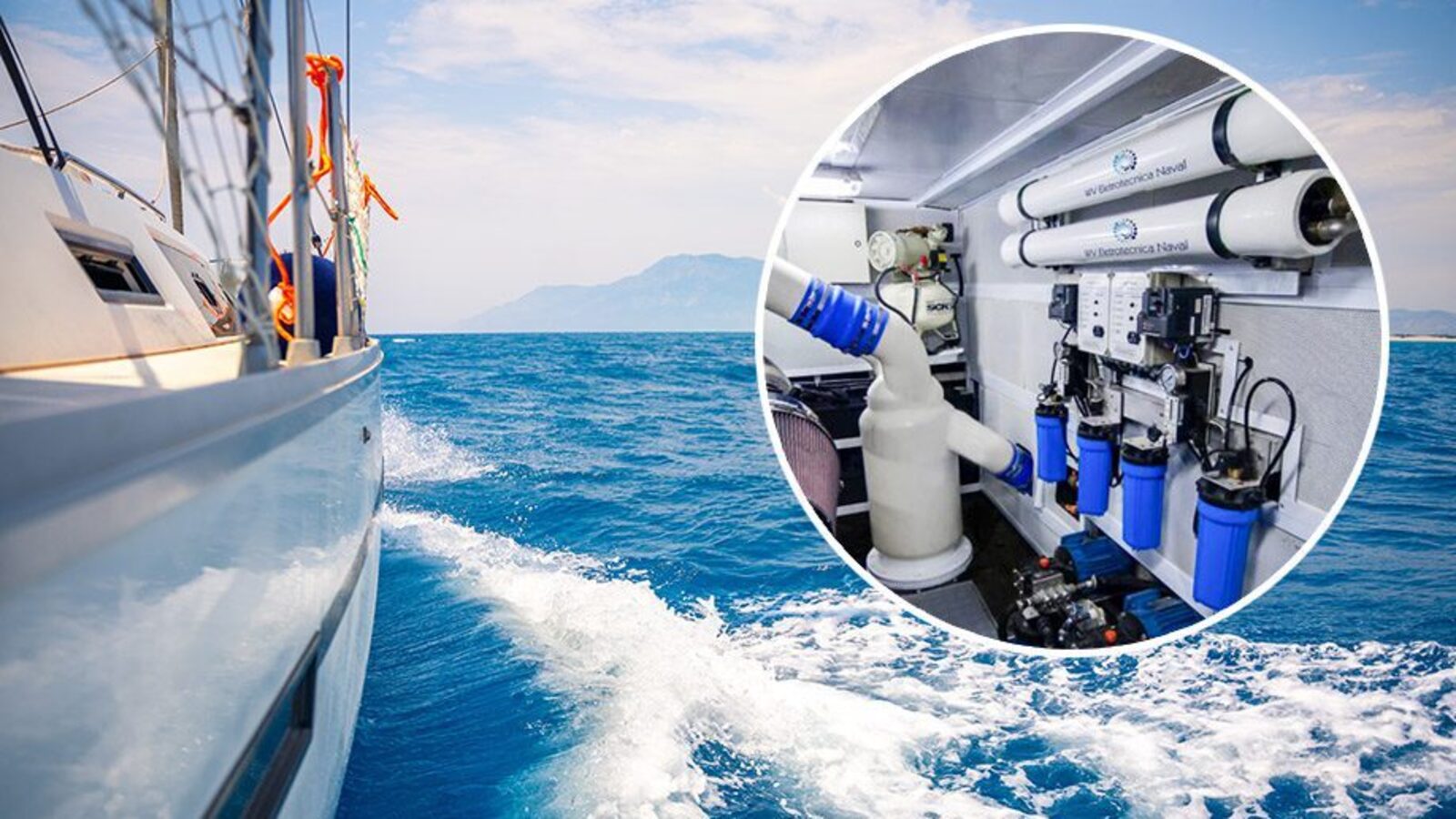
Brazilian family creates machine that transforms seawater into fresh water, produces up to 130 liters per hour, facilitates routine on vessels, and boosts family business along the country’s coast.

-
A doctor from Minas Gerais warns that sleeping with the fan pointed at the body all night is not as harmless as you think; it dries out the respiratory tract, causes mucus buildup, spreads dust mites, and can even irritate the cornea of the eyes.

-
Ecuadorian volcano at 6,268 meters is more than 2,000 meters closer to space than Everest, which is 8,848 meters, because the Earth is wider at the equator.
-
Public school students in the hinterlands of Maranhão create a bioinsecticide with neem and castor to protect corn crops, transform rural waste into biogas and biofertilizer, and bring sustainable technology to producers at ExpoSertão.



The inaugural flight, conducted at an airfield in northwest China, marked the transition of the project’s more than seven-year development phase from ground testing to flight testing.
According to CCTV, the first test focused on validating the most basic flight capabilities of the CH-7, confirming takeoff, stability, and initial performance at altitude.
The public display of the flight reinforces the message that China intends to consolidate its own long-range aerial surveillance platform, operating over conventional flight paths and with reduced exposure to adversarial radars.
Altitude Range, Endurance, and Takeoff Weight
The technical data released so far shows why the new Chinese stealth drone CH-7 alarms rivals and intrigues analysts.
The aircraft has a wingspan of 27.3 meters, an estimated maximum altitude of around 16,000 meters, an endurance of approximately 16 hours of continuous flight, and a maximum takeoff weight of 8 tons.
This combination allows the CH-7 to remain operational for long periods, above much of the conventional air traffic, with the ability to cover large areas in a single mission.
The long endurance is presented as a key factor for ground observation, communication support, and data support in extended operations without the need for frequent landings for refueling or maintenance.
Flying Wing Shape and Stealth Profile
The new Chinese stealth drone CH-7 adopts a “flying wing” design, where the devices responsible for stability are integrated into the wing itself.
In practice, the aircraft resembles the shape of a boomerang, with smooth lines and no prominently highlighted traditional fuselage.
This type of configuration reduces protruding surfaces and favors a cleaner profile, matching the promise of “almost disappearing from radars” made by Chinese propaganda.
According to CCTV, the CH-7 was designed to significantly reduce its signature in detection systems, making it more difficult to identify and track the drone during prolonged surveillance missions at high altitudes.
Optical Sensors, Infrared, and Next Testing Phase
According to information released by Chinese media, including the Global Times newspaper, the initial flight of the new Chinese stealth drone CH-7 only evaluated the essential flight functions.
The next stages of testing are expected to focus on the full performance of the aircraft and the validation of the so-called “payload” of the drone.
Among the expected equipment are optical and infrared sensors, which allow capturing images and data in different lighting conditions, in addition to systems aimed at ground observation, data support, and communication in complex conditions.
With that, the CH-7 positions itself as a long-range strategic surveillance platform, capable of operating for many hours at high altitudes, providing images and information in near-real-time for Chinese forces.
New Piece on the Long-Range Surveillance Board
With the new Chinese stealth drone CH-7, China adds to its arsenal a large unmanned aircraft with a high operational ceiling and strong stealth appeal.
The combination of wide wings, flying wing shape, 16,000 meters maximum altitude, and up to 16 hours of flight indicates a project aimed at monitoring vast regions, both in times of peace and in tense scenarios.
By showcasing the inaugural flight on state television, Beijing signals that it is ready to accelerate the program and move on to more complex testing, positioning the CH-7 as a potential permanent “electronic eye” in sensitive areas. Now, it remains to track how the platform will be integrated, in practice, into the country’s intelligence and surveillance operations.
In light of all this, do you think the new Chinese stealth drone CH-7 changes the game for long-range military surveillance in Asia?


-

1 person reacted to this.