





 Portuguese
  English
  Spanish
  5 min of reading
  0 comments


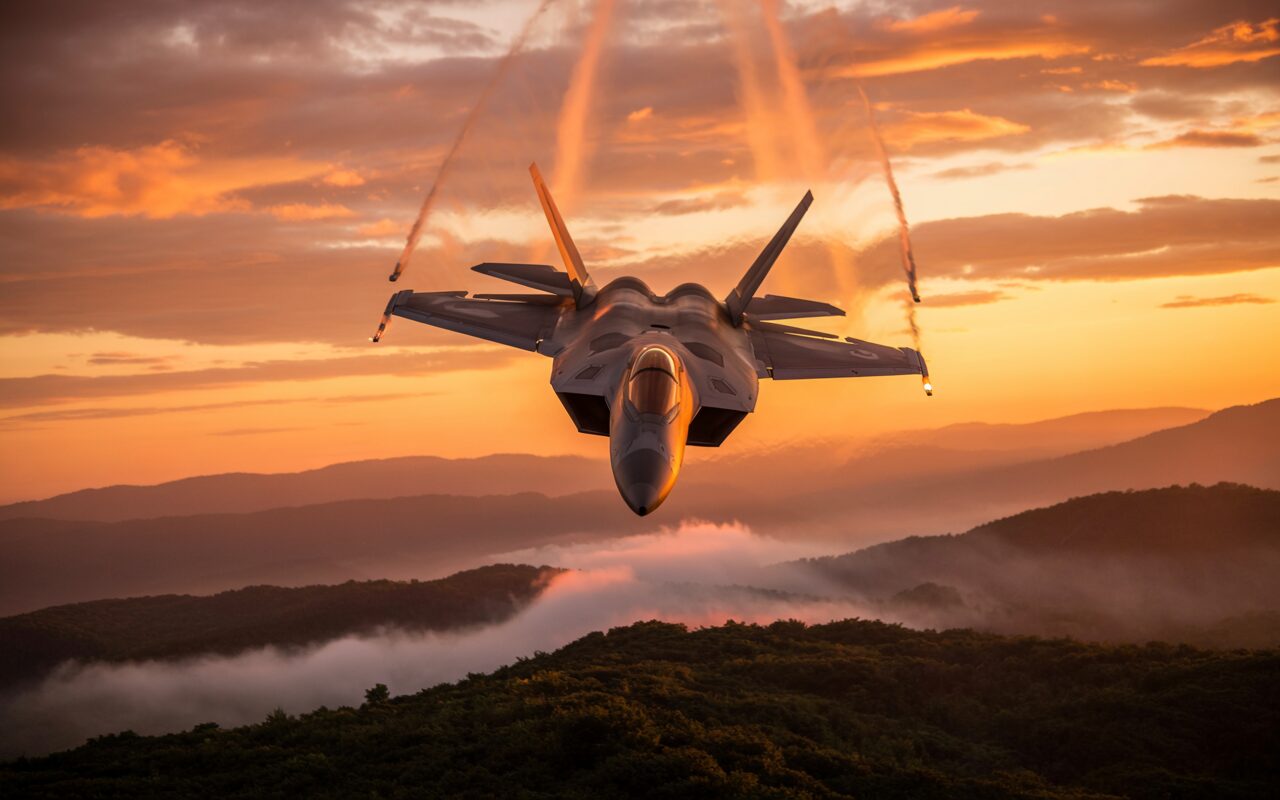
Conceived to be unreachable, undetectable, and unbeatable, the F-22 Raptor is more than a fighter jet. It is a symbol of air supremacy, a technical legend that literally “dances” in the sky, performing maneuvers that challenge the laws of physics and impress even the most skeptical.
The F-22 Raptor began to take shape in the 1980s when the United States realized that its F-15 fighters, as efficient as they were, were becoming obsolete in the face of evolving global threats. The solution? A new fifth-generation fighter that combined stealth, supermaneuverability, advanced sensors, and multirole combat capability.
Developed by Lockheed Martin in partnership with Boeing and Pratt & Whitney, the invisible F-22 Raptor had its first flight in 1997. Series production began in 2005 and ended in 2011, with only 195 units built due to astronomical costs and changes in the Pentagon’s strategic priorities.
The Invisible Fighter That Dances in the Sky: Why Is the F-22 So Unique?
The nickname “invisible fighter that dances in the sky” is no coincidence. The F-22 Raptor is known for its ability to perform maneuvers impossible for conventional aircraft, such as prolonged inverted flight, the post-stall turn, the stationary vertical loop, and the famous Pugachev’s Cobra maneuver, executed with more precision than the Russian fighters that originated it.
-
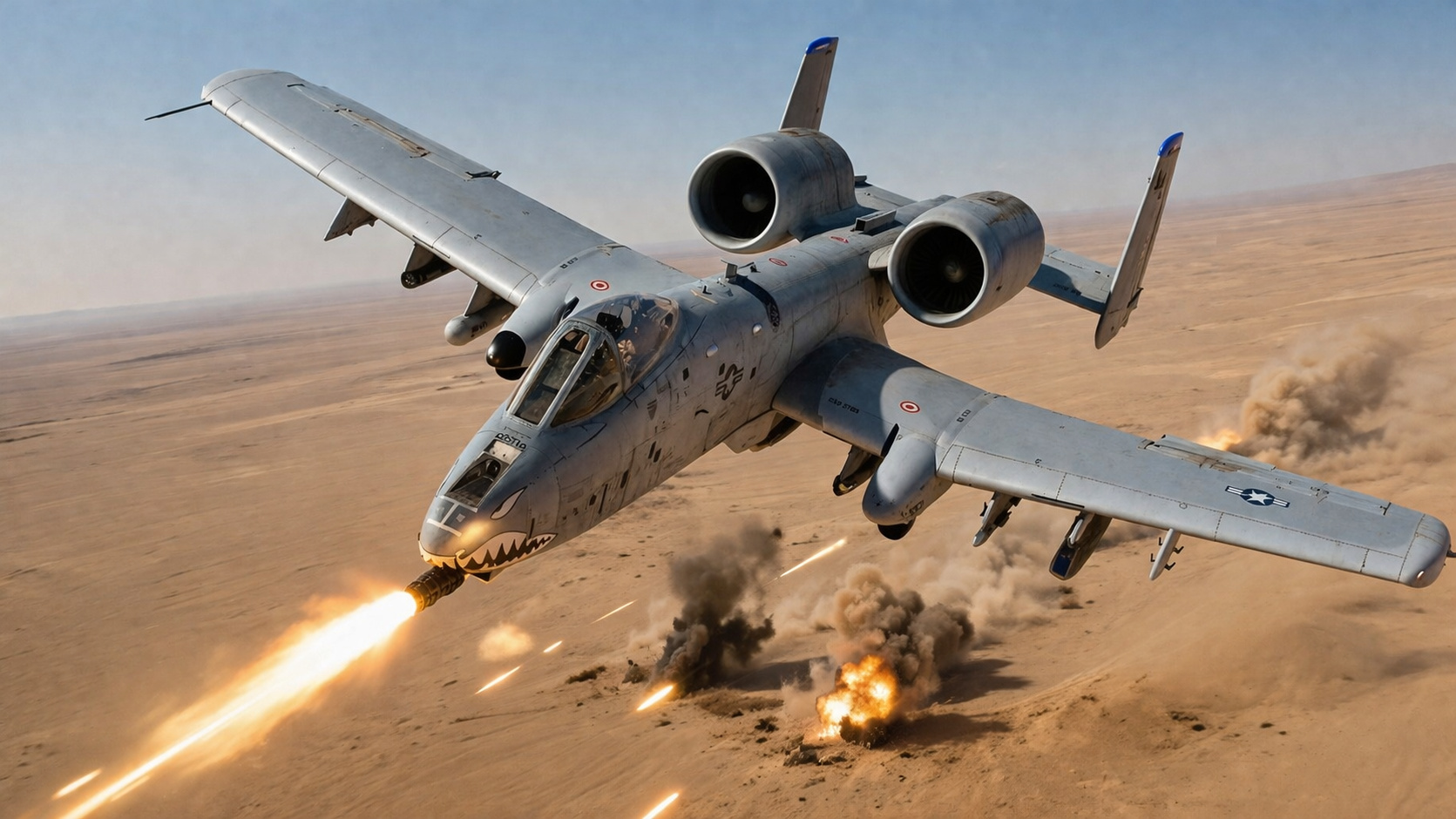
Few people know, but “mega burst” attacks from the A-10 in the Middle East are intriguing analysts and even experienced former pilots of the U.S. Air Force.
-
Manufactured in Brazil and exported to Saudi Arabia and Malaysia, the ASTROS system is renamed as Fogos in 2026, gaining AI, cruise missiles with a range of 300 km, and air defense costing R$ 3.4 billion, transforming a launcher from the 1980s into the most ambitious multidomain platform in Latin America.
-
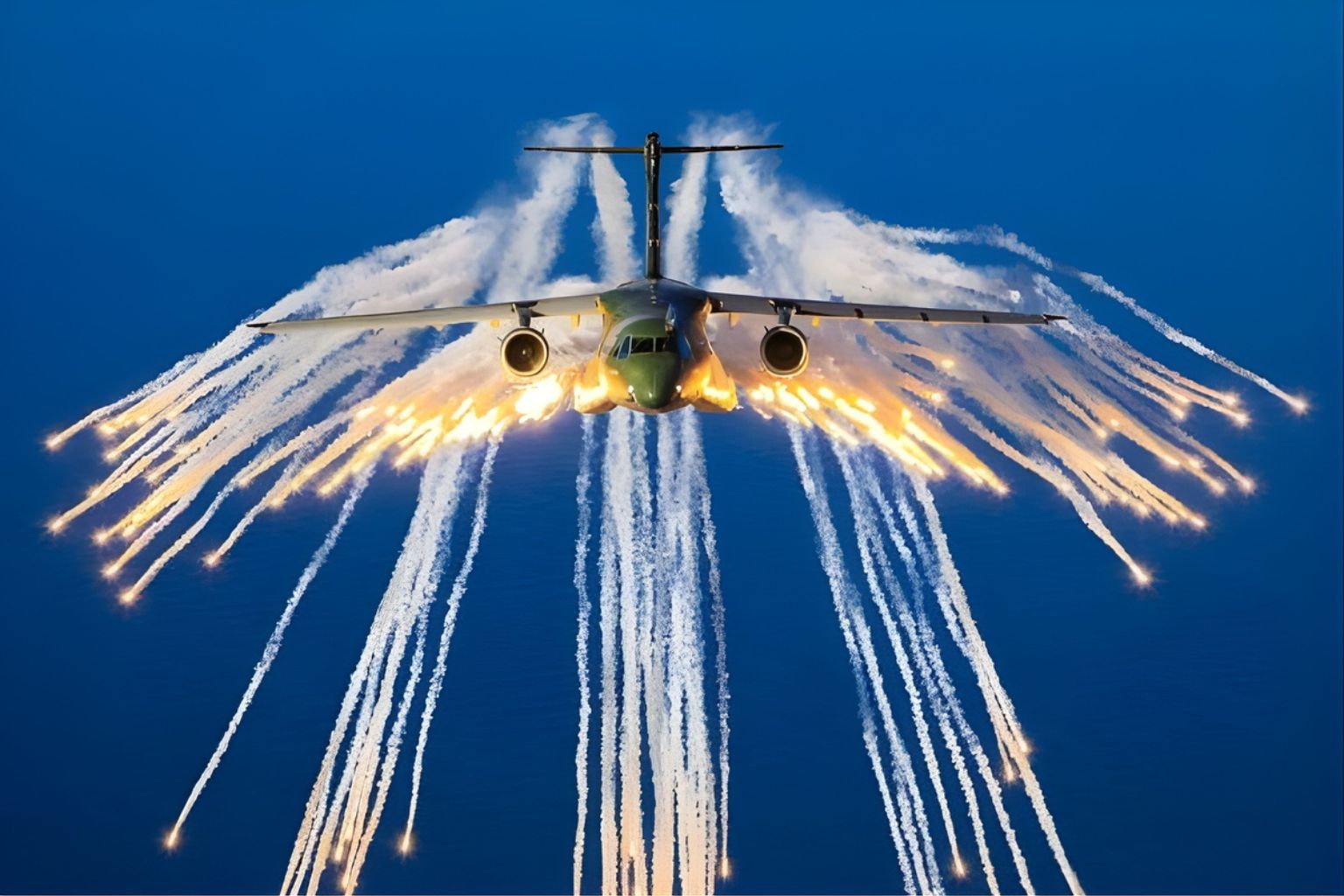
The largest military aircraft ever produced in Brazil, the KC-390 Millennium can carry up to 26 tons, refuel fighter jets in flight, and has already been exported to Europe and Asia, placing the country in the select group that designs and sells large military aircraft worldwide.
-
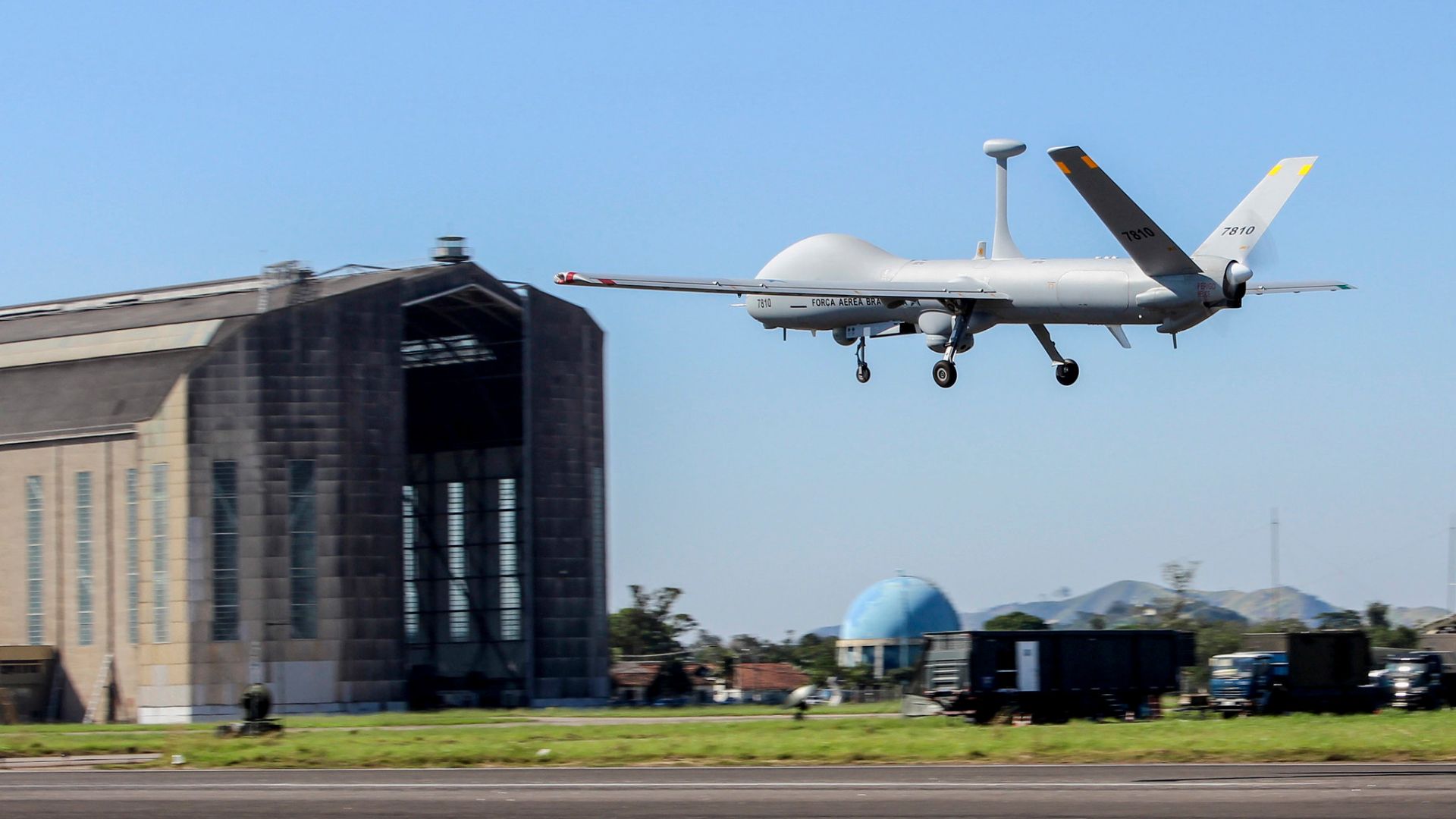
FAB loses Hermes 900 drone during multinational exercise in Mato Grosso do Sul and is left with only one active aircraft, raising concerns about operational fragility and strategic response capability.



All of this is possible thanks to the combination of:
- Two-Dimensional Thrust Vectoring
- Stealth and Advanced Aerodynamic Design
- Ultra-Responsive Fly-By-Wire Flight Controls
- Pratt & Whitney F119-PW-100 Propulsion Systems, with afterburners and exceptional power
Key Technical Specifications of the F-22 Raptor
| Feature | Performance |
|---|---|
| Maximum Speed | 2,414 km/h (Mach 2.25) |
| Cruising Speed | 1,963 km/h (Mach 1.8, without afterburner) |
| Operational Range | 3,000 km with aerial refueling |
| Operating Altitude | Between 15,000 and 20,000 meters |
| Length | 19 meters |
| Wingspan | 14 meters |
| Maximum Takeoff Weight | 38,000 kg |
| Cost per Unit | US$ 150 million |
These numbers place the F-22 Raptor fighter among the most powerful aerial platforms in military aviation history.
Absolute Stealth: The Ghost of Radars
The invisible F-22 Raptor is not just a fast plane — it is a ghost in the skies. Its angular design, composite materials, and RAM (Radar Absorbing Material) coatings make it practically disappear from enemy radars.
Moreover, its thermal and electronic signature is also reduced, making the F-22 extremely difficult to detect by infrared sensors or electronic warfare equipment. The pilot thus has complete advantage of surprise and evasion.

The F-22 Raptor has one of the most advanced sensor systems ever integrated into a fighter. Its AN/APG-77 radar with Active Electronically Scanned Array (AESA) is capable of:
- Detecting, tracking, and engaging multiple targets simultaneously
- Operating in passive mode to avoid detection
- Sharing real-time information with other air and ground units
Additionally, the fighter has electronic warfare systems, target designation, encrypted communication, and data fusion that provide the pilot with a complete real-time picture of the battlefield.
Armament: Lethal Precision
Even though it is discreet, the F-22 Raptor is a true aerial arsenal. In air-to-air missions, it can carry:
- 6 AIM-120 AMRAAM long-range missiles
- 2 AIM-9 Sidewinder missiles for close combat
- 1 M61A2 20 mm rotary cannon
In air-to-ground missions, the internal compartment can accommodate:
- Precision-guided GBU-32 JDAM bombs
- Munitions for surgical strikes in urban environments or fortified bunkers
Thanks to the internal weapons compartment, the F-22 maintains its minimal radar signature, even when armed.
The Early End of Production: A Controversial Decision
The production of the F-22 Raptor was halted in 2011 after the delivery of the 195th unit. The decision was considered controversial and still generates discussions. The main factors for the termination were:
- High per-unit cost (US$ 150 million)
- Complex operational and logistical costs
- Strategic focus shift post-Cold War
- Simultaneous development of the F-35 Lightning II, which is more versatile and costs less
Although the F-35 is cheaper, many military experts believe that no other fighter equals the F-22 in air-to-air combat. Therefore, the Raptor remains irreplaceable in the role of air superiority.
The F-22 Raptor Today: Still at the Top
In 2024, the F-22 Raptor continues to be the most advanced air combat fighter in the world. Even against fifth-generation adversaries such as:
- Sukhoi Su-57 (Russia)
- Chengdu J-20 (China)
… the F-22 is still considered superior in stealth, maneuverability, and sensing. It is constantly updated by the U.S. Air Force, with upgrades in software, weapons, and connectivity.
The Fighter That Flies Upside Down
One of the most impressive images of the invisible fighter that dances in the sky is its ability to fly upside down with total stability. This maneuver is not just for demonstrations: it represents the F-22’s incomparable maneuverability, capable of performing tight turns at low speed without stalling, reversing maneuvers in the air, and maintaining complete control at high angles of attack.
At airshows, such as Aviation Nation and EAA AirVenture, the audience watches in awe as the F-22 spins, hovers, and changes direction with the grace of a dancer, even thousands of meters high.
An Uncertain Future, But an Eternal Legend
With only 187 F-22 Raptors in active service, the future of the world’s most advanced fighter is uncertain. The U.S. Air Force is already studying a transition to hypersonic and unmanned platforms, but the Raptor is expected to remain in service at least until 2040, according to Pentagon projections.
Projects like Next Generation Air Dominance (NGAD) aim to create a replacement for the F-22, but no aircraft, so far, has gained the respect and fascination that the Raptor has achieved throughout its journey.
The F-22 Raptor, known as the invisible fighter that dances in the sky, is a unique combination of engineering, technology, and air dominance. Capable of flying upside down, disappearing from radars, destroying targets before being seen, and changing the course of battles, it represents the highest achievement in the art of air warfare.
Even with production ended, its presence is still a symbol of deterrence, technological power, and supremacy in the skies. As long as it flies, the Raptor will continue to remind the world that when it comes to dominating the sky, it remains the absolute king.








-

Uma pessoa reagiu a isso.