Portuguese
 Spanish


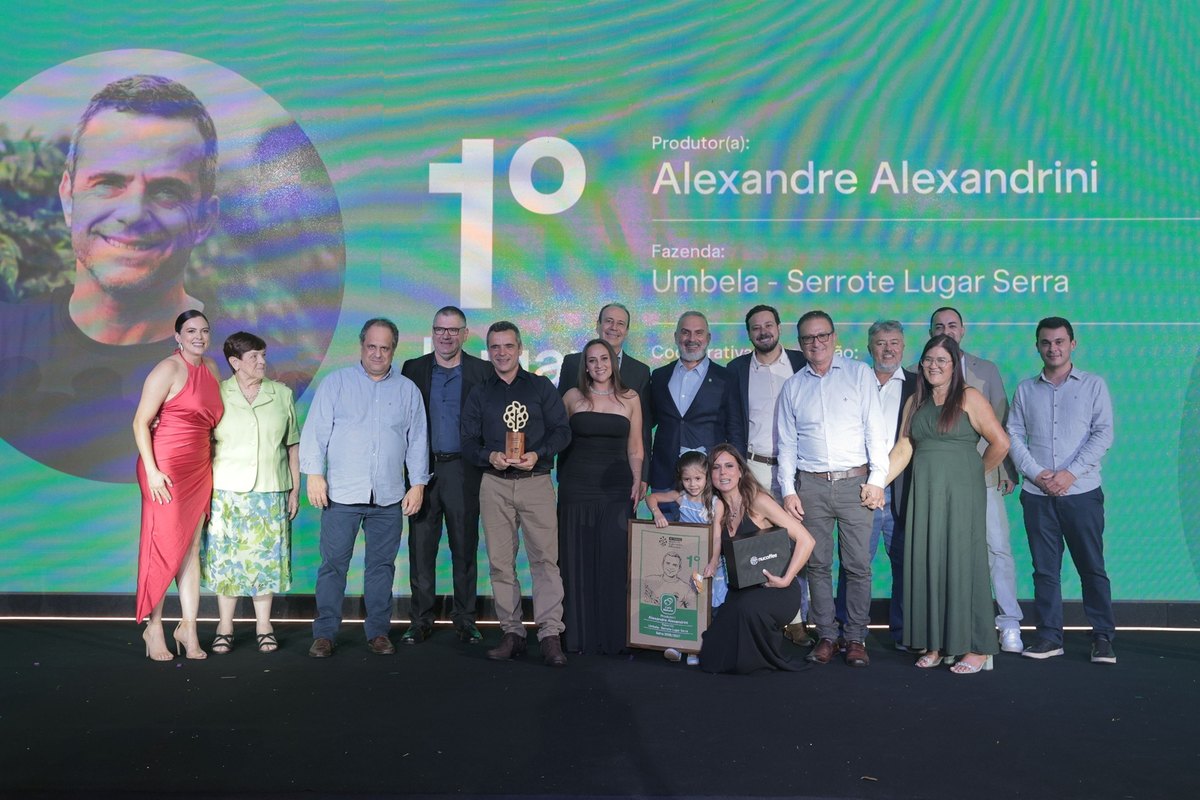
A bag of Natural-process coffee from grower Alexandre Alexandrini sold for R$220,000 on Thursday (19) in Uberlândia, Minas Gerais. It set a new national record, topping the R$200,000 mark set in 2025, while the auction of nine bags at the 14th Cerrado Mineiro Region Award raised R$733,000.
The winning bid came Thursday night (19) at the charity auction that concludes the awards ceremony organized by the Federation of Cerrado Coffee Growers at the Center Convention in Uberlândia, in the Triângulo Mineiro region.
The coffee is in the Natural category and comes from Fazenda Umbela – Serrote Lugar Serra, owned by grower Alexandre Alexandrini. A consortium made up of Expocacer, Sucafina, C6 Bank, Sebrae and Café Cajubá bought the bag.
What a R$220,000 bag of coffee costs per kilo
A bag of coffee weighs 60 kilograms. By our calculation, R$220,000 works out to about R$3,667 per kilo for the beans from Fazenda Umbela.
-
Ultrarunner Cameron Balser ran 3,067 miles from San Francisco to New York City Hall in 41 days, 16 hours and 45 minutes, averaging about 73 miles a day to beat a 2016 Trans America record by 13 hours and 45 minutes.

-
Brazilian Beef Processors Eye Lucrative Chinese Market for Gallbladder Stones

-
Baltic Workboats chairman Margus Vanaselja says EUROGUARD, a 45-metre, €95 million prototype launched in Estonia by 27 companies from 10 countries, proves the country can now build its own warships.
-
Newcastle University student Elise Zallu found a 7 cm Roman gold chain on the first day of her first dig, one of the treasures 52 first-year archaeology students unearthed in Redesdale, Northumberland.



The price beats the previous record, R$200,000, set at the same auction in 2025, by R$20,000. By our calculation, that is a 10% increase in one year.
Juliano Tarabal, executive director of the Federation of Cerrado Coffee Growers, said the bid had put the region back at the top. “It is the most expensive coffee in Brazil’s history,” he said after the auction.
How Natural, Pulped Natural and Fermented processing differ
The auction’s three categories distinguish coffees by how the beans are processed after harvest, a step that carries as much weight as the farm itself in the final score.
For Natural processing, the category of the record-setting lot, the whole coffee fruit dries with its skin intact, either on a patio or in a dryer. For Pulped Natural processing, the skin is removed before drying.
For Fermented coffee, the grower controls a fermentation stage to change the aroma and flavor. I was surprised to see a Natural coffee, made using the most traditional method, set the price record.
How the winning coffee scored
Alexandrini’s lot won the Natural category with 90.19 points, entered by the Expocacer cooperative, according to the winners list released by the organizers.
TMK Agronegócios, represented by Coopadap, placed second in the same category with 89.78 points. Fausto do Espírito Santo Velloso, of Carmocer, came third with 89.56 points.
The edition’s highest score, however, did not belong to Alexandrini. Silvia Suzuki Nishikawa, of Coopadap, won the Fermented category with 91.13 points and also received the Elas no Cerrado Trophy.
Lúcio Gondim Velloso, of Carmocer, took first place in the Pulped Natural category with 89.88 points. By our calculation, the gap between the Natural category winner and the runner-up was just 0.41 points.
How the nine-bag auction worked
Auctioneer Mauro Lúcio dos Santos, of Investbras, led the bidding. The organizers offered nine lots, three from each category: Natural, Pulped Natural and Fermented.
Each lot consisted of a single bag. Buyers therefore bid on nine bags, not the entire crop from each award-winning farm.
The auction raised R$733,000, compared with R$562,000 in 2025. By our calculation, that is an increase of about 30%. The average price exceeded R$50,000 per bag.
Where the money goes
The auction supports a charitable cause. Of the total proceeds, 40% go to the School of Attitude Trophy, which recognizes education projects in the region’s coffee-growing communities. The contribution amounts to R$293,000, the organizers said.
It is the largest amount the initiative has ever allocated to schools. This year, the trophy recognized APAE de Patrocínio’s Paralympic Sports Project, submitted by Expocacer.
The organizers did not explain how the other 60% are divided among the producers of the auction lots.
What the award-winning producer gets beyond the bid
The prize also includes a commercial reward tied to the New York market price. Winners in each category receive an amount equivalent to “New York + 300.”
Runners-up receive “New York + 200,” while third-place winners receive “New York + 120.” In the Sweet Cerrado Mineiro category, six coffees selected by the cooperatives receive “New York + 50.”
The winning lots are also included in promotional and sales initiatives for the Cerrado Mineiro Region Denomination of Origin, giving them access to roasters and coffee shops.
A harvest season marked by rain
The record came in a difficult year for harvest workers. Tarabal said producers faced heavy rain during the harvest, requiring extra care to preserve bean quality.
“Despite the challenges producers faced during the harvest, they managed to produce high-quality coffees that were recognized by the market,” the director said.
The blog reported in July that the coffee harvest in Cerrado Mineiro had reached 60%, amid concerns about fruit ripening.
How many coffees competed for the prize
The 14th edition received 920 samples, up 28.9% from 714 the previous year. A total of 468 producers entered coffees in the Natural process, Pulped Natural, Fermented and Sweet Cerrado Mineiro categories.
The event also introduced the Regenerative Future Award, which evaluates the entire farm. Ana Paula Curiacos Urtado, of Fazenda Três Meninas, took first place and won R$30,000.
The region behind the most expensive coffee
The Cerrado Mineiro Region was the first coffee Denomination of Origin recognized in Brazil. It covers 55 municipalities, about 250,000 hectares under cultivation and approximately 4,500 certified producers.
The model is based on controlled origin and traceability: buyers know which farm and producer each lot came from.
The award is organized by the Cerrado Coffee Growers Federation, with support from Sebrae Minas and Fundaccer, and brings together the cooperatives Carmocer, Carpec, Coocacer Araguari, Coopadap, Expocacer and monteCCer.
High bids are not limited to this auction
Charity auctions of single bags have been fetching high prices in Minas Gerais. On November 16, the blog covered another contest that ended with a bag selling for R$110,000, with half of the proceeds going to cancer treatment.
These bids, however, do not reflect the price of coffee sold in everyday commerce, which follows market prices. They serve as a showcase for the origin and the award-winning producer.
The organizers did not say which municipality Fazenda Umbela is in or how large the property is. The federation said the full results appear in the announcement reproduced by Rural News.
Would consumers pay more for coffee if they knew which farm and producer it came from? Share your thoughts in the comments.