





 Portuguese
  English
  Spanish
  2 min of reading
  0 comments


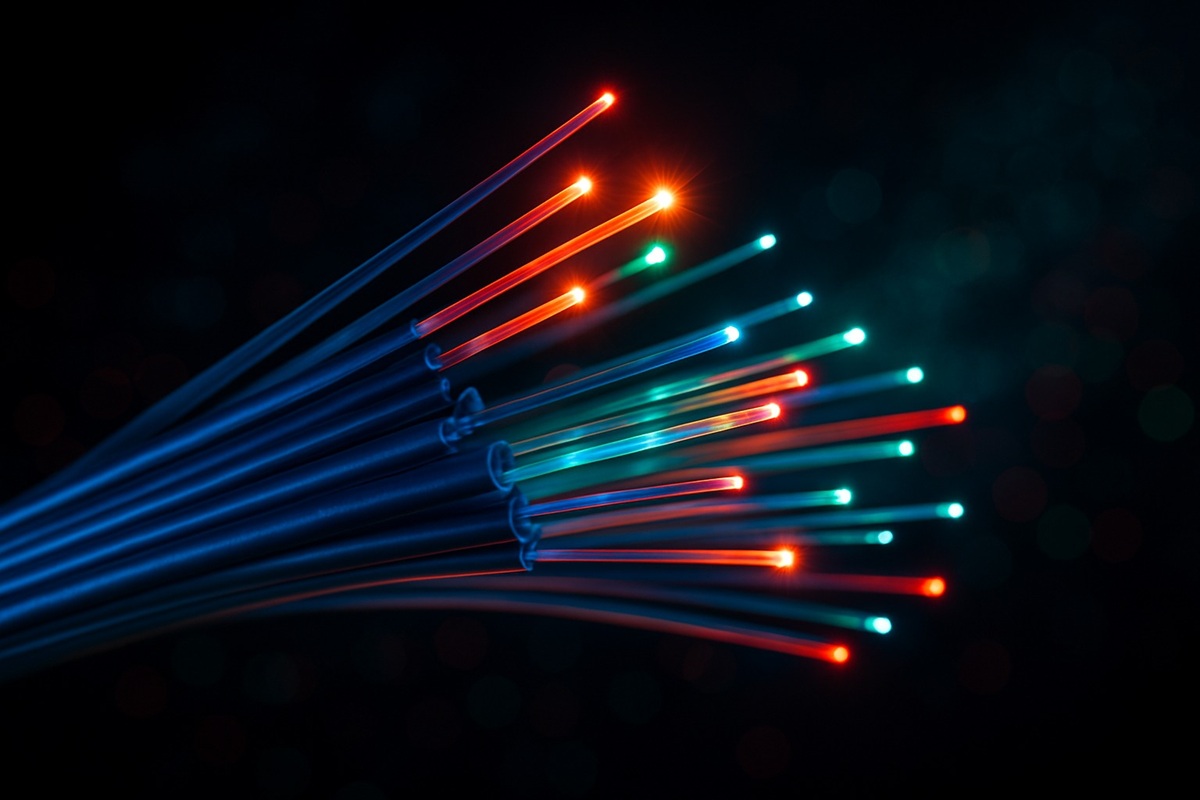
A New World Record in Data Transmission Promises to Change the Future of the Internet. Japanese Researchers Reached a Speed Capable of Downloading the Entire Netflix Catalog in Just One Second, Opening the Way for Increasingly Faster and More Efficient Digital Technologies.
A team of researchers from Japan achieved an impressive milestone in data transmission. The feat, recorded by the National Institute of Information and Communications Technology (NICT), reached 1.02 petabits per second.
The most important aspect is that this speed would allow the entire Netflix catalog to be downloaded in just one second.
This result far exceeds current networks. This is because the team used a special optical fiber capable of operating with multiple transmission channels.
-
Giant structures 14 meters beneath Egypt are revealed by satellites and expose a millennia-old secret buried in Buto.

-
Children have been making clay pieces for 15,000 years in Southwest Asia, and fingerprints preserved on 142 ornaments helped archaeologists prove this.
-
New semi-autonomous legged robot technology challenges the limitations of space exploration by operating almost without human intervention on the Moon.

-
Super toxic red mineral found in the double burial of two women aged 1,900 years near the banks of the Dnieper River in Ukraine.


Additionally, the innovation does not require an increase in the number of cables, making the solution practical for large operations.
How The Technology Works
The basis of the advancement is wavelength division multiplexing.
This technique uses different colors of light to transport data, combining more than 800 channels simultaneously. Therefore, the system can optimize the transfer rate and reduce energy losses.
Another relevant point is that the tests were carried out over a distance of 1,800 km.
The performance achieved proves that the technology is viable for long-distance applications, something that was previously a challenge.
Impact On Diverse Sectors
With such a speed, it would be possible to transfer entire libraries of data in a few seconds. Research centers and companies would have a significant advantage in the massive processing of information.
Areas of artificial intelligence and virtual reality would be directly benefited.
This is because data exchanges between servers would become almost instantaneous, eliminating latency issues that currently limit some services.
Although, for now, the technology is limited to professional networks, it may reach household consumption in the future. 6G standards may draw inspiration from this advancement to achieve unprecedented speeds.









-

-

-

8 pessoas reagiram a isso.