






 Portuguese
  Spanish


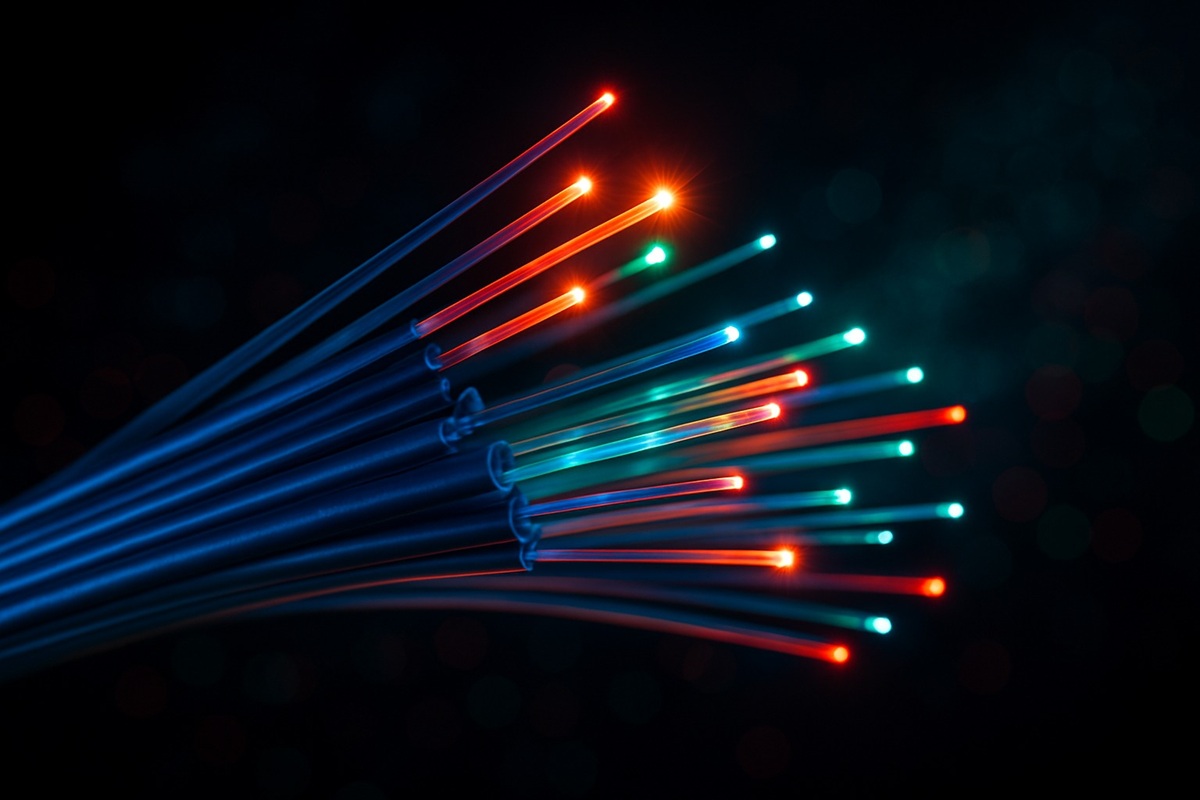


A New World Record in Data Transmission Promises to Change the Future of the Internet. Japanese Researchers Reached a Speed Capable of Downloading the Entire Netflix Catalog in Just One Second, Opening the Way for Increasingly Faster and More Efficient Digital Technologies.
A team of researchers from Japan achieved an impressive milestone in data transmission. The feat, recorded by the National Institute of Information and Communications Technology (NICT), reached 1.02 petabits per second.
The most important aspect is that this speed would allow the entire Netflix catalog to be downloaded in just one second.
This result far exceeds current networks. This is because the team used a special optical fiber capable of operating with multiple transmission channels.
-
Digital Transformation Essential in Energy, Oil, and Gas Industries, But IT Infrastructure Often Overlooked

-
Brazilian Students Repurpose Clay Tea Cups to Create Cooler That Lowers Room Temperature by Up to 10°C Without Air Conditioning or Fans
-
353-Year-Old Mystery Deepens as Archaeologist Arrested with Teeth and Bone Fragment Possibly Linked to d’Artagnan, the Real Musketeer Behind Alexandre Dumas’ Inspiration

-
16-Year-Old Invents CoolTowel, a Fitness Towel That Stays Cold for Up to 2 Hours, Wins Global Alibaba Competition with Over 15,000 Participants, Earning $1 Million




Additionally, the innovation does not require an increase in the number of cables, making the solution practical for large operations.
How The Technology Works
The basis of the advancement is wavelength division multiplexing.
This technique uses different colors of light to transport data, combining more than 800 channels simultaneously. Therefore, the system can optimize the transfer rate and reduce energy losses.
Another relevant point is that the tests were carried out over a distance of 1,800 km.
The performance achieved proves that the technology is viable for long-distance applications, something that was previously a challenge.
Impact On Diverse Sectors
With such a speed, it would be possible to transfer entire libraries of data in a few seconds. Research centers and companies would have a significant advantage in the massive processing of information.
Areas of artificial intelligence and virtual reality would be directly benefited.
This is because data exchanges between servers would become almost instantaneous, eliminating latency issues that currently limit some services.
Although, for now, the technology is limited to professional networks, it may reach household consumption in the future. 6G standards may draw inspiration from this advancement to achieve unprecedented speeds.


