Portuguese
 Spanish


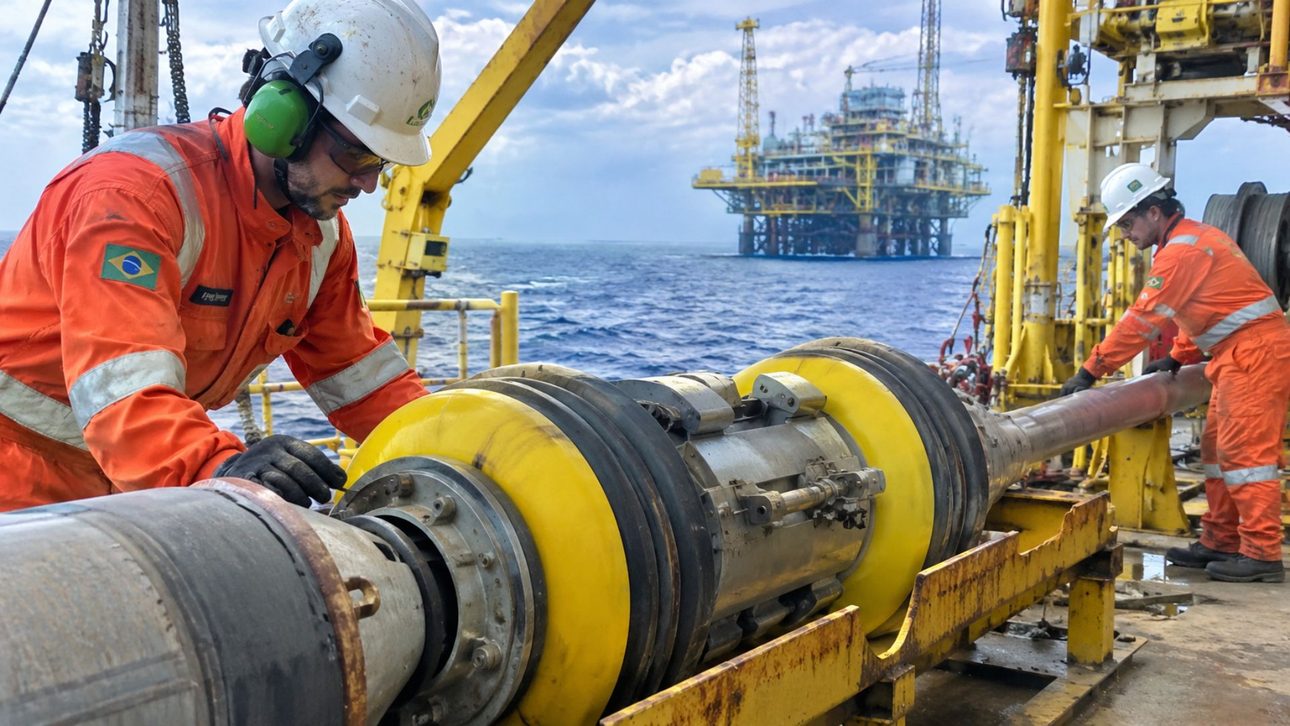

The technology project calls for two equipment configurations to remove residual fluids from subsea pipelines during the decommissioning of oil facilities. One will use pneumatic propulsion, while the other will have a hydraulic motor, an internal pump and scrapers to remove solid deposits.
Petrobras is seeking proposals to develop an internal cleaning technology for subsea pipelines that would allow work to be carried out using vessels with lower operating costs and greater availability than the rigs used for this type of operation.
The OP3425 technology challenge, called CTPP (Coiled Tubing Propelled by PIG), is accepting proposals through December 11, 2026, according to information from the Petronect portal reproduced by the independent platform ControlBid.
-
After oil indications at a Campos Basin well, Petrobras seeks to acquire ExxonMobil and QatarEnergy stakes

-
Petrobras keeps Sergipe platforms operational until 2030 and 2031, while gas route remains under review

-
Equinor extends Seven Viking contract through 2028 for subsea well inspection and repair in Norway
-
Oil-storage vessel planned 82 km off Quissamã sparks debate over support routes and Espírito Santo fishing grounds
The solution is based on equipment known in the oil industry as a PIG, a device that travels through the inside of pipelines to perform tasks such as cleaning, inspection and fluid displacement.
The modification proposed by the state-controlled company involves creating a longitudinal opening in the device, allowing it to connect directly to coiled tubing, the name for continuous, flexible tubing that Petrobras itself will provide for the project’s development.
Petrobras aims to extend coiled tubing’s reach inside pipelines
In the first configuration, nitrogen can propel the PIG, while the coiled tubing remains connected to the back of the device as it travels through the subsea pipeline.
Unlike a closed device, which pushes liquids toward the other end of the pipeline, the slotted tool will allow fluids encountered along the way to flow back through the coiled tubing to a receiving facility at the surface.
One technical problem addressed by the challenge concerns how coiled tubing behaves when subjected to compressive forces as it is inserted into long pipelines. Under these conditions, it can form a spiral and stop advancing.
To overcome this limitation, Petrobras intends to have the PIG itself pull the coiled tubing, keeping it under tension as it travels, rather than relying solely on force applied at the surface end.
Increasing the distance traveled inside the pipelines is one expected outcome of the modification, although the equipment’s performance still needs to be evaluated experimentally.
This first configuration is designed for interventions in blocked pipelines where there is no risk of fluids leaking into the marine environment.
Hydraulic motor and pump to clean damaged pipelines
To address other subsea pipeline integrity conditions, the technology challenge includes a second version of the tool, called CTPP + GeroPar, which incorporates a gerotor-type hydraulic motor coupled to a screw pump.
Fluid sent through the coiled tubing is expected to power the motor installed inside the device, transferring motion to the pump, which will remove liquids ahead of the PIG and move them to its rear.
The project also calls for using the reaction force generated as fluid exits the hydraulic motor to help move the tool.
In addition to the components that move liquids, the device will have scrapers to remove paraffin and other solid residues that can build up on the inside walls of pipelines.
One technical requirement sets a maximum diameter of six inches for the motor-and-pump assembly, equivalent to approximately 15.2 centimeters, even when installed in a larger PIG (pipeline pig).
Unlike the first version, the second was designed to operate in damaged pipelines or those open to the seabed, with the goal of moving residual fluids without releasing them into the marine environment.
Pipeline cleaning is part of offshore decommissioning
According to Petrobras, decommissioning encompasses activities associated with the permanent shutdown of an oil and gas production system, which may occur when facilities reach the end of their useful life.
Services planned for this stage include cleaning and preparing pipelines and equipment, treating and disposing of waste, and disconnecting subsea structures.
These operations may also take place during oil field redevelopment projects, when older production systems are taken out of service to make way for new facilities.
The technology opportunity sets a development period of up to 24 months. The work is expected to produce a prototype developed in collaboration with Petrobras, which will undergo bench testing and testing in a real-world environment.