






 Portuguese
  Spanish





Pentagon’s Secret Program Investigated UFOs Between 2007 and 2012, Received US$ 22 Million, Analyzed Navy Encounters and Changed U.S. Policy.
On December 16, 2017, a report by The New York Times revealed to the public the existence of a project that had until then been known only to a small circle within the United States government: the Advanced Aerospace Threat Identification Program, more commonly known by the acronym AATIP. The program officially operated between 2007 and 2012, within the U.S. Department of Defense, with the stated objective of investigating unidentified aerial phenomena that could pose risks to national security.
What made the revelation historic was not only the existence of the project but also the fact that it had been funded with public resources, kept secret, and focused on events recorded by advanced military sensors, including radar, infrared cameras, and systems embedded in Navy fighter jets.
US$ 22 Million, Influential Senators, and Discreet Contracts
The AATIP received approximately US$ 22 million over its years of operation. The funding was approved at the initiative of then-Senator Harry Reid, with support from other members of the Senate Appropriations Committee.
-
Collector adapts forklift electric motor in a Kombi Corujinha pickup, hides 16 batteries under the bed, and makes the Brazilian classic run silently with up to 90 km of range.

-
Goodbye traditional vacuum: Samsung surprises and launches 2-in-1 robot with steam, AI that recognizes floors and stains, self-cleaning station, hot air drying, automatic emptying, water refill, and app control.
-
Brazil is transforming acerola waste discarded by the pulp industry into an ambitious and surprising project that could forever change the way the country utilizes one of the most invisible by-products of the fruit sector.
-
Scientists have created a colossal digital twin to predict tsunamis in real time, a simulation of 55.5 trillion unknowns run on 43,520 GPUs that reduced 50 years of calculation to 0.2 seconds and could change the defense of coastal cities.


A large portion of this budget was directed to contracts with Bigelow Aerospace, based in Nevada, specializing in advanced aerospace studies. The official mission was to analyze data, produce technical reports, and assess whether the observed objects could be related to advanced foreign technologies, sensor failures, or poorly understood natural phenomena.
Nothing, at least officially, indicated a search for “extraterrestrial life”. Nevertheless, the documents analyzed went far beyond conventional drones or weather balloons.
The Role of the Navy and the Encounters Recorded on Video
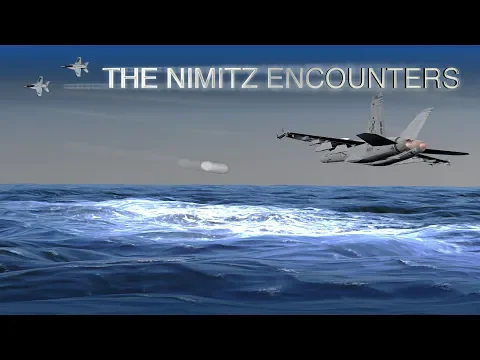
The turning point in public perception came when the U.S. Navy confirmed the authenticity of videos recorded between 2004 and 2015, which show military pilots interacting with objects of anomalous behavior.

The most famous are the videos known as FLIR1, Gimbal, and GoFast, recorded by pilots of F/A-18 Super Hornet jets during exercises in the Atlantic and Pacific. These objects displayed characteristics that defied immediate explanations:
- Abrupt speeds with no corresponding thermal signature
- Instantaneous direction changes
- Ability to hover and accelerate without visible means of propulsion
- Absence of wings, rotors, or conventional exhausts
Internal AATIP reports indicate that some of these objects appeared to operate beyond the known limits of aerodynamics, leading the Pentagon to classify them as UAPs (Unidentified Aerial Phenomena), a term adopted to replace the stigmatized “UFO“.
The Official Closure and What Continued After
In 2012, the Department of Defense announced the formal closure of the AATIP, claiming that the program no longer fit within the strategic priorities of the time. However, subsequent documents and testimonies showed that investigations did not cease entirely.
Some activities were absorbed by other internal structures, culminating years later in the creation of new official offices, such as the All-domain Anomaly Resolution Office (AARO), responsible for investigating anomalous phenomena not only in the air but also in space, at sea, and in underwater environments.
The Political and Institutional Impact in the United States
The revelation of the AATIP had profound effects. For the first time, the U.S. government publicly acknowledged that objects of unknown origin and operation were being observed regularly by modern armed forces and that there were no conclusive explanations for all cases.
This led to:
- Congressional hearings with Navy and intelligence officials
- Public reports mandated by law to the Director of National Intelligence
- Change in guidelines for pilots to report anomalous encounters without fear of stigma
- Greater institutional transparency on the subject
In 2021, an official report admitted that dozens of cases remained unexplained, even after analysis of data from multiple sources.
What the Government Claims and What Remains Open
It is important to highlight that no official U.S. agency has stated that UAPs are of extraterrestrial origin. The most cited hypotheses include:
- Foreign experimental technologies
- Rare atmospheric phenomena
- Sensor artifacts
- Events not yet understood by current science
Nevertheless, the Pentagon itself recognizes that some cases do not clearly fit into any of these categories, which keeps the topic active within the scientific, military, and political communities.
Why the AATIP Changed the Global Debate on UFOs
Before 2017, discussing UFOs was largely synonymous with marginal speculation. After the AATIP revelation, the topic began to be treated as a matter of aerial, technological, and strategic security.
Today, U.S. allied countries such as the United Kingdom, France, and Japan are reviewing their own archives, while universities and research centers are openly discussing the need to study anomalous aerial phenomena with scientific rigor.
What was once taboo is now an institutional agenda.
An Ended Program, a Debate That Continues
The AATIP officially existed for only five years, but its impact far exceeded that period. It opened the door for a new governmental approach to the unknown, forcing institutions to acknowledge technological limits and gaps in understanding of airspace.
More than providing definite answers, the program left an unsettling conclusion: not everything that crosses the skies monitored by the world’s leading military powers can be explained with current knowledge.
And, for governments used to controlling narratives, this may be the most disturbing aspect of all.


