Small-car buyers in Europe will be able to order the Suzuki Ignis EV from summer 2027, a four-seat city car only 3,570 mm long that uses a 26 kWh battery and a 67 kW motor, and the first compact electric model Suzuki has built for global markets.
Suzuki Motor Corporation revealed the car in an online world premiere on November 25, 2026, and said in its official announcement that sales will begin in Europe and other markets in sequence from the summer of 2027.
The name is familiar. The previous Ignis was a petrol mild-hybrid crossover sold in Europe for years, and Suzuki UK still lists it on its website. The new car keeps the badge but drops the combustion engine entirely.

The numbers Suzuki has confirmed so far
The official specification sheet lists a 26 kWh battery, two-wheel drive and a motor with a maximum output of 67 kW and maximum torque of 133 Nm. Suzuki marks every figure as pre-homologation and subject to change.
-
Tesla’s AI Driving System Lets Cars Accelerate, Brake, and Change Lanes; Italy Grants Provisional Approval, Advancing Expansion in Europe

-
Fiat and Jeep partner Leapmotor makes a bold entrance, hits 2 million vehicles produced and accelerates its global expansion
-
From Le Mans to Formula E: Why Stellantis, parent of Fiat, Jeep, and Peugeot, decided to leave two major championships to develop high-performance cars
-
BYD’s new luxury hybrid SUV logs 3,777 registrations in Brazil, challenges BMW X1’s lead, and will be built in Bahia by 2027; meet the Denza B5


The body measures 3,570 mm long, 1,565 mm wide and 1,635 mm tall, on a 2,460 mm wheelbase. Ground clearance is 150 mm, the car seats four, and it rides on 175/65R15 tyres, according to the same sheet.
Brakes are ventilated discs at the front and leading-trailing drums at the rear. Suzuki gives a minimum turning radius of 4.5 m, while its UK site describes the same ability as a 9.0 m turning circle.
What is still missing from the spec sheet
Suzuki has not published a WLTP range, a price or trim levels for any market. CAR magazine says more details will be confirmed closer to the European launch, which it places in the middle of 2027.
Chief engineer Tomoyuki Tsubata told CAR magazine that Suzuki is “not ready to announce the Ignis’ efficiency figures”, while claiming that its Japanese sibling, the eSky, is the most energy-efficient EV sold in Japan.
CAR reported that the mechanically near-identical eSky claims around 190 miles on Japan’s WLTC test cycle and said the Ignis should come close to that. That is the magazine’s estimate, not a homologated European figure.
How much the small Ignis weighs
Suzuki’s own release does not state a kerb weight. CAR magazine reported that the Ignis weighs 1,080 kg and described the Heartect-E platform underneath it as “rather light”.
The magazine also said the motor produces about 90bhp, that the battery uses lithium iron phosphate chemistry, and that it can charge at up to 7.4 kW on AC and 50 kW on DC.
Tsubata described the battery pack as “surprisingly thin”, according to CAR. Suzuki’s release only confirms that the pack is an LFP unit “designed for high safety and long service life” and that it sits beneath the body.

A dedicated platform under a boxy body
The car sits on Suzuki’s HEARTECT-e platform, built for electric models. Placing the battery under the floor gives a lightweight, highly rigid body and leaves more space in the cabin, the company said.
The drive unit is an eAxle that combines a newly developed motor, inverter and reduction gears in a single compact housing. Suzuki describes the whole unit as compact and lightweight.
CAR described the result as a “properly boxy” city car whose shape makes the most of the space inside. The magazine added that the same boxy dimensions help give the car its tight turning radius.
Tested on European roads before the reveal
Suzuki said engineers ran real-world tests in urban areas and on winding roads in Europe and other countries. The data was used to tune power delivery and the chassis for local road conditions in major markets.
The company named the concept “Easy to Switch”, aiming at drivers moving from a petrol car to an EV, or from a bigger car to a smaller one. It promises quiet running and smooth acceleration for first-time EV owners.
The suspension is specific to the EV platform. The car also gets a regenerative-hydraulic braking system, an electric brake booster and what Suzuki calls an “easy operation pedal”, which is not fitted to every version.
The president’s “smaller, fewer, lighter” pitch
Toshihiro Suzuki, representative director and president, said the Ignis brings together decades of small-car development and the company’s philosophy of “Sho-Sho-Kei-Tan-Bi”, which Suzuki translates as smaller, fewer, lighter, shorter and beauty.
He said the packaging skills Suzuki refined on Japan’s mini vehicles allowed a light, compact body with “excellent energy efficiency and easy manoeuvrability” alongside a spacious cabin.
Like the Swift and S-Cross, the new Ignis went through extensive driving tests on public roads in Europe, he said, adding that Suzuki wants to offer mobility that is “just right” for each customer.
Not a renamed eSky, says the engineer
The Ignis is closely related to the eSky sold in Japan, but Tsubata rejected the idea that it is a simple rebadge. “In the early stages of development, the two vehicles were made separately with different markets in mind,” he told CAR.
After the e Vitara, the Ignis is Suzuki’s next electric model for markets outside Japan, according to the magazine. The company itself calls it its first compact EV for global markets.
Inside a cabin built for four
Suzuki used three design keywords for the car: “Smart”, “Iconic” and “Cozy”. The exterior has a flowing shoulder line, a floating roof and LED lamps at both ends with graphics inspired by digital numerals.

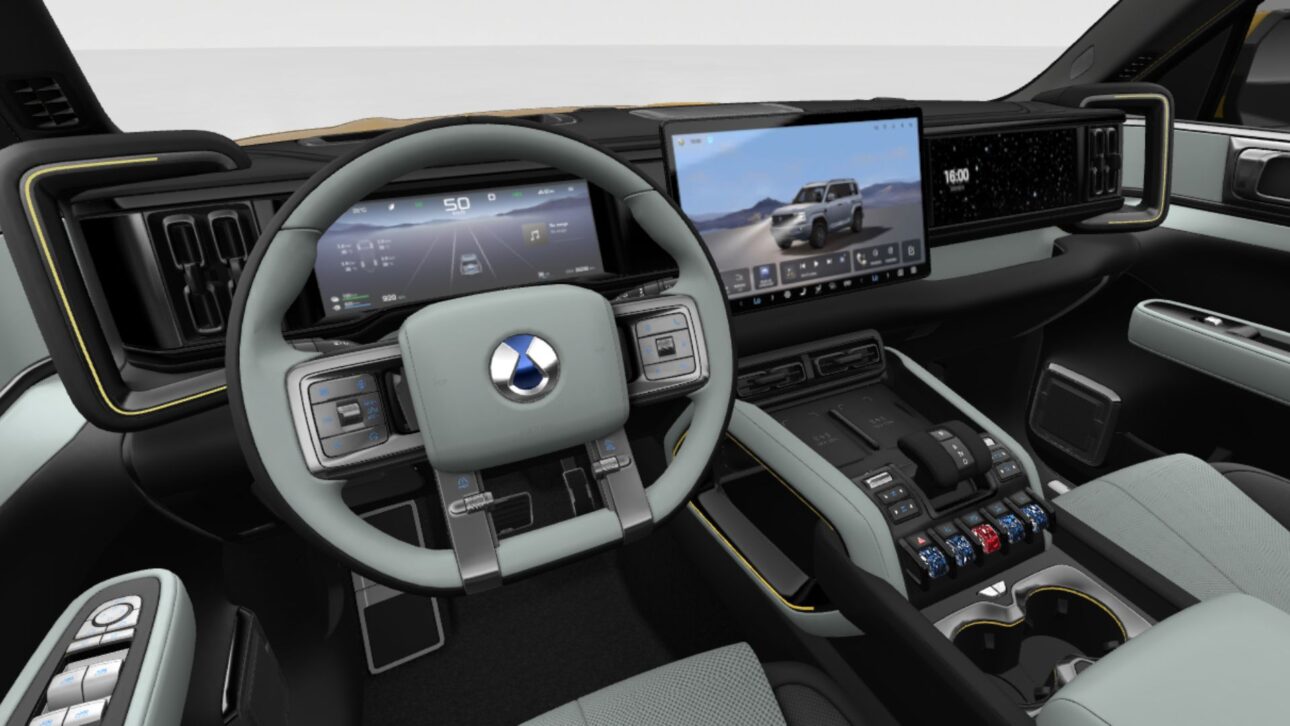
Inside, a rounded line runs from the dashboard into the door trims. A wide display sits on the instrument panel next to a tray whose design, Suzuki says, was inspired by pottery.
Where it lands in Europe’s small-EV fight
CAR named the electric Renault Twingo as the Ignis’ closest competitor in Europe, noting that both cars have simple interiors and space for four occupants.
With price and range still unannounced, the comparison rests on size, weight and battery for now. CAR expects the missing figures to arrive closer to the European launch next year.
Would a 26 kWh four-seater weighing about 1,080 kg be enough electric car for daily driving in a European city?