






 Portuguese
  Spanish
  4 min of reading
  0 comments


For decades, the Amazon was the planet’s largest climate shield — a forest so vast that it absorbed billions of tons of carbon per year, offsetting part of human emissions and slowing global warming. This role is being lost. A study published in February 2026 in the scientific journal AGU Advances, by the Max Planck Institute of Biogeochemistry, documented something scientists feared to confirm: in 2023, the world’s largest tropical forest became a net carbon source — emitting more CO₂ than it absorbed. The research on Amazon carbon reveals that the shift happened not because of fires, but because of something more insidious: drought made the forest stop breathing.
The study’s title says it all: “Reduced Vegetation Uptake During the Extreme 2023 Drought Turns the Amazon Into a Weak Carbon Source”. The international team, led by Santiago Botia, combined CO₂ measurement data from the Amazon Tall Tower Observatory (ATTO), satellite images, and vegetation models to track, month by month, what happened to the Amazonian carbon cycle in 2023. The result was historic — and worrying.
Why Amazon Carbon Became a Source in 2023
Fires were not the cause. Satellite data showed that burnings in 2023 were within normal levels for the last twenty years. The main culprit was the extreme drought. In 2023, temperatures 1.5°C above the historical average of 1991-2020 and abnormally low atmospheric humidity created conditions that Amazonian vegetation was not prepared to withstand.
-
Ukraine launches largest drone attack on Moscow since 2022, Russia claims to have intercepted nearly 200 aircraft near the capital, Kapotnya refinery targeted again, and offensive reignites alert about war reaching the Russian energy heart just a few kilometers from the Kremlin.

-
As historic droughts threaten crops and cities, Morocco accelerates a billion-dollar plan to transform ocean water into drinking water, build Africa’s largest desalination plant, and supply millions by 2030.

-
Truck drivers, freight, and fines from 2022 take center stage in politics: Chamber approves MP with amnesty, mandatory tracking by CIOT, million-dollar penalties, and new minimum wage for those who spend more than 24 hours on the road.
-
China off the radar: US plans mega $30 million weapons depot in Australia, out of reach of most Chinese missiles, with full capacity expected by 2028



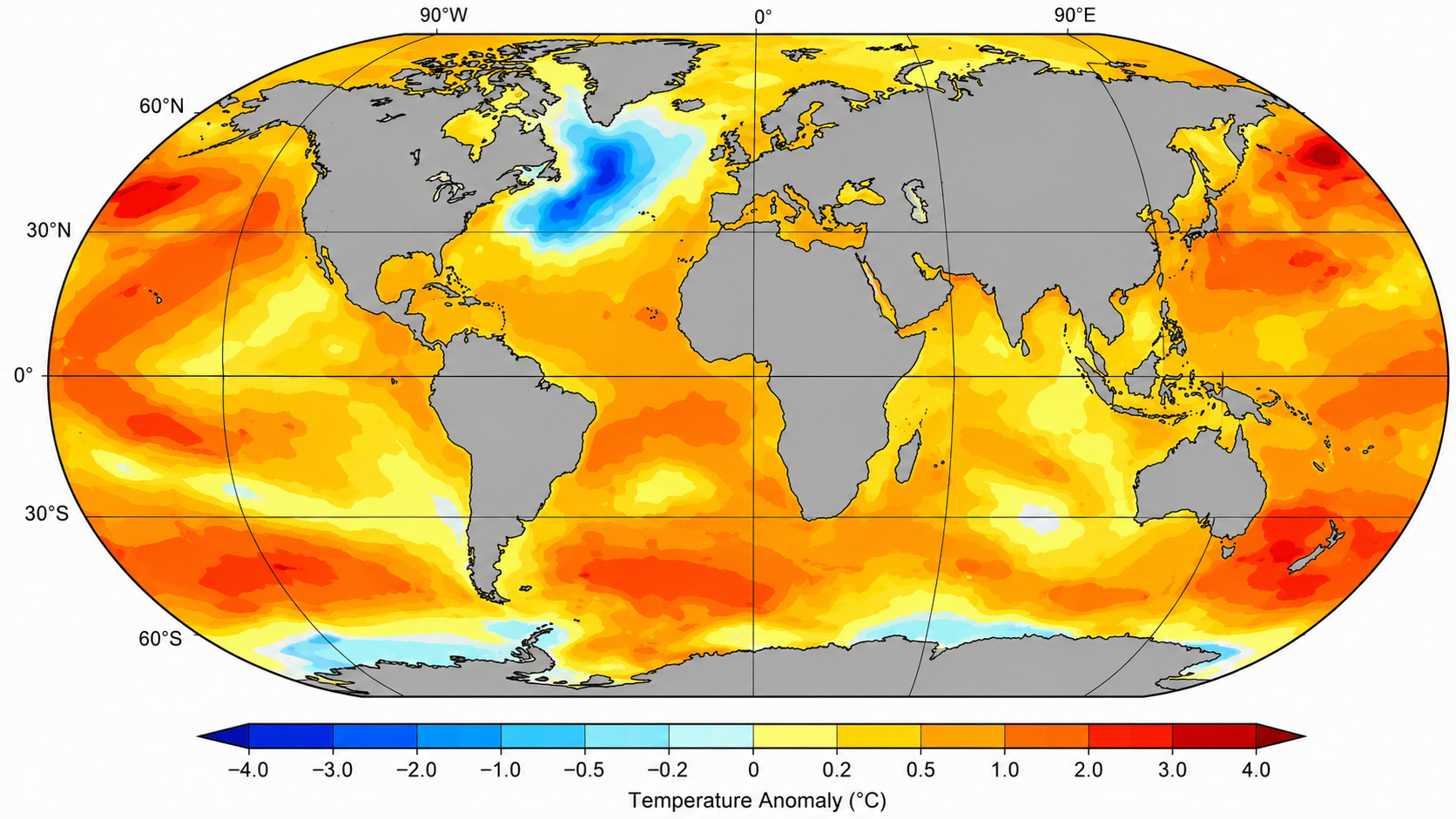
The root cause of the drought was the unusual warming of the Atlantic and Pacific, which reduced the transport of moisture from the Atlantic to the interior of South America. The forest, deprived of water, drastically reduced photosynthesis — the process by which plants absorb CO₂ and release oxygen. Without photosynthesis at a normal pace, Amazon carbon absorbed much less CO₂ than usual.
The pattern was seasonal. From January to April, the forest absorbed more carbon than normal — an initial positive sign. But in May, when the drought intensified, the inversion occurred: the Amazon went from sink to source. The peak of emissions was in October, during the most critical period of the dry season, when high temperatures and very low humidity caused vegetation to release carbon instead of capturing it.
The mechanism is as follows: under normal conditions, Amazonian trees perform photosynthesis throughout the year — unlike temperate forests that “hibernate” in winter. This continuous cycle is what makes the tropical forest so efficient as a carbon sink. In 2023, the drought interrupted this cycle: plants closed their stomata (the “pores” of the leaves) to conserve water, and in doing so, stopped absorbing CO₂ from the air. The forest became biologically “silent” — still alive, but not capturing carbon.
At the same time, forest soils continued to release CO₂ through microbial respiration — a process that does not depend on light or water and continues even during drought. This created an imbalance: emissions continued from the soil, but absorption by vegetation decreased. The net balance turned negative — and the Amazon, for the first time in modern records, contributed to warming instead of combating it during a complete annual cycle.

Amazon Carbon Accounted for 30% of All Tropical Emissions in 2023
The volume emitted was 10 to 170 million tons of carbon — the wide range reflects uncertainties in the models, but even the minimum value represents a historic break from the forest’s historical role as a carbon sink.
The most impactful number from the study: the Amazon alone accounted for 30% of all net carbon emissions from the planet’s tropical lands in 2023. The forest that should have been the solution became part of the problem — and in significant proportions.
- Net carbon emission in 2023: 10 to 170 million tons
- Responsible for 30% of tropical land emissions globally
- Temperature: 1.5°C above the historical average (1991-2020)
- Main cause: vegetation stopping CO₂ absorption (not fires)
- In 2024: fires released 791 million tons of CO₂ — 7x the recent average
The following year was even more dramatic. In 2024, the Amazon suffered the worst fires in recent history, releasing 791 million tons of CO₂ — seven times the average of previous years. For the first time, emissions from fires surpassed emissions from deforestation. The combination of persistent drought and fire created a cycle of degradation that researchers describe as a precursor to the forest’s so-called “tipping point”.
The Tipping Point: What Scientists Fear
The year 2023 was not an isolated event. The 2023 drought was the worst recorded in the Amazon in decades — but climate models indicate that such events will become increasingly frequent. The frequency of extreme El Niño events is increasing, and each intense El Niño adds heat and drought pressure on the Amazon basin. What was an exception may become the new norm.
The AGU Advances study places the Amazon in an urgent scientific debate: that of the proximity of the so-called tipping point — beyond which the forest would no longer be able to recover, even if the causes of degradation ceased. The latest climate models suggest that the Amazon may cross this threshold sooner than previously thought.






-

1 person reacted to this.