






 Portuguese
  Spanish


With 825 meters in length and 90 meters in height over an artificial reservoir, the Senqu Bridge is the largest of the three structures of the mega water project that will supply millions of people in South Africa and Lesotho — and will be inaugurated on April 22, 2026
In a few days, two African countries will inaugurate a bridge that shouldn’t exist — at least not in the conventional sense.
The Senqu Bridge, 825 meters long and suspended 90 meters high, was built over a reservoir that is still being filled with water.
It is part of Phase II of the Lesotho Highlands Water Project (LHWP), a binational water mega-project connecting South Africa and Lesotho.
-
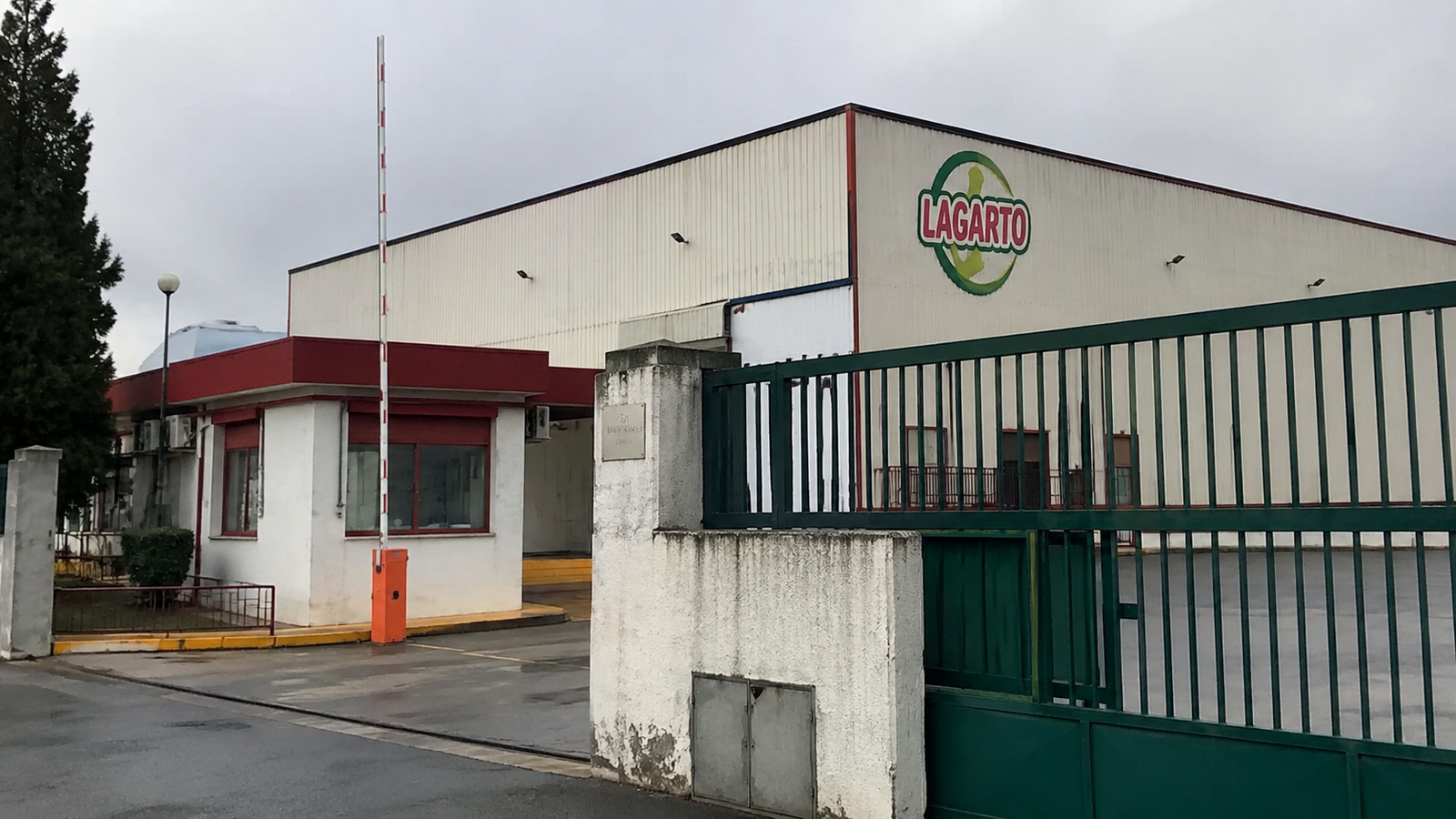
Historic Factory in Zaragoza Closes After Over 50 Years, Leaving Dozens Unemployed and Ending an Era in Spain’s Industrial History

-
Brazil to Convert 80 Public Properties into 11,000 Affordable Homes Across 44 Cities to Address Housing Shortage

-
Brazilian Company Develops Wall Panels from Recycled Refrigerator Foam with Comparable Thermal and Acoustic Performance

-
Brazil’s São Paulo Region Unveils Latin America’s Largest Timber Shopping Mall, Built in 7 Months, Capturing Carbon and Preventing 900 Tons of Emissions


The inauguration is scheduled for April 22, 2026, in the Mokhotlong District, in the mountains of Lesotho — a region known as the “Roof of Africa” for its altitudes exceeding 2,000 meters.
To give an idea of the scale, 825 meters is almost the distance of 8 football fields lined up, suspended at a height equivalent to a 30-story building.

What is the Lesotho Highlands Water Project
The LHWP is one of Africa’s largest cross-border water transfer projects — and one of the most ambitious in the world.
It captures water in the mountains of Lesotho — a small country completely landlocked within South Africa — and transports it through tunnels and canals to the Gauteng region, where Johannesburg and Pretoria are located.
Gauteng concentrates over 16 million inhabitants and is the economic heart of South Africa.
However, the region is naturally dry and relies on external water sources to supply its growing population and industry.
Phase I of the LHWP was completed decades ago, with dams and tunnels that already transfer billions of liters.
Now, Phase II is in full execution, with new dams, transfer tunnels, and three large bridges — of which the Senqu is the largest and most impressive.
Why a bridge over a reservoir under construction
When Phase II’s dam is complete and the reservoir full, entire valleys will be flooded.
Roads that currently connect rural communities in Lesotho will be submerged by water.
Without the bridges, residents of the Mokhotlong region would be completely isolated — without access to hospitals, schools, and markets.
Therefore, the three bridges of the project are not an engineering luxury — they are vital survival infrastructure for communities living in the mountains.
The Senqu Bridge is the largest of the three precisely because it crosses the widest point of the reservoir, where the distance between the banks is greatest.
825 meters and 90 meters — to visualize the size
The Senqu Bridge is 825 meters long — almost the distance covered by an Olympic athlete in the 800-meter dash.
Its height of 90 meters surpasses that of the Rio-Niterói Bridge in its central span (72 meters).
Furthermore, it is located at an altitude of over 2,000 meters, in the mountains of Lesotho.
The combination of length, height, and altitude made construction extremely challenging — materials had to be transported along winding and steep mountain roads, and workers faced sub-zero temperatures during the austral winter.
For comparison with Brazil, the country’s largest cable-stayed bridge — the Salvador-Itaparica Bridge under construction — will be 12 km long but over the sea at ground level. The Senqu is shorter in length, but 90 meters higher and on infinitely more hostile terrain.

Millions of people depend on this water
The Gauteng region is not only the most populous — it is also the most economically important in South Africa.
Johannesburg is the financial center of the African continent.
Pretoria is the administrative capital of the country.
Together, these cities and their surroundings are home to over 16 million inhabitants in constant growth.
However, the region fundamentally depends on water transferred from external sources to meet the growing demand from residences, industries, and agriculture.
The LHWP is the main external water source for Gauteng.
Thus, the completion of Phase II — including bridges like the Senqu — is not just road infrastructure.
It is the guarantee of water supply for one of the largest metropolises on the entire African continent and for millions of people who depend on this water daily.
Two countries, one project — how cooperation works
The LHWP is a rare model of binational cooperation in water infrastructure.
Lesotho provides the water — its mountains receive abundant rainfall and feed mighty rivers.
South Africa finances most of the infrastructure and receives the transferred water.
In return, Lesotho receives royalties for the exported water, which represent a significant portion of the small mountainous country’s revenue.
Therefore, the Senqu Bridge symbolizes more than engineering — it symbolizes a partnership between nations to solve a problem that neither could solve alone.

Caveats
The LHWP faces historical criticisms regarding environmental impacts and forced resettlement of communities that lived in the valleys that will be flooded.
Furthermore, the Phase II schedule has experienced delays at various stages throughout the years of construction.
The inauguration of the Senqu Bridge is a positive milestone, but the mega-project as a whole still has years of work ahead before it is fully operational.
Questions regarding adequate compensation for displaced communities and the environmental impact on Lesotho’s mountain ecosystems continue to be debated.
Still, the scale of the engineering — an 825-meter bridge 90 meters high in the mountains of Africa, built on hostile terrain to guarantee water for 16 million people — demonstrates what is possible when two countries cooperate to solve a problem that affects millions of lives.








Yes the Senqu Bridge 🌉 image is incorrect please find correct image
Confirmed, Paul — the Senqu Bridge image used was a stock substitute that doesn’t match the real structure. We’ll update with an accurate photograph of the bridge being inaugurated. Thanks for catching it — readers like you keep us accurate.
The image of that bridge is incorrect who- ever wrote this must get the true facts to- gether
Thank you for flagging, J Blaauw — you’re right. The thumbnail image originally used was a stock placeholder of a different bridge. We’ll source the correct photograph of the actual Lesotho-South Africa bridge being inaugurated. The factual content of the article (length, height, project details) is accurate.