





 Portuguese
  English
  Spanish
  3 min of reading
  0 comments


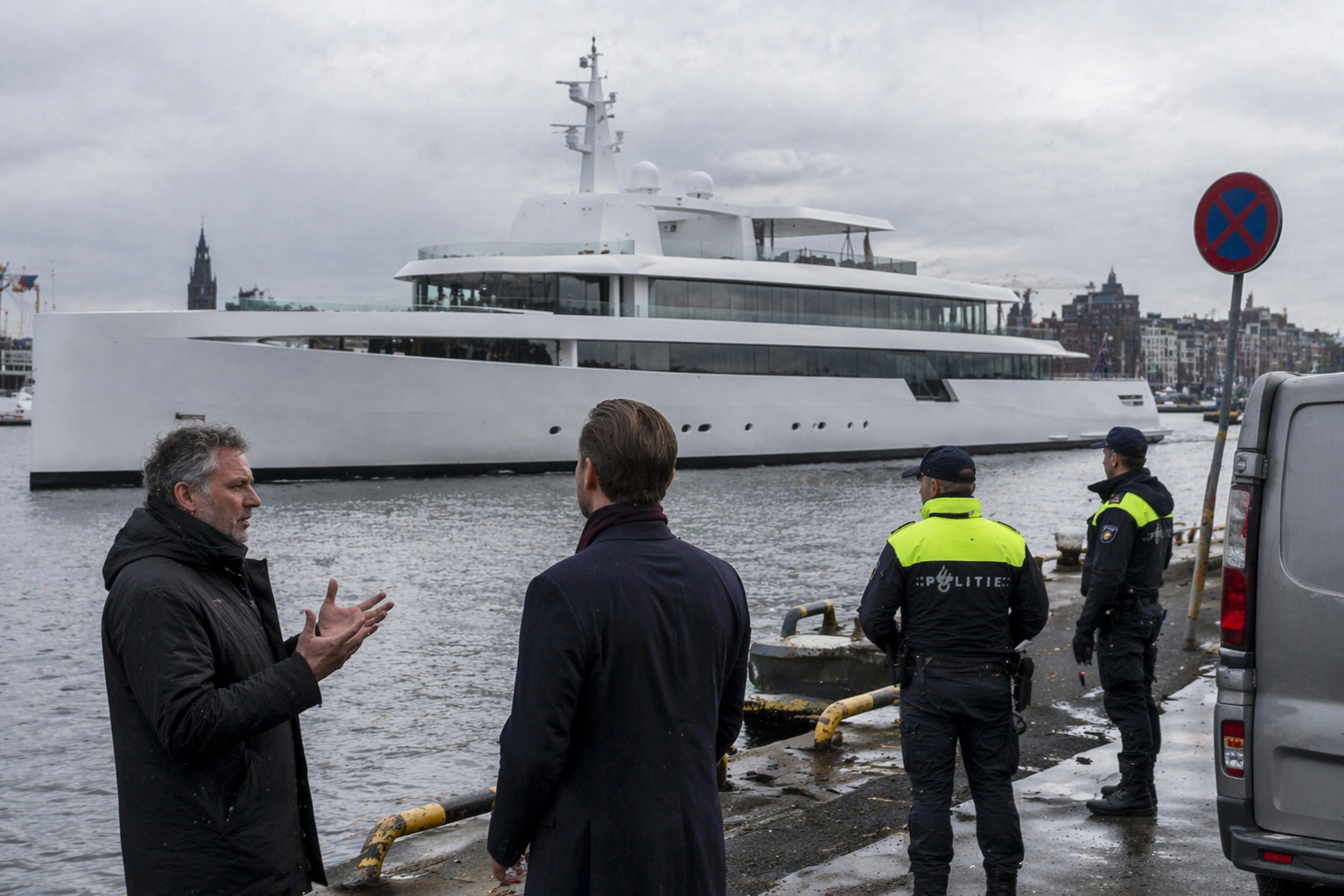
Superyacht envisioned by the founder of Apple was held due to debt with designer and only sailed after agreement between heirs
As a consequence, authorities seized the vessel in the port of Amsterdam, and the heirs only took control after settling the debt.
-
A waterfall with an infinity pool effect, 50 meters high, has become a tourist sensation in a little-known city in the South of Santa Catarina.

-
Cities on the verge of depopulation are paying residents to not disappear from the map: a program that started with Italian villages selling houses for €1 is now advancing through the United States, Spain, and Portugal with bonuses of up to US$15,000, free internet, and tax exemptions to try to curb the demographic collapse.

-
8-year-old boy discovers hidden gold mine in China and reveals millennia-old relics that could rewrite the history of ancient trade routes

-
A Brazilian teenager created an artificial intelligence to map heat islands and help cool down cities that are becoming open-air ovens under increasingly extreme temperatures.


The superyacht project took five years and followed a strict design standard
During the last five years of his life, Steve Jobs dedicated himself intensely to the development of the Venus. Just as he did in iconic Apple projects, he worked directly with Philippe Starck and defined every detail of the boat.
The project combined aesthetic elegance and technological innovation, using wood, glass, and aluminum. Large windows enhanced the entry of natural light and reinforced the proposal for integrated environments.
The financial agreement followed an informal model and stipulated 6% of the total project value as payment to the designer, as reported by Reuters.

Jobs’ death in 2011 created a financial impasse with heirs
In October 2011, Steve Jobs died before the yacht’s completion. The final payment to the designer was pending at that time.
The relationship between the parties was based on trust, without a detailed formal contract, as Starck’s lawyer explained to Reuters. This format opened the door for disagreements after the entrepreneur’s death.
The direct understanding between Jobs and the designer gave way to a conflict over values involving the heirs.
Difference in values led to a dispute of millions of euros
The initial budget for the project was around €150 million, which would guarantee the designer about €9 million. The final cost, however, dropped to €105 million.
The heirs argued that the calculation should consider the actual construction value, which reduced the commission to about €6 million.
The €3 million difference triggered the financial conflict and brought the case to the judicial sphere.
Yacht was seized in Amsterdam until payment resolution
Philippe Starck resorted to a collection agency and obtained a court order to retain the yacht. The Venus remained in the port of Amsterdam and did not make its maiden voyage.
The port authority confirmed to the BBC the existence of the debt and the retention of the vessel, which gave international visibility to the case.
Days later, the heirs resolved the impasse. According to Le Monde, they made an undisclosed payment and ended the dispute.
Superyacht Venus combines advanced technology and exclusive design
After its release, the Venus began to sail normally and drew attention for its technical specifications. The yacht measures 80 meters in length and the Feadship shipyard in the Netherlands conducted its construction.
The navigation system uses seven 27-inch iMacs, reinforcing the integration between design and technology. This choice reflects Jobs’ vision applied to the project.
The minimalist and sophisticated look established the Venus as a reference in the high-end nautical sector.
Steve Jobs never saw the completed yacht
Steve Jobs did not get to see the Venus finished. His widow, Laurene Powell Jobs, received the vessel after his death.
Biographer Walter Isaacson reported that Jobs was aware of this possibility while developing the project.
Diving into this story that mixes innovation, trust, and financial dispute, one is left to ponder: to what extent can informal agreements between great names withstand the test of time when million-dollar values come into play?






Be the first to react!