






 Portuguese
  Spanish


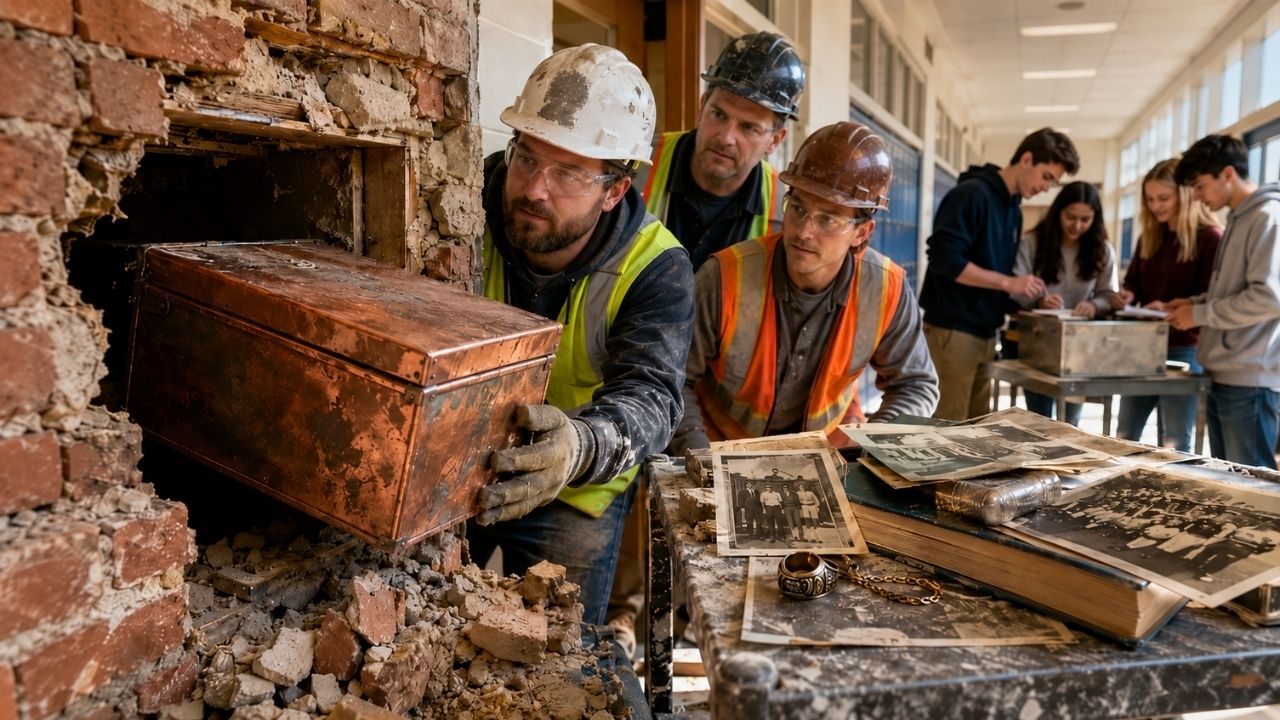

Workers found the time capsule behind a cornerstone during renovations at Schenectady High School, in April 2026. The sealed box contained a yearbook, photographs, newspapers, books, notebooks, and a graduation ring, while current students began to decide what to leave for future generations of Schenectady students.
A time capsule hidden since 1957 was found by two workers inside an external wall of Schenectady High School, in New York State, USA. The discovery occurred on April 9, 2026, during a revitalization project of the school building, and revealed a preserved copper box behind a cornerstone.
According to a report by the American newspaper Times Union, on April 21, 2026, the box contained documents, photographs, and objects related to the educational history of the city. After the find, the district decided to involve that year’s graduates in preparing a new capsule for future students.
Workers were removing bricks when they found the box

The carpenter Bill Dumais and mason Jim McKeever were working on the southwest part of the facade when they began removing bricks from one of the external walls. During the work, the two found a stone marked with the year 1957, related to the old construction of that wing of the school.
-
Infinite energy: a discovery just 200 meters above the ground could transform villages, drastically reduce climate control costs, and reveal a solution that promises to change the future of energy.

-
Car prohibited: village over 1,600 meters above sea level holds a treasure discovered in the 18th century and surprises tourists with a rare experience that few imagine finding in winter
-
Family buys an 1850 palace in Sicily with 600 m², begins renovation in the old stable, breaks through a sealed door under the apartment and finds an artificial cave full of stones that extends under the street, may be connected to ancient tunnels and remains without a known function.
-
Trees have become one of Brazil’s biggest businesses: the planted forest sector generates 240 billion reais, covers more than 10 million hectares of eucalyptus and pine, and is a global powerhouse in cellulose.


Upon carefully removing the block positioned behind the cornerstone, they noticed the existence of a metallic box hidden in the cavity. The container had been out of sight for almost seven decades, protected by the masonry and the structure of the building.
Stone from 1957 indicated that the object could be historical
The position of the box immediately aroused suspicion that it was a time capsule. For Dumais, a cavity located behind a stone engraved with the year of construction seemed like a planned place to store memories intended for the future.
McKeever, however, was not sure at first. The container was covered by a layer of tar, and the worker considered the possibility that it was just an object used to fill or level some space during the construction of the wall.
Copper box was sealed by welding
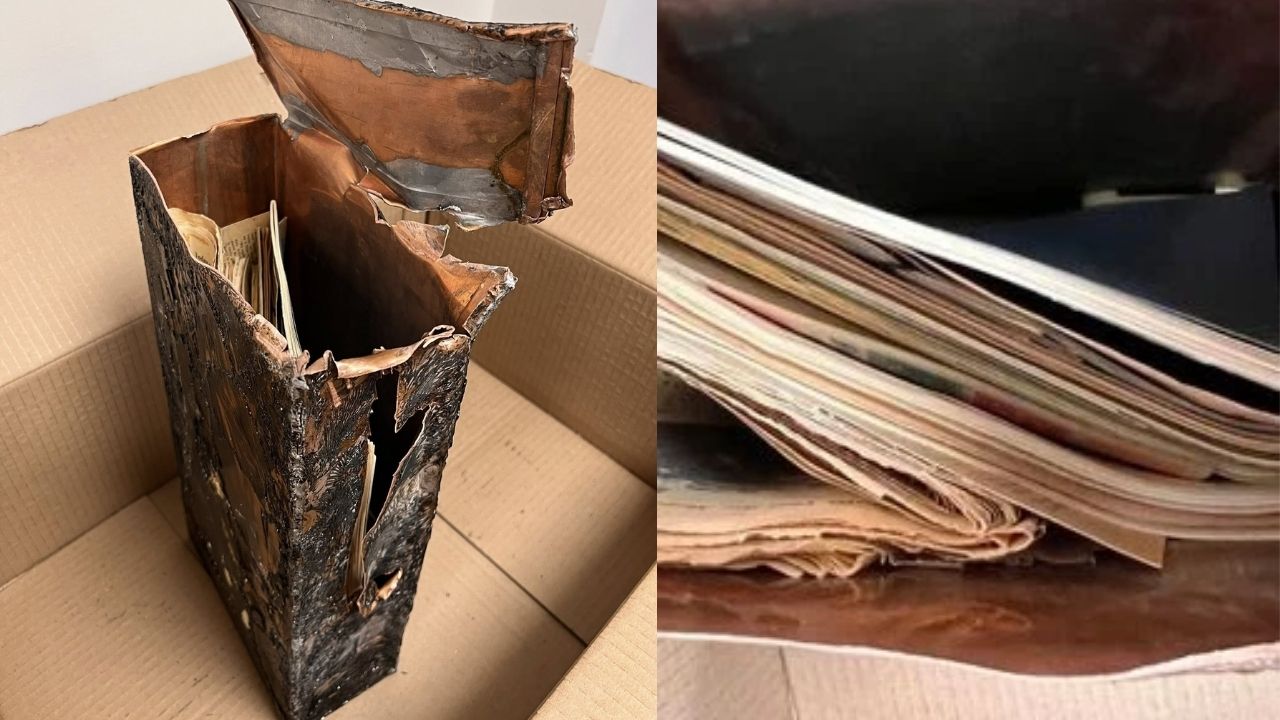
After removing the container, the workers placed it on an improvised bench to avoid damage. The copper box remained firmly closed, and the attempt to access the interior proved more difficult than expected.
The duo needed to use an impact drill to break the weld point that kept the lid attached. The sturdy closure helped protect the contents from moisture, dust, and changes that occurred in the building for approximately 70 years.
Documents showed what the school community was like
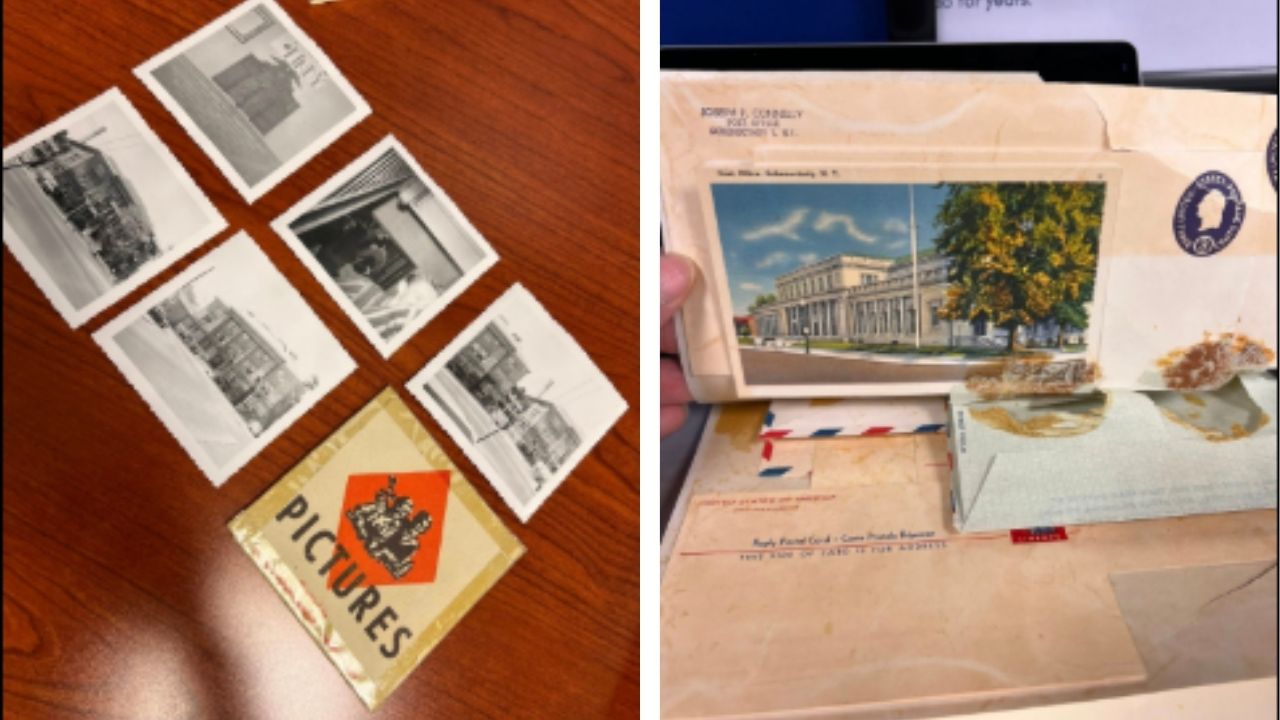
Inside the time capsule were a yearbook, newspaper clippings, old textbooks, notebooks, photographs, and a graduation ring. The black and white images seemed to show students, teachers, and staff linked to Schenectady schools at that time.
The objects were not only of sentimental value. Together, they allowed for an observation of how the school community presented itself, what events it considered important, and what records it chose to preserve for people who had not even been born yet.
Content recorded an important change in the city
According to a publication by the school district, the materials help to tell the transition between the closure of Nott Terrace High School and the construction of Linton High School. The new high school was inaugurated in 1958 and later became known as Schenectady High School.
The box was prepared precisely at a time of transformation and modernization of the educational network. Therefore, its content serves as a portrait of the expectations of a community that was preparing to inaugurate a new phase in its history.
City had thousands of students at the end of the 1950s

When Linton High School was inaugurated, Schenectady had 25 municipal schools. At that time, more than 13,000 children attended the public network, while another 3,500 were enrolled in private or religious institutions.
Adult education also had a significant presence in the city. Between 10,000 and 12,000 people attended night classes, showing that the school system served audiences of different ages and needs.
Current renovation paved the way for discovery
The time capsule appeared during the second phase of the Schenectady 2030 Revitalization Project. The program includes large-scale interventions in the school and requires the removal or modification of parts built several decades ago.
Without opening the external wall, the box could have remained hidden for many more years. The renovation created an unexpected encounter between the current team and the people who planned that construction at the end of the 1950s.
Graduates will prepare a new capsule
After the discovery, the school district decided that students graduating high school in 2026 would participate in creating a new capsule. The project is to be developed in conjunction with the administration and the team responsible for designing the interventions.
The intention is to replace the removed container and return to the wall a set of objects representative of the present. In this way, the discovery will not end the tradition started in 1957 but will give rise to a new record for future generations.
Students will need to choose how to represent 2026
The graduates will face the challenge of deciding which objects, texts, photographs, or digital records can explain the current school culture. The choices will need to show how students live, study, communicate, and imagine the future.
Selecting what will be preserved also requires recognizing what defines a generation. Common items in the present may seem curious or historically important when examined by students approximately 70 years from now.
Project turns discovery into educational activity

For the district, the value of the find goes beyond the curiosity provoked by a hidden box. The materials allow current students to analyze cultural priorities, educational practices, and expectations held by students and educators at the end of the 1950s.
The experience also creates a concrete link between different generations. Instead of studying the past only through books, young people can handle records chosen by people who attended schools in the same city decades earlier.
Old objects were taken to the school district


After examining part of the content, Dumais and McKeever handed the capsule to those responsible for the work. The container and materials were eventually sent to the school district’s administrative office for evaluation and preservation.
The discovery is expected to continue being used as part of the institutional memory of the network. The yearbook, the ring, the photographs, and the notebooks help transform abstract events into concrete signs of student life from another era.
New message should cross another seven decades
The new time capsule aims to leave future students a view of the school and the city in 2026. If it remains protected for the same period as the original box, it could be found around the 2090s, when school routines will likely be very different.
The challenge for graduates will be deciding what truly deserves to cross so many decades. What would you put inside a capsule intended for students who will only know our era 70 years from now? Tell us in the comments which object or message would best represent current life.


