Portuguese
  Spanish


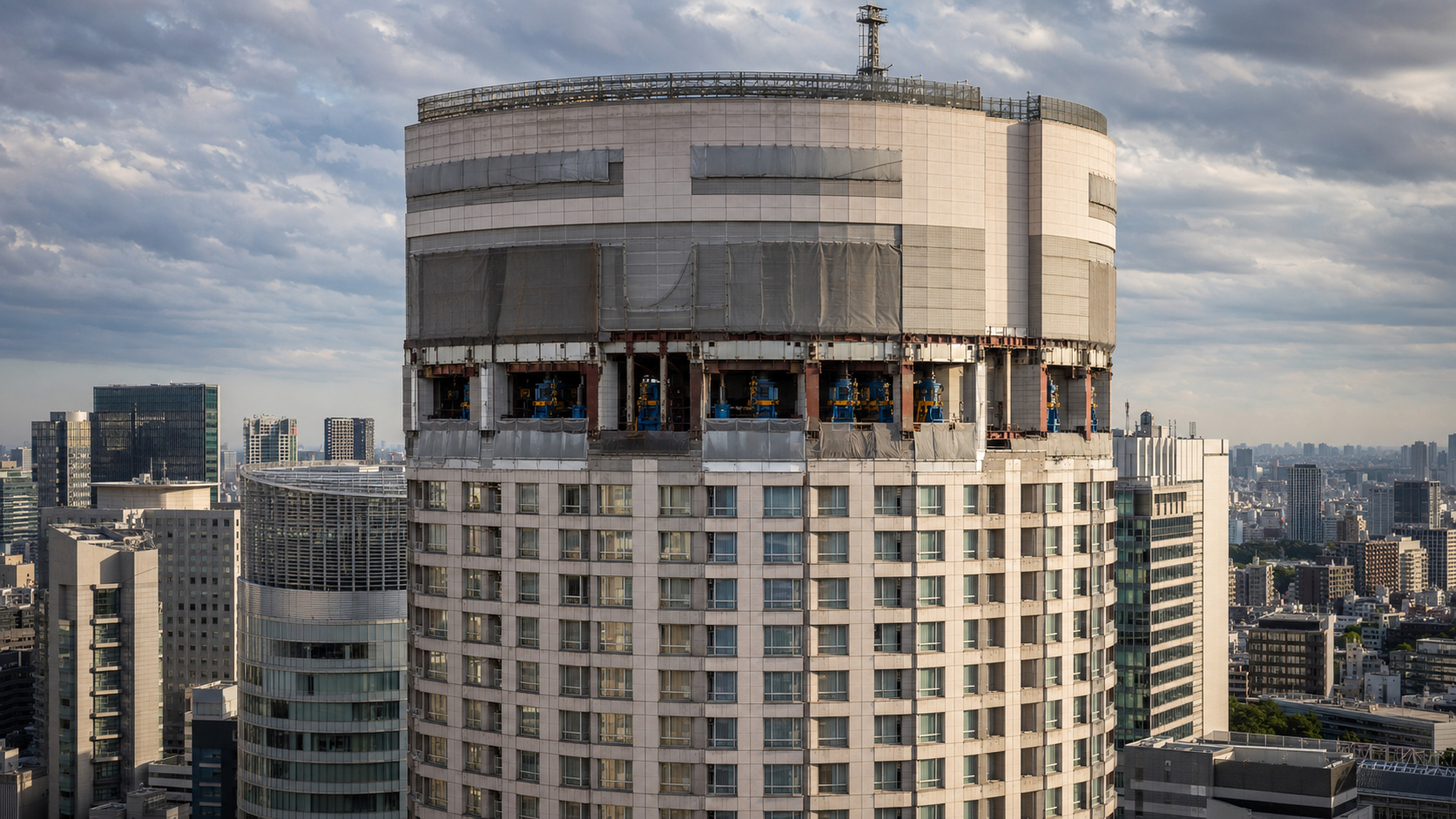

The Grand Prince Hotel Akasaka, approximately 139 meters tall, was dismantled by a closed factory installed at the top, while hydraulic jacks lowered its roof and internal cranes recovered energy, in a controlled demolition that reduced dust, noise, and emissions in the center of Tokyo.
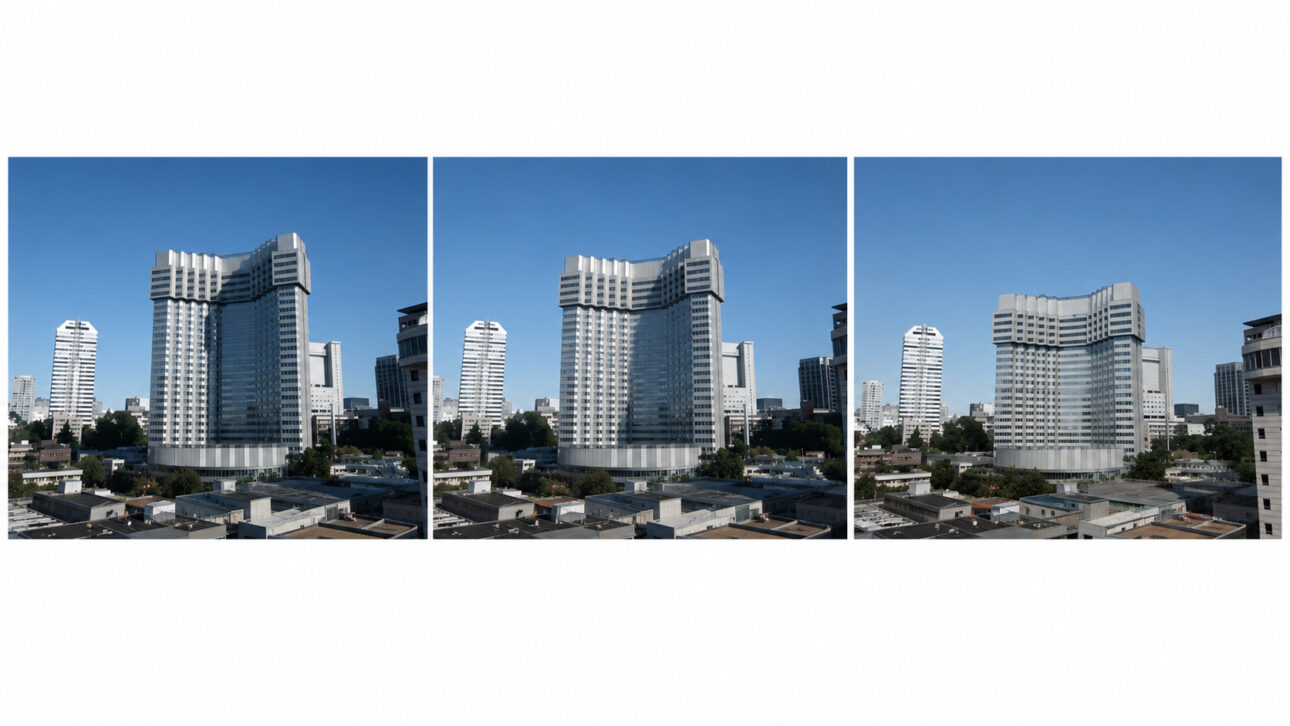
A 40-story hotel began to shrink in the center of Tokyo, but its roof remained visible at the top. Instead of imploding the tower, the team removed its structures internally and gradually lowered the top.
The Grand Prince Hotel Akasaka was approximately 139 meters tall. Designed by architect Kenzo Tange, the tower was inaugurated in the 1980s, ceased operations in 2011, and its dismantling was completed in 2013.
The information was published by Wired, an international magazine of technology and innovation. The construction company Taisei installed a closed unit on the upper floors, where machines and workers dismantled the building without exposing the entire operation to the city.
-
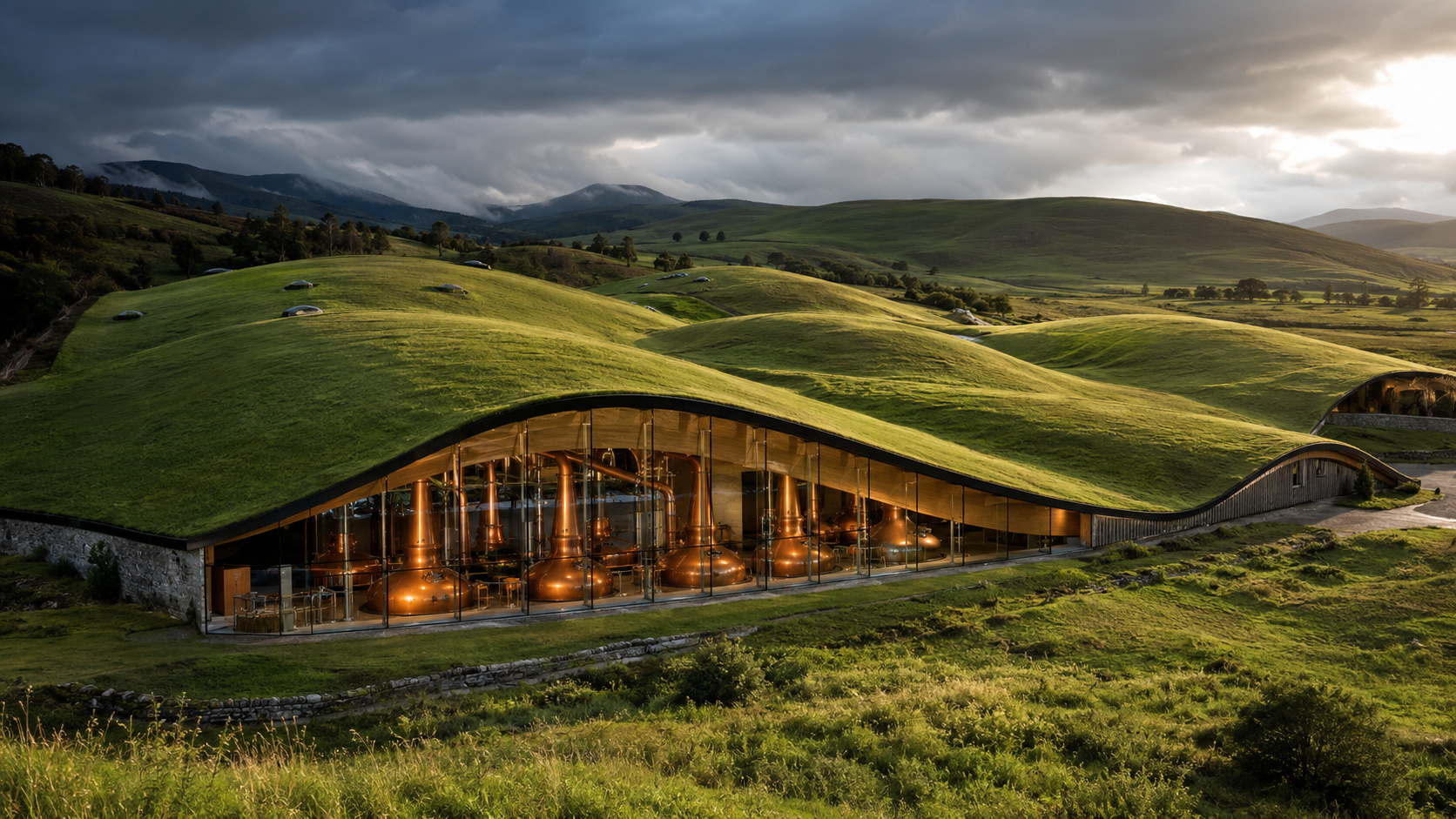
They seem like just green hills in Scotland, but they hide a 120-meter distillery, 36 stills, and the capacity to produce 15 million liters per year.

-
Avenue in São José dos Campos will be closed for 342 trucks to pour 2,730 cubic meters of concrete non-stop, forming a giant structural block with 165 piles of 26 meters, placing Jardim Aquarius at the center of the largest concrete pouring ever done in the RM Vale.

-
Family buys abandoned 110-acre ranch in Nevada, finds restaurant, store, apartments, houses, butcher shop, and sheds, removes tons of trash, faces daily leaks, and transforms weed-infested fields into the foundation for a rebuilt rural family complex with irrigation, vegetable garden, and rental income.
-
A woman bought a century-old house from 1926 without a large renovation budget, tore out the carpet, began restoring old details with thrift store pieces, Marketplace, and free materials, and showed that restoring the charm of a century-old property can cost much less than a traditional renovation.


Imploding the hotel in the center of Tokyo would increase the impacts
Imploding a tall building requires an extensive safety area. The rapid fall can also produce a large dust cloud, scatter small materials around, and cause intense noise during the operation.

These effects would be especially problematic in a densely populated area of Tokyo. The hotel was surrounded by streets, buildings, and urban activities that could not simply be moved away for long periods.
The solution was to carry out a controlled demolition from top to bottom. Each part was removed separately, transported to the ground, and organized within a protected industrial process.
A demolition factory operated hidden at the top
Taisei applied the Ecological Reproduction System, known by the acronym Tecorep. The technology transformed the hotel’s top floors into a closed dismantling unit.
First, the team removed materials that did not help support the building. Then they began dismantling slabs, beams, pillars, and other structures located below the roof.
Panels enclosed the work area and prevented much of the dust from spreading. The original roof protected the equipment and kept the dismantling less exposed to weather conditions.
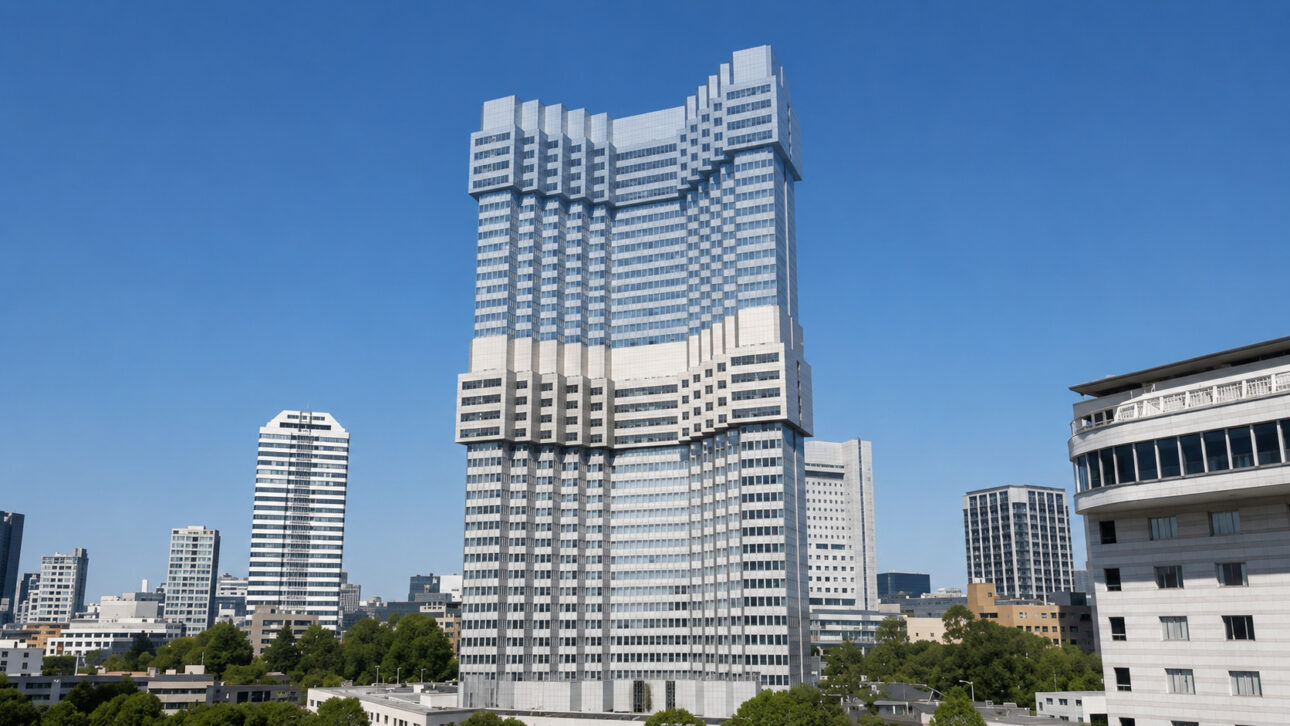
Seen from the street, the building did not appear to be undergoing a conventional demolition. The tower only gradually lost height, while most of the work remained hidden.
Hydraulic jacks made the roof descend
The upper part of the hotel was supported by temporary pillars and hydraulic jacks. The pillars held the weight of the roof while the structural elements just below were removed.
After dismantling a floor, the hydraulic jacks lowered the upper part. This system allowed the roof to descend gradually without being removed in the early stages of the operation.
The process was repeated as the work progressed. Therefore, those observing the hotel noticed an unusual situation: the roof remained in the same shape but appeared increasingly closer to the ground.
The tower of approximately 139 meters began to look smaller without experiencing a sudden drop. The visual effect was the result of a controlled sequence of removal, support, and descent.
Internal cranes generated electricity during the descent of materials
The dismantled parts were not thrown from above. Cranes installed inside the hotel lowered the materials to the ground in a controlled manner.
During the descent, the movement allowed energy recovery and its transformation into electricity. This energy was used in the operation’s equipment, including the lighting of the work area.
The technology harnessed a force that would normally be lost during the descent of the loads. However, this does not mean that all the energy needed to dismantle the building was produced by the system itself.
Energy recovery functioned as a complement. Besides controlling the transportation of materials, the cranes helped to reduce part of the external consumption of the project.
Dust fell by 90% and noise was reduced by up to 23 decibels
Wired, an international technology and innovation magazine, recorded the indicators released by Taisei. The construction company estimated that the system reduced dust by 90%.
Taisei also attributed a noise reduction of between 17 and 23 decibels to the method. Decibel is the measure used to indicate the intensity of a sound. The greater the reduction, the less noise is perceived around the site.
The enclosed structure helped contain particles and sounds produced by the removal of concrete and steel. This reduced interference with residents, workers, drivers, and nearby buildings.
The construction company also calculated a reduction of up to 85% in process emissions. The estimate considered measures such as energy recovery, material separation, and performing the dismantling inside the building.
Technique may interest densely populated Brazilian cities
The dismantling of the Grand Prince Hotel Akasaka showed that a tall building can be removed without implosion and without relying solely on large external cranes. The operation combined internal machines, temporary structures, and hydraulic control.
This type of engineering can be useful in densely populated areas of Brazilian cities, where old buildings share space with busy streets, neighboring properties, and service networks. The application would depend on the structural conditions of each construction and the project planning.
The technique does not eliminate all the impacts of a demolition. There is still movement of materials, energy consumption, and waste production. The difference lies in the ability to control these stages within an enclosed structure.
Completed in 2013, the dismantling of the hotel left a reference for urban engineering. The building gradually disappeared as its roof descended, its materials were removed from within, and part of the operation’s energy was recovered.
If a technique reduces dust, noise, and risks for the entire neighborhood, should it be prioritized even if the demolition takes longer? Leave your opinion in the comments and share the post.