Portuguese
  Spanish


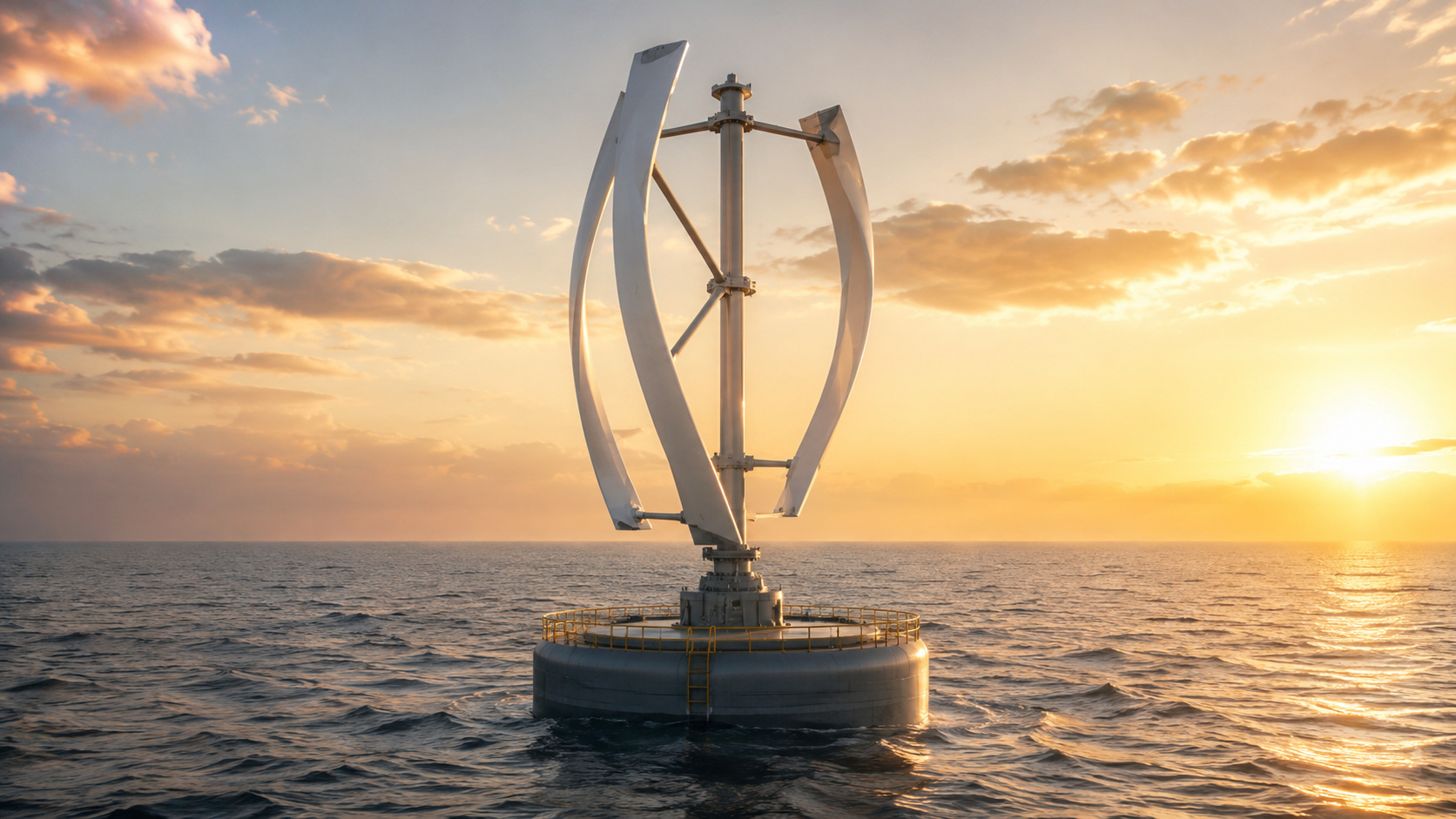

The Swedish SeaTwirl develops a floating vertical axis wind turbine that is assembled “like IKEA furniture”, on the ground and without a giant crane, with the generator at sea level to facilitate maintenance. After having its 1 MW prototype license withdrawn in Norway in January 2026, the company began leading the Verti-Go project, a 2-megawatt demonstrator funded with 15 million euros from the European Union, with operation expected until the end of 2029.
The proposal is bold and simple at the same time. According to the channel Undecided with Matt Ferrell, SeaTwirl laid the turbine on its side and transformed it into a floating vertical axis turbine that can be assembled on the ground, in pieces, like flat-pack furniture, eliminating the need for the huge cranes typically required for offshore wind installation.
The company’s latest project has concrete numbers. According to the portal Offshore Wind, SeaTwirl leads the Verti-Go consortium, which received 15 million euros from the Horizon Europe program to build a 2-megawatt floating vertical axis turbine demonstrator, with design, manufacturing, installation, and operation stages planned until the end of 2029.
Next, see what the SeaTwirl floating vertical axis wind turbine is, how the “IKEA style” assembly works, what the advantages and risks of the vertical axis are, what happened with the prototype in Norway, and what this technology has to do with Brazil.
-
Hurricane Katrina: Engineering Failures by U.S. Army Corps Led to 80% of New Orleans Flooding

-
Hisense Unveils 615-Liter PureView Fridge with Transparent Door, Smart Display, Voice Control, and UV Purification to Compete with LG and Samsung

-
Are Cleaning Staff in Large Buildings Becoming Obsolete? Autonomous Robots Now Clean Airports, Hospitals, and Shopping Centers for Hours, as Companies Invest in Automating Repetitive Tasks

-
Xiaomi Launches Compact Photo Printer with Bluetooth, Extra Black Ink, and Augmented Reality Photo Printing



What is the SeaTwirl floating vertical axis wind turbine
Let’s start with the central idea. SeaTwirl is a Swedish company developing a floating vertical axis turbine, meaning instead of the traditional blade spinning at the top of a mast, it uses vertical blades that rotate around a central axis, on a structure that floats in the sea.
The concept was born for deep waters. Since a floating vertical axis wind turbine does not need to be fixed to the seabed, it can operate in locations over 100 meters deep, where some of the strongest and most consistent winds on the planet are found, beyond the reach of common fixed turbines.
The entire structure is different from the usual. In SeaTwirl’s turbine, the tower, the shaft, and the floating foundation form a single rotating piece, supported on a semi-submerged cylindrical base, of the “spar” type, anchored to the bottom by cables, which gives stability to the vertical axis turbine even in rough seas.
And there is a detail that changes everything in maintenance. Unlike common turbines, which hide the generator up high, SeaTwirl’s vertical axis wind turbine places the generator at sea level, promising to make repairs simpler, cheaper, and safer, without needing to climb 100 meters or use a helicopter.
The “IKEA style” assembly: without crane and with generator at sea level
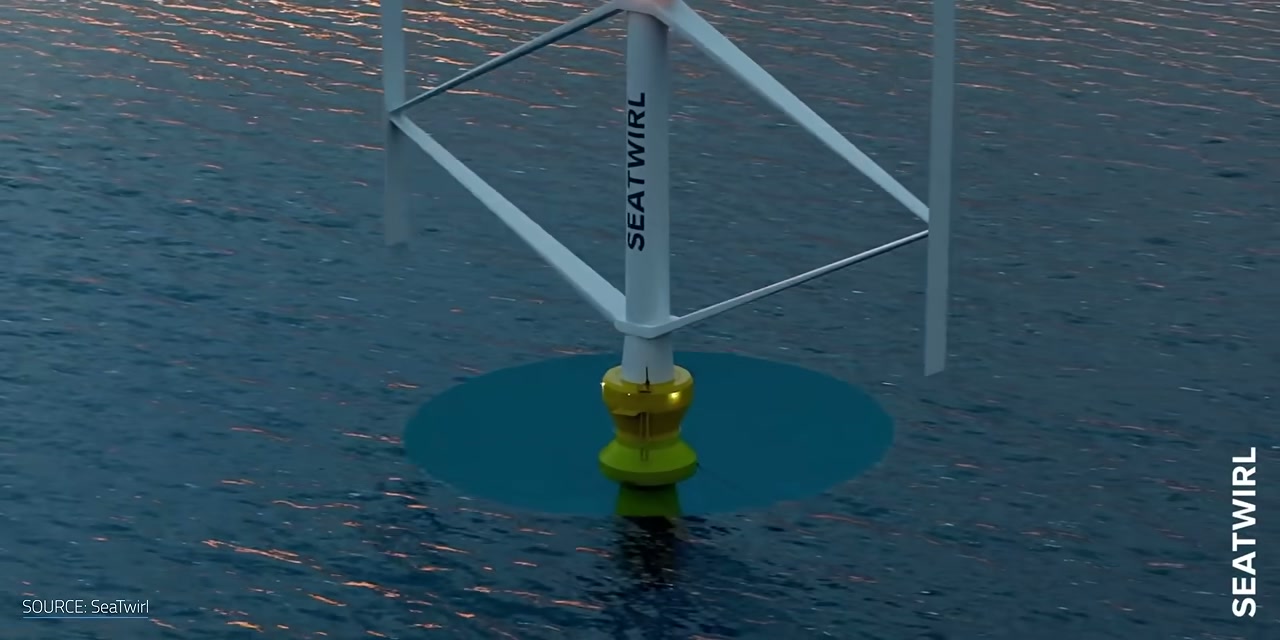
Here is the hook that made the company famous. SeaTwirl’s vertical axis turbine is compared to an IKEA flat-pack furniture because it can be assembled on the ground, in pieces, and then taken to the water, without relying on the giant cranes that increase the cost of offshore wind installation.
The analogy has a practical purpose. Just like furniture that arrives disassembled, the vertical axis wind turbine is designed to be easy to transport, assemble, and operate, and it is this simplicity that SeaTwirl bets will reduce the cost of energy generated in deep waters.
The generator at sea level is the second big idea. In traditional turbines, technicians need to climb dozens of meters to the machine house, called nacelle, to make repairs, while in SeaTwirl’s vertical axis turbine the generator is below, near the water, which facilitates maintenance.
All this aims at a single objective: cutting costs. Crane installation and high-altitude maintenance are among the items that most increase the cost of offshore wind, and the floating vertical axis wind turbine tries to tackle precisely these two points, although much of this promise depends on proving the technology on a real scale.
Vertical axis vs. horizontal axis: the advantages and the price to pay
It’s worth understanding why most turbines aren’t like this. Common turbines are horizontal axis, with the blade pointing to the wind, and need systems that rotate the blades and the nacelle to follow the wind direction, complex mechanisms that require constant maintenance.
A vertical axis turbine dispenses with part of this complexity. As its blades rotate around a vertical axis, it captures wind from any direction without needing to reorient, making it simpler, quieter, and theoretically easier to maintain, with fewer parts subject to failure.
But there is a price to pay for this simplicity. According to the video explanation, the vertical axis wind turbine is about 25% less efficient from an aerodynamic standpoint than the horizontal axis one, and historically suffers from the wear of structural parts, a problem that SeaTwirl needs to overcome to become viable.
The company’s bet is to compensate in the final account. SeaTwirl claims that, even losing in efficiency, its vertical axis turbine can be cheaper over its lifetime due to reduced maintenance, with a claim of energy cost up to 20% lower than floating horizontal axis turbines, a number that still needs to be proven.
The shadow of Éole: the largest vertical turbine ever made and why it failed
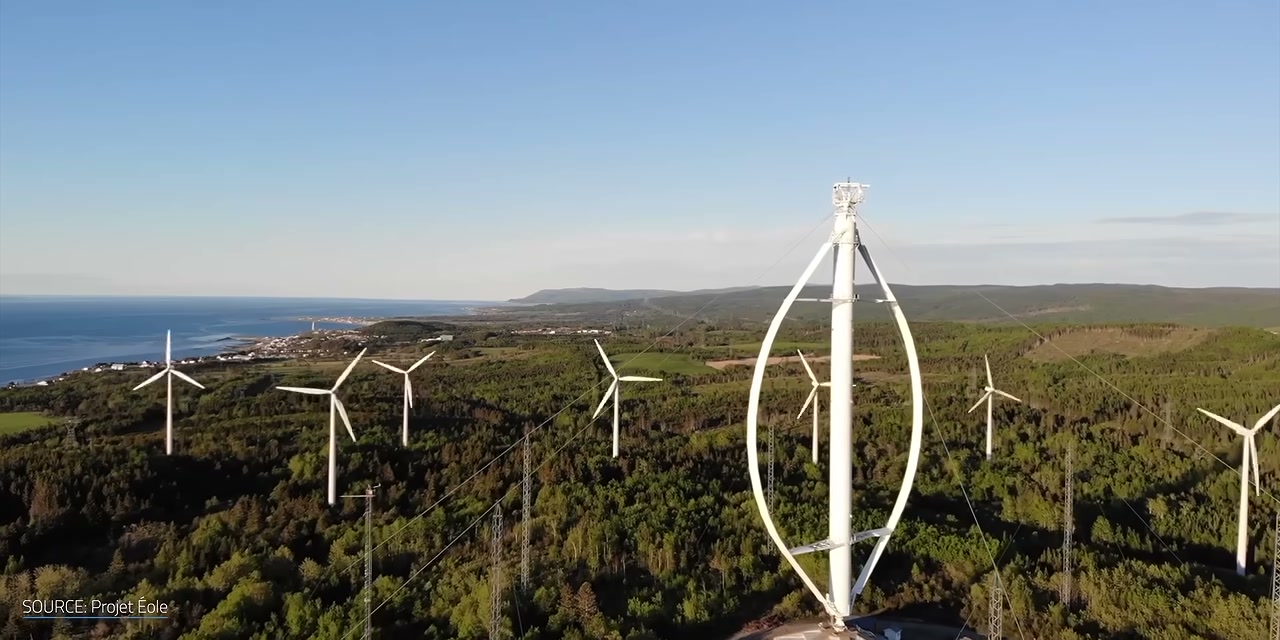
The history has a ghost that haunts the sector. The largest vertical axis turbine ever built was the Éole, with 3.8 megawatts, erected in Canada, a milestone in engineering that showed both the potential and the dangers of this type of technology.
Its end serves as a warning. The Éole operated for about five years before being stopped by a failure in the main bearing, linked to structural fatigue, an outcome that reinforced the reputation that the large vertical axis wind turbine is difficult to keep standing for a long time.
This is exactly the challenge for SeaTwirl. To succeed, the company needs to prove that its floating vertical axis turbine solves the structural problems that brought down the Éole, delivering real durability instead of just a good idea on paper, something that only time and testing will tell.
The history explains the skepticism. Due to cases like Éole’s, many experts still doubt that the vertical axis wind turbine can surpass the horizontal axis one, and it is against this backdrop of distrust that SeaTwirl tries to launch its floating proposal.
From prototype S1 to the lost license in Norway
The trajectory of SeaTwirl is one of ups and downs. The company’s first prototype, the S1, with 30 kilowatts, was installed in Sweden in 2015 and continues to operate more than a decade later, having withstood hurricane-force winds, a good calling card for the floating vertical axis turbine.
The next step, however, stumbled. SeaTwirl planned to install the S2x, a much larger 1-megawatt prototype, in Norway, but the test center withdrew the project’s license in January 2026, even before the vertical axis wind turbine reached the water, a turnaround that delayed the company’s plans.
The withdrawal of the license was a hard blow. Unable to test the S2x at sea, SeaTwirl lost the chance to validate its 1-megawatt vertical axis turbine in a real environment, precisely the step that would separate the laboratory promise from a market-ready product.
It was then that the company changed its focus. Instead of insisting on the 1-megawatt prototype, SeaTwirl began to concentrate energy on a new and larger project, supported by the European Union, betting that an even more powerful demonstrator could put the floating vertical axis wind turbine back on track.
So, what is the Verti-Go 2 MW project?
Verti-Go is SeaTwirl’s new hope. It is a project to build a 2-megawatt floating vertical axis turbine demonstrator, the largest ever attempted by the company, with the aim of finally proving the technology on a relevant scale.
The money comes from Europe. The Verti-Go consortium received 15 million euros from the Horizon Europe research and innovation program, a contribution that gives SeaTwirl the momentum to design, manufacture, install, and operate the new floating vertical axis wind turbine, with the company as the project’s technical coordinator.
The schedule is long but defined. Verti-Go began at the end of 2025, with the design phase expected to last until around the end of 2026, and the construction and operation of the 2-megawatt vertical axis turbine expected by the end of 2029, when real performance data will finally be available.
However, it is advisable to keep expectations grounded. Verti-Go is still a project, not a functioning turbine, and the 2-megawatt vertical axis wind turbine will only generate energy in the future, so the verdict on SeaTwirl’s technology remains open.
Is the floating vertical axis turbine really worth it?
The honest answer is: it’s still too early to tell. SeaTwirl’s floating vertical axis turbine brings promising ideas, such as crane-free assembly and a generator at sea level, but it has yet to prove, on a commercial scale, that it delivers everything it promises.
The strengths are real. A vertical axis wind turbine that captures wind from any direction, assembles on the ground, and has simpler maintenance could indeed lower energy costs in deep waters, a huge and underexplored market that SeaTwirl wants to conquer.
The risks are also real. The lower aerodynamic efficiency, the history of structural failures in turbines like the Éole, and the setback of the lost license in Norway show that the vertical axis turbine floating still faces significant technical and regulatory obstacles.
That’s why Verti-Go is decisive. Only when the 2-megawatt demonstrator is operating will it be possible to say if SeaTwirl’s vertical axis wind turbine is a revolution or just another good idea that didn’t survive the sea, and this is the answer the energy sector is waiting for.
What SeaTwirl’s vertical axis turbine has to do with Brazil
The link is floating offshore wind, which Brazil has just unlocked. The country approved in 2025 the legal framework for offshore wind, creating rules for the use of maritime areas, paving the way for floating technologies like SeaTwirl’s vertical axis turbine to enter the Brazilian debate.
The national potential is enormous. Official estimates indicate that Brazil has hundreds of gigawatts of offshore wind potential, far above the current installed electrical capacity, and taking advantage of this wealth depends on technologies capable of operating far from the coast, where the floating vertical axis wind turbine aims to operate.
There is a regional fit to consider. While the Northeast has shallow waters, suitable for fixed turbines, the South of the country looks to deeper waters, the niche where a floating vertical axis turbine would make more sense, although currently there is no SeaTwirl project on Brazilian soil.
Thus, the underlying lesson remains. Following SeaTwirl’s vertical axis wind turbine helps Brazil understand which technologies can reduce the cost of offshore energy, at a time when the country is beginning to build its own offshore wind market and seeks the best solutions for deep waters.


In the end, SeaTwirl’s floating vertical axis turbine is a bold bet. By laying the turbine down, assembling it like an IKEA piece of furniture, and placing the generator at sea level, the company tries to solve the costs that hinder offshore wind, even if it needs to overcome the lower efficiency and the history of failures of the vertical axis.
More than the analogy with IKEA, what matters is the real test. If the 2-megawatt Verti-Go demonstrator delivers what it promises by 2029, the floating vertical axis wind turbine could open a new path for clean energy in deep waters, including in countries like Brazil.
And you, do you believe that a floating vertical axis turbine that assembles like furniture can really reduce the cost of ocean energy, or do you think the horizontal axis will continue to dominate offshore wind? Share your opinion in the comments and share with those interested in energy and innovation.