Portuguese
  Spanish



New System Unites Open TV and Internet, Promises Superior Quality and Gradual Launch Until the 2026 World Cup
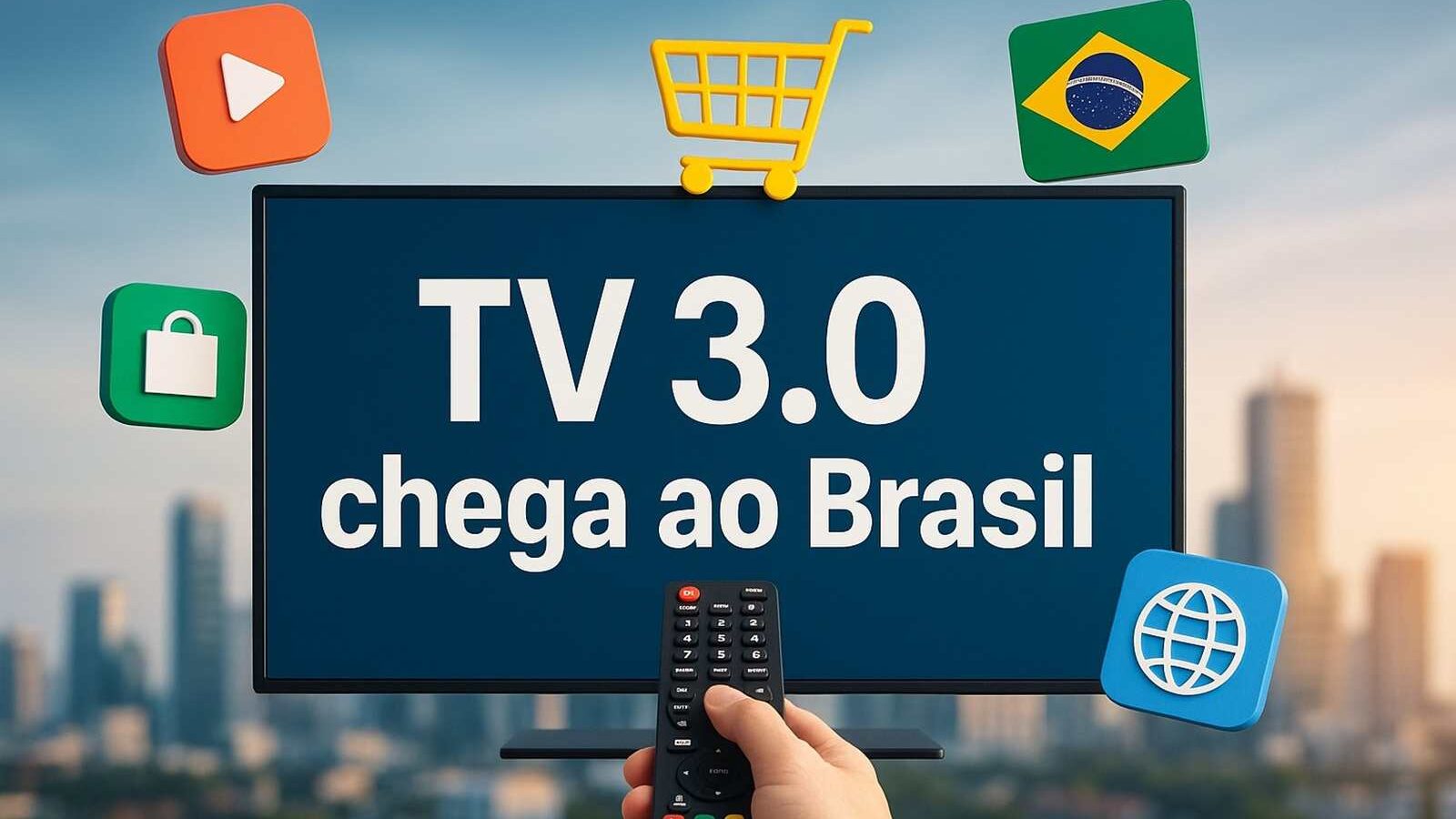
President Luiz Inácio Lula da Silva (PT) will sign the decree officializing TV 3.0 this Wednesday (27).
The measure inaugurates a new broadcasting standard in Brazil, featuring ultra-high-definition images, immersive sound, and advanced interactivity features.
The system will also integrate the internet and open television, transforming the way Brazilians consume content.
-
Antarctic Sea Creature Yields Promising Compound Against Melanoma, Captivating U.S. Researchers

-
Underwater Guardian: The Autonomous Robot Monitoring Submarine Cables, Self-Returning, Wirelessly Charging, and Transmitting Data Without Onboard Crew

-
Robots Clean Solar Panels in Desert Power Plants Without Water, Preventing Energy Losses
-
AI Radar Built with Old Camera and $20 Gains Attention After Alleged $317,000 Sale to Chinese Government, But Lack of Documentation and Official Confirmation Raises Questions




According to the Ministry of Communications, it will not be necessary to immediately replace televisions. The change will occur gradually and will follow a schedule defined by the government.
How the New Technology Will Work
TV 3.0 will allow viewers to access apps during programming.
Broadcasters will be able to offer on-demand content, such as series, games, and special programs.
Additionally, the system will enable purchases directly through the television screen, opening new revenue opportunities for the broadcasting sector.
Another highlight is the quality of the transmission. Devices will be capable of offering resolutions in 4K and even 8K, as well as immersive sound effects similar to those of a cinema.
This brings open television closer to streaming platforms, offering richer and more personalized experiences.
Implementation Timeline
The preparatory phase of TV 3.0 is expected to be completed by 2025.
The first broadcasts are scheduled for the first half of 2026, coinciding with the World Cup.
Initially, the novelty will reach major capitals, in a staggered process that may take up to 15 years to cover the entire country.
The federal government envisions a coexistence period between the current and new systems.
This strategy aims to facilitate public adaptation and ensure that no region is left without access to open television during the transition.
Challenges for Broadcasters and Consumers
Despite technological advancements, there are significant challenges ahead.
In contact with CNN Brasil, the president of the Brazilian Society of Television Engineering (SET), Paulo Henrique Castro, emphasizes the need for substantial investments.
Broadcasters will have to cover the licensing of technology and acquire new transmitters.
For users, it will be necessary to purchase converters, currently estimated at R$ 400.
The Ministry of Communications believes prices should fall with increased production scale and market evolution.
Therefore, the expectation is that the technology will become more accessible over time.
Public Communication and Digital Government
The decree also provides for the creation of the Common Platform for Public Communication and Digital Government.
This tool will allow citizens to access public services directly through their television.
The initial app catalog will include open channels and icons of public broadcasters like TV Brazil, TV Câmara, TV Senado, and TV Justiça.
The proposal is to bring government and society closer, increasing access to official information and facilitating service delivery.
Moreover, navigation will be simple, with the possibility of manually rearranging the icons displayed on the screen.
The Role of Anatel and Technical Tests
The National Telecommunications Agency (Anatel) will be responsible for planning frequency bands to ensure the transition.
The chosen system is ATSC 3.0, regarded as one of the most advanced in the world. It encompasses transmission standards that include transport, audio, video, subtitles, interactivity, and security.
Between 2023 and 2024, the Forum for the Brazilian System of Digital Terrestrial Television conducted field tests to evaluate the technologies.
After technical and market analyses, the entity unanimously recommended the adoption of ATSC 3.0.
Investments and Democratization
The project has already received investments of R$ 7.5 million.
The government believes that TV 3.0 will bring greater efficiency to broadcasting and create space for new broadcasters.
This is expected to make the sector more democratic and accessible. Furthermore, integration with the internet could transform television into a point of social inclusion, broadening the reach of digital services.
Frequently Asked Questions
The new standard does not require compulsory internet. Those without a connection will still be able to watch traditional content broadcast over the air.
However, the internet will provide additional options, such as extra content and greater interactivity.
Small towns will also be included, but gradually, as was the case in the migration from the analog to digital system.
The minimum image quality will be at 4K, with the possibility of reaching 8K. Traditional remote controls might disappear, giving way to icons similar to those of streaming platforms.
A Milestone for Brazilian Broadcasting
The implementation of TV 3.0 is considered a milestone for open television in Brazil.
With advanced sound, image, and interactivity features, the country will join the ranks of those using the most modern broadcasting standards.
The expectation is that the innovation will transform the relationship between the public and TV, offering not only entertainment but also access to integrated services and information.