Portuguese
  Spanish


Sentence also determines recovery of 551.1 hectares, provision of community services, additional fines, and temporary prohibition of public contracts for the company of the convicted brothers after cultivation of GMOs in the Rio das Cobras Indigenous Land
Two businessmen were sentenced to pay R$ 6 million for deforestation in indigenous land after devastating 551.1 hectares of the Rio das Cobras Indigenous Land, in Nova Laranjeiras, Paraná. The area, equivalent to 771 football fields, was used to plant genetically modified corn and soybeans. The data in the article is from G1.
Deforestation in indigenous land reached 5.51 million square meters
The convicted are brothers Leo Luiz Ceccon, 53, and Zairo Ceccon, 55, partners of Cerealista Ceccon Verê. According to the decision, the deforested area totals more than 5.51 million square meters.
Inspections by Ibama, the National Foundation for Indigenous Peoples, and the Federal Police indicated that the crimes occurred between May 2018 and October 2021.
-
Brazilian agribusiness reaches an estimated revenue of R$ 1.4 trillion, with crops accounting for 64% of the total and soybeans leading alone with an impressive R$ 335.8 billion, nearly a quarter of the entire Gross Value of National Agricultural Production.

-
Player in the World Cup final builds a luxury winery the size of 22 fields, with Malbec from the 1930s, restaurant, and future hotel.

-
Organic coffee from Itapira wins state category in a competition with around 400 samples, enters the group of 50 awardees, and earns a seal to enhance value and traceability.

-
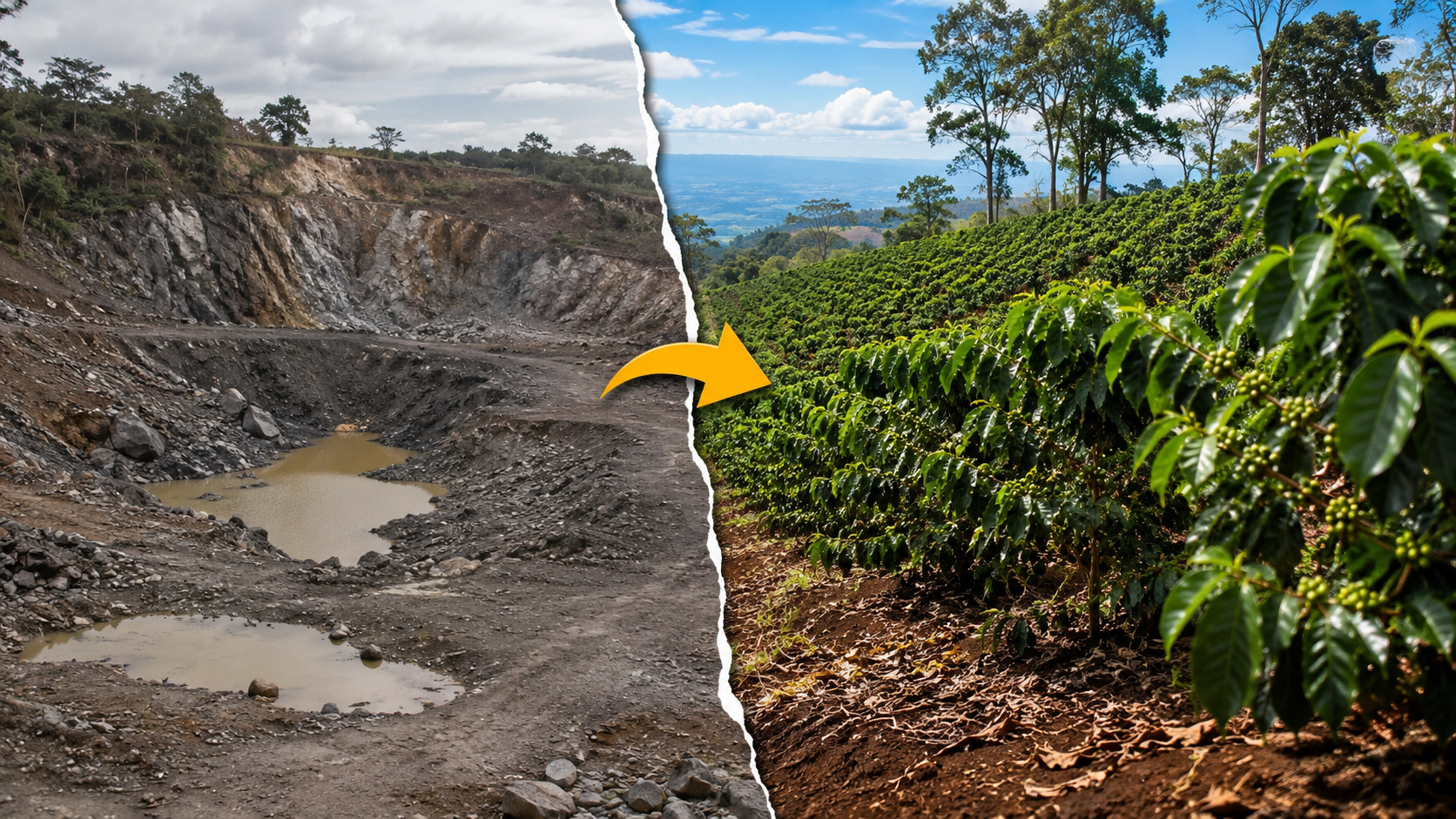
An abandoned quarry in Kenya, once considered unsuitable for agriculture, had its soil rebuilt with composting and biological inputs and turned into a 10-hectare farm with over 14,000 coffee trees.


After the removal of vegetation, the businessmen used the site to cultivate genetically modified corn and soybeans.
The planting of genetically modified organisms is prohibited in indigenous lands and conservation units, except in Environmental Protection Areas.
The sentence was handed down at the end of June 2026 and released by the Federal Public Ministry on July 13. When contacted by g1, lawyer Ismar Antônio Pawelak stated that he does not comment on client cases.
Conviction includes community services, fines, and restriction on the company
The Federal Court also sentenced the businessmen to more than three years and ten months in semi-open prison.
The prison sentence, however, was replaced by community service and payment of 30 minimum wages.
The amount corresponds to approximately R$ 48.6 thousand. Cerealista Ceccon Verê was also prohibited from being contracted by the public authorities during the same period defined in the conviction.
Additionally, the company must pay a fine equivalent to 150 minimum wages, calculated at R$ 81 thousand. The financial sanctions are separate from the R$ 6 million reparation determined for the environmental damage.
The decision also obliges the defendants to replant native species in the affected areas. The recovery must follow a Degraded Area Recovery Plan prepared by the convicted parties, approved and supervised by Ibama.
Court recognized authorship and materiality of the crimes
In the first instance, the defendants had been acquitted of the deforestation charge. At that stage, only one of the partners and the company were convicted for the use of a substance considered harmful to the environment.
The MPF appealed, and the 7th Panel of the Federal Regional Court of the 4th Region recognized that the authorship and materiality were proven by infraction notices, expert reports, and testimonies from Ibama’s environmental analysts.
According to the thesis established by the Court, the economic exploitation of indigenous land with deforestation and cultivation of genetically modified organisms constitutes crimes provided for in articles 50-A and 56 of Law No. 9.605/1998.
What environmental legislation establishes
Article 50-A of the Environmental Crimes Law provides for a fine and up to four years of imprisonment for those who deforest or economically exploit forests on public lands without authorization from the competent authority.
Article 56 provides for a fine and up to four years of imprisonment for the use of toxic, dangerous, or harmful substances to the environment in violation of legal requirements.
Law No. 11.460/2007 also prohibits the research and cultivation of genetically modified organisms on indigenous lands and conservation units, except for Environmental Protection Areas.
This article was prepared based on information from g1 and the Federal Public Ministry, with data, numbers, and statements preserved according to the material consulted.