Portuguese
  Spanish


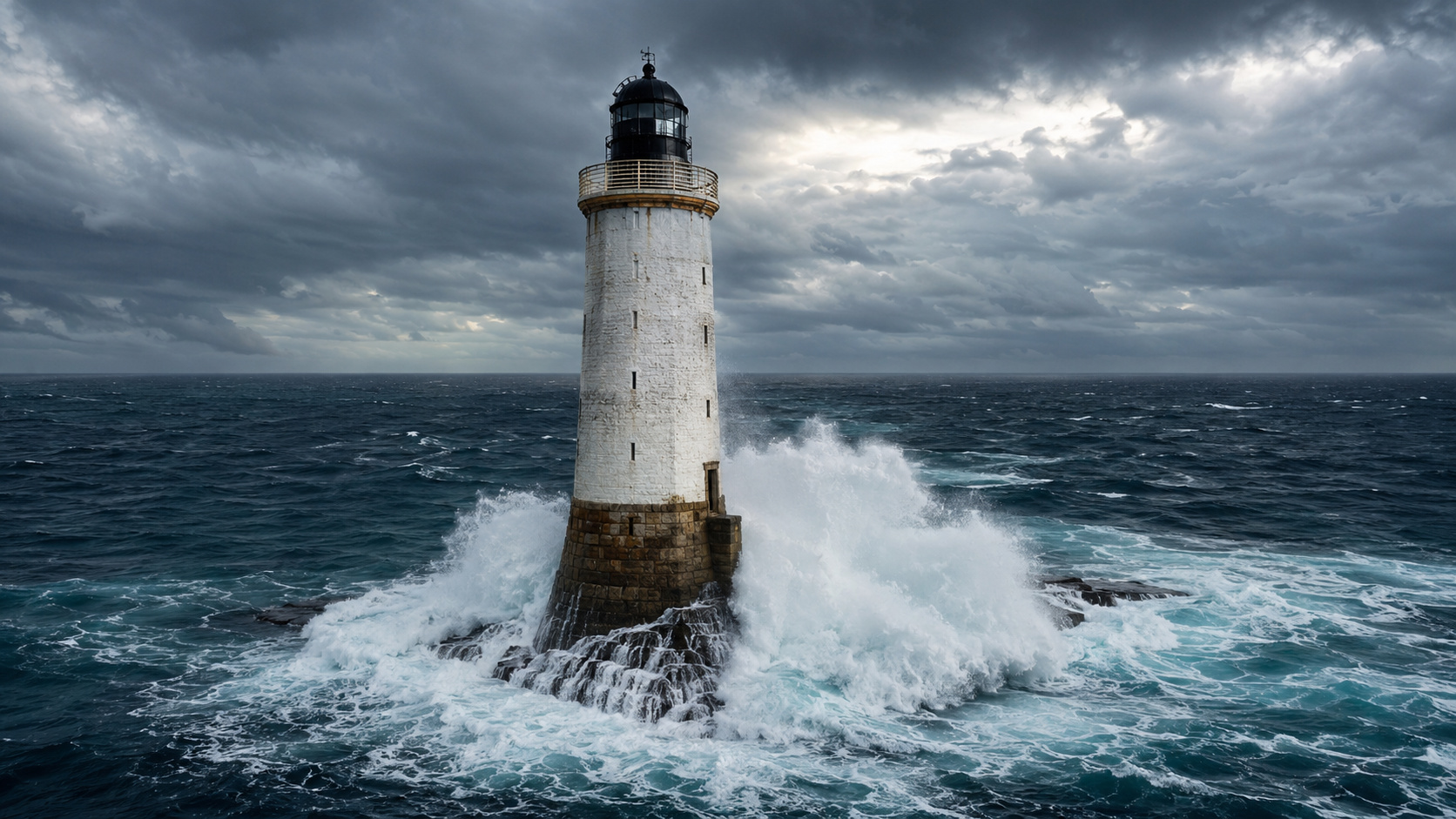

Built between 1807 and 1811 in Scotland, the Bell Rock Lighthouse received a massive base and interlocking stones to withstand the waves of a reef covered by 4.9 meters of water. Automated in 1988, the tower remains active as a maritime signal in the North Sea.
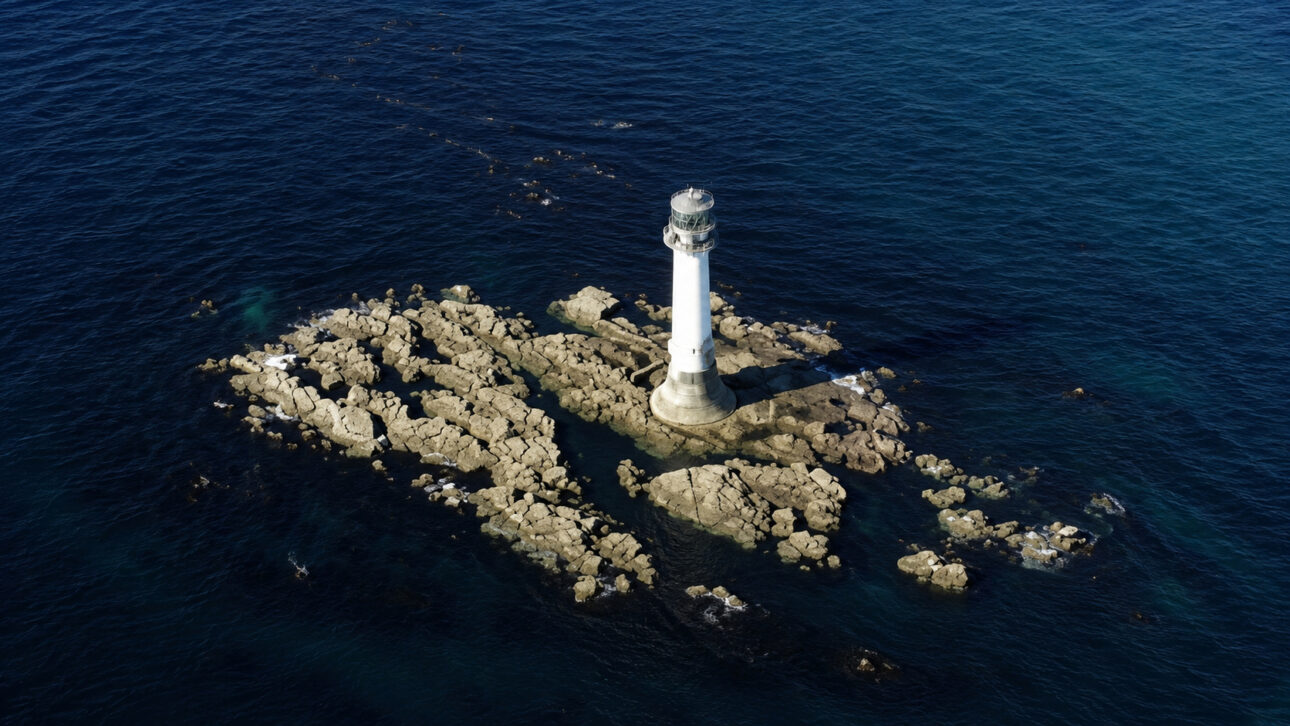
While common constructions start on dry and accessible land, the Bell Rock Lighthouse was erected on a site that disappeared whenever the tide rose. The reef is exposed only at low tide and can be covered by approximately 4.9 meters of water.
The Northern Lighthouse Board, the maritime signaling authority of Scotland and the Isle of Man, classifies Bell Rock as the oldest lighthouse built on a submersible reef still in operation. The tower is located off the coast of Angus, Scotland, in an area traversed by vessels in the North Sea.
The excavation of the rock began in 1807, under the responsibility of engineer Robert Stevenson. The light became operational in February 1811, after a project controlled by the movement of the sea and the few hours the reef remained accessible.
-
Created in 1918 to form a barrier of eight towers against submarines, the Nab Tower never saw combat, was purposely sunk, and eventually transformed into a lighthouse for two major English ports.

-
The first lighthouse built directly on the seabed withstood for more than 140 years, received a steel protection in 1987, and can now be moved to land.
-
At 2,700 meters below the sea, Equinor fits the piece that will pump 16 million m³ of gas per day in the Campos Basin.

-
Starnav orders 10 hybrid vessels with German MTU engines in Itajaí and prepares fleet to serve Petrobras in the pre-salt for 12 years.


The site disappeared whenever the tide rose
The team could only reach the rock surface during low tide. When the water level began to rise, the workers had to stop the service and leave the reef before the site was completely covered.


This movement created small windows to excavate, prepare the foundation, and place the blocks. A stage not completed in time remained exposed to the waves until the tide allowed the workers to return.
The challenge was not only to build quickly. The team also needed to ensure that each completed part could withstand the water without coming loose, even before receiving the weight of the subsequent layers.
The tide controlled each stage of construction
The pace of the work did not depend on a common schedule. The tide determined when the work started and when everyone should leave, while the conditions of the North Sea determined if boats, materials, and workers could reach the site.
During the periods when the rock appeared, the team excavated the reef and prepared the surface to receive the blocks. The goal was to create a firm connection between the natural foundation and the stone tower.
The construction extended from 1807 to 1811. During this period, each advancement needed to be planned so that the waves would not destroy the work executed during the previous tide.
Interlocked stones prevented the waves from dismantling the tower
A wall formed only by stacked stones could lose blocks after repeated impacts. To reduce this risk, the lower part of the lighthouse received solid masonry with interlocked stones.
Each block had cuts prepared to attach it to neighboring pieces. This shape is known as a dovetail joint, as the wider ends make it difficult for a stone to be pulled out of its position.
The system made the base work as a single structure. When a wave hit the lighthouse, the force was distributed across several blocks, instead of acting only on a single isolated stone.
This interlocking also reduced the possibility of water opening spaces between the pieces. The solution was indispensable because part of the tower remained within the range covered by the high tide.
Solid base supports a 36-meter tower
The Northern Lighthouse Board, the maritime signaling authority of Scotland and the Isle of Man, presents Bell Rock as a white tower of 36 meters in height, with 96 steps to the top.
The construction has approximately 13 meters in diameter at the base and narrows to about 4.6 meters at the top. This shape places more stone and weight near the reef, precisely where the impact of the waves is strongest.
The first 9 meters of the tower are formed by solid and interlocked masonry. Half of this section is below the level reached by the high tide, creating a heavy base without large internal spaces.
Above the solid part, five compartments and the lighting system room were built. Thus, the necessary interior for operation was concentrated in the higher and narrower region of the tower.
Lighting evolved to automation in 1988
When the lighthouse began operating in February 1811, the lighting used 24 parabolic reflectors. The equipment rotated with the help of a weight-driven mechanism and displayed alternating red and white signals.
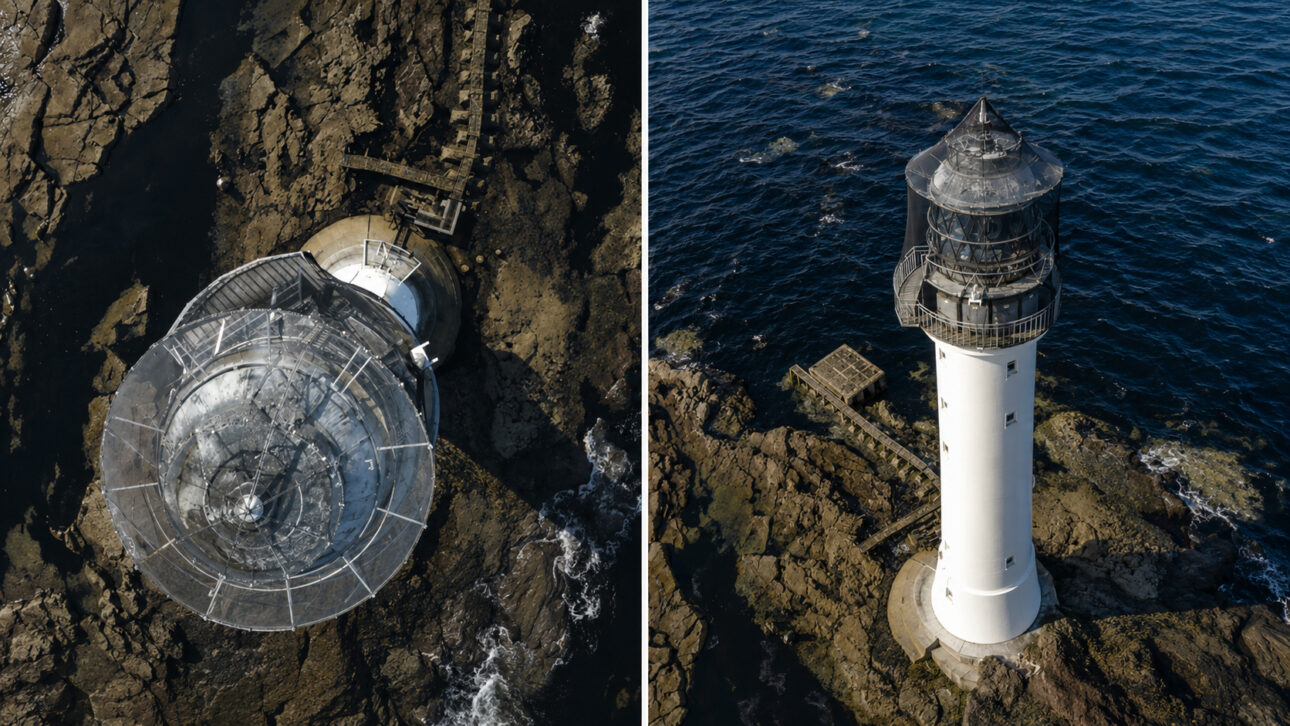
The reflectors were later replaced by a first-order Fresnel lens. This lens concentrates the light and allows it to be perceived at a greater distance at sea. An electric lamp began to be used in 1964.
In 1988, another optical system was installed, with a white light flashing every 5 seconds. On October 26, 1988, the lighthouse ceased to have a permanent team and began to be monitored remotely from Edinburgh.
Automation changed the operation but preserved the main function. The lighthouse continued to serve as a navigation reference, without requiring the constant presence of workers inside the tower.
Engineering keeps Bell Rock in service after 215 years
The longevity of the Bell Rock lighthouse is linked to the decisions made during its construction. The massive base, the weight concentrated at the bottom, and the blocks interlocked with each other helped the tower withstand the continuous pressure of the waves.
The modernization of the lighting allowed the service to be updated without replacing the original construction. Thus, a tower inaugurated in 1811 remains active after 215 years, even surrounded by the sea and supported on a reef that disappears at high tide.
Bell Rock remains a functioning maritime engineering work, not just a historical construction. Its structure still fulfills the task for which it was created, providing a safe reference for vessels crossing this region of the North Sea.
If the stones were not interlocked with each other, do you believe this tower would have lasted for 215 years? Leave your opinion in the comments and share the post.