





The study examines how load position, proximity to supports and slab width affect the strength of reinforced concrete. Comparisons with 143 experimental results help refine structural calculations, but do not replace assessments of existing bridges.
The strength of a reinforced concrete slab can vary depending on where a load is applied. On bridges, this difference affects how the structure distributes forces transmitted by vehicle wheels and responds to those loads.
A study by the São Carlos School of Engineering (EESC) at the University of São Paulo (USP) developed a methodology to assess this behavior, considering two failure mechanisms: shear and punching shear.
-
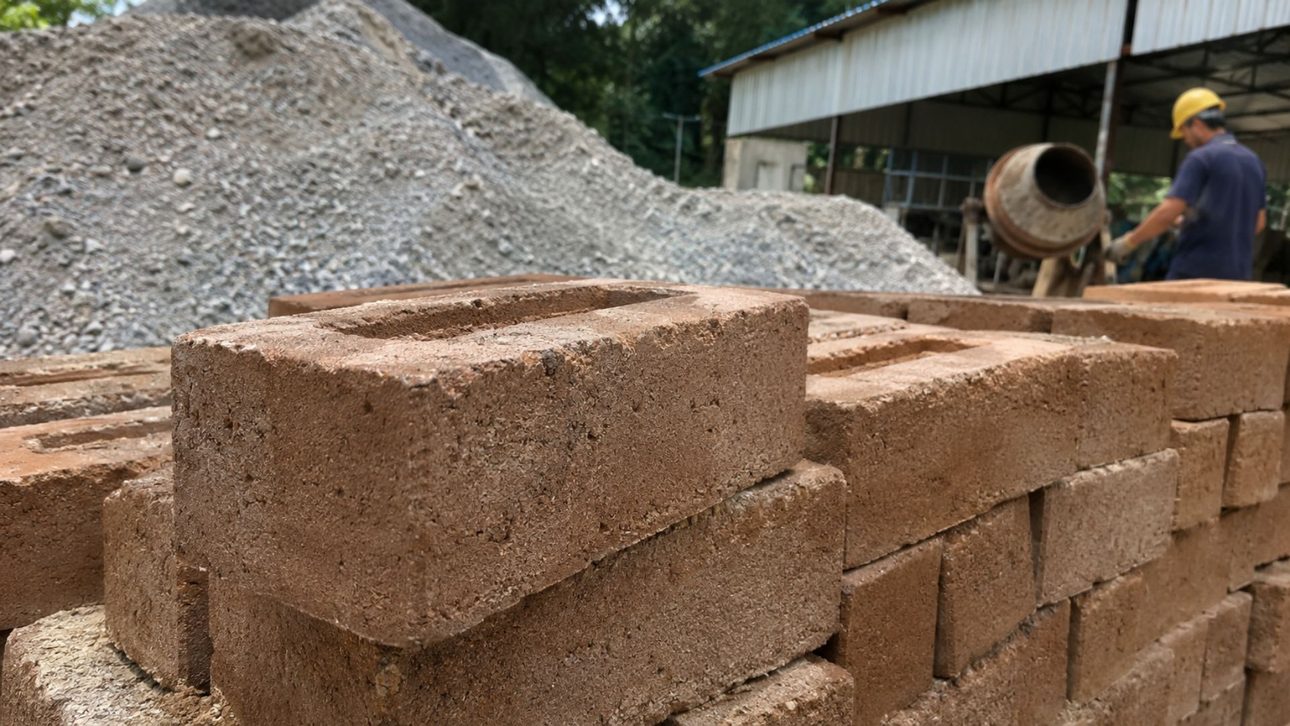
University of São Paulo evaluates soil-cement bricks with quartzite tailings from Minas Gerais for strength and absorption

-
A 338-meter tunnel is linked beneath a São José dos Campos neighborhood using a trenchless method, but the drainage project still requires lining and finishing work
-
Renovation and expansion advance across 40.82 kilometers of two Paraná highways, with 9.56 kilometers of additional passing lanes planned as investment already applied nears R$30 million
-
Cuiabá begins building 500-meter overpass, backed by R$53.8 million investment, to ease peak-hour congestion at intersection of two major avenues


Alex Micael Dantas de Sousa conducted the study under the supervision of Professor Mounir Khalil El Debs, in collaboration with researcher Eva Lantsoght. The findings were presented in scientific research and explained to the public in a report published by Jornal da USP in October 2024.
In that coverage, the researchers also discussed changes in the loads considered in bridge designs. In simplified terms, design reference vehicles went from 36 metric tons in the 1970s and 1980s to 45 metric tons under the parameters then in use.
This comparison concerns the load models used in bridge designs. It does not mean that all Brazilian bridges can support vehicles weighing 45 metric tons, since each structure’s capacity depends on its construction, state of preservation and assessment criteria.
How shear and punching shear can cause failures in concrete bridges
Shear occurs when internal forces tend to make parts of a structural element slide past one another. In reinforced concrete slabs, this behavior can produce inclined cracks and reduce the element’s load-carrying capacity.
Punching shear is a different failure mechanism. When a load acts over a relatively small area, cracks can form around the loaded region, creating a localized failure that involves the concrete’s resistance in more than one direction.
Both mechanisms can cause sudden failures, with little visible deformation beforehand. For that reason, calculation models need to accurately represent how a slab responds to concentrated loads.
On bridges, vehicle wheel loads reach the deck at specific locations. The way these forces are distributed depends, among other factors, on the load’s position and its proximity to the structure’s supports.
A slab subjected to a given force near a support does not necessarily behave the same way when the load is applied farther away. A change in position can affect both the available strength and the failure mechanism.
In this context, the researchers investigated what is known as arching action: a load-transfer mechanism in which forces follow an arch-like path toward the supports, potentially increasing load-carrying capacity in some situations near them. This contribution decreases as the load moves farther away, changing the distribution of internal forces.
Another factor analyzed was the effective width, the portion of the slab considered to contribute to its shear resistance. The study examined how this contribution varies with load position, rather than assuming that the entire available width resists shear in the same way.
For punching shear, the analysis also considers a perimeter around the loaded region. Different parts of this perimeter can contribute unequally to resistance, depending on the slab’s width and the location of the supports.
Study compared results from 143 tests on concrete slabs
One of the scientific studies associated with the research compiled 143 results from experimental tests to assess the accuracy of the proposed recommendations. The tests involved slabs subjected to concentrated loads, with different support conditions and loading configurations.
The paper published in the scientific journal IBRACON Structures and Materials in 2023 detailed a comparison of the results with calculation models based on the provisions of the Brazilian standard ABNT NBR 6118:2014.
Of the results analyzed, 91 involved shear failures, 40 involved punching shear, and another 12 showed mixed mechanisms. This classification made it possible to examine how the recommendations performed across different structural behaviors.
The figures represent experimental results available in the scientific literature, not inspections of 143 bridges. The tests make it possible to assess resistance models, but they do not replace an evaluation of the actual conditions of an existing structure.
The comparison showed that the proposed recommendations improved the accuracy of resistance predictions in the tests evaluated. The adjustments focused primarily on the distance between the load and the support, the slab’s width, and the mechanisms that help resist the forces.
The study also identified cases in which traditional procedures produced overly conservative estimates, predicting less resistance than was observed experimentally.
In other configurations, some predictions could overestimate load-bearing capacity, especially when the failure mechanism was not adequately represented. The models seek to bring calculations closer to the behavior observed in experiments without dispensing with safety criteria.
What the results could mean for evaluating older bridges
The research is also relevant to the need to reassess structures built under earlier design criteria. Bridges designed several decades ago may face traffic conditions different from those originally considered, requiring checks using appropriate parameters.
The researchers noted that changes in calculation models also affect these evaluations. A structure may produce unfavorable results in certain theoretical checks even without apparent signs of deterioration related to the mechanism being studied.
That does not necessarily mean a bridge in this situation is safe. The absence of visible signs does not replace a structural assessment, just as an unfavorable result from a simplified model needs to be interpreted in light of the structure’s actual conditions.
The methodology developed seeks to provide additional tools for these checks, particularly when analyzing slabs subjected to concentrated forces. Its use depends on whether the model assumptions are compatible with the characteristics of the structure being examined.
In a 2024 announcement, the authors said the approach had been validated to represent behaviors observed in laboratory tests. Applying it under conditions closer to those found in bridges still required further investigation.
At the time, the researchers identified as a next step conducting tests that would account for combinations of concentrated loads and thicker slabs, similar to those used in real structures.
They also mentioned the possibility of discussing the recommendations within the technical community as part of future revisions to Brazilian standards. However, publication of the results does not in itself mean they will be incorporated into standards or applied in assessments of existing bridges.


