






 Portuguese
  Spanish


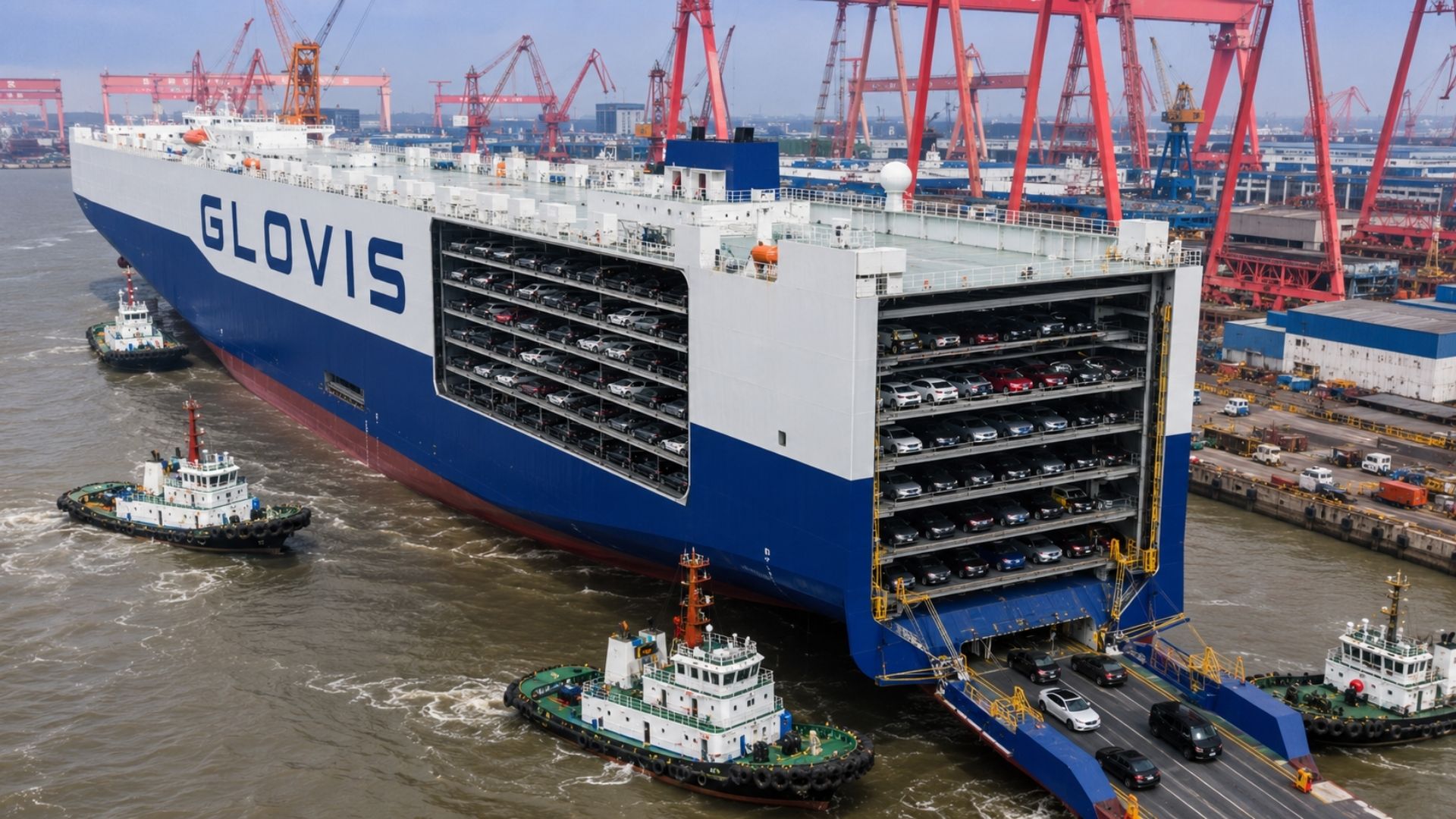

The Chinese shipyard Guangzhou Shipyard International delivered another of its megaships capable of carrying 10,800 vehicles per trip. With 230 meters and 14 decks, the vessels show how China stopped relying on foreign fleets and came to dominate car maritime transport.
Imagine a 14-story parking garage floating across the ocean with 10,800 cars inside. That’s basically what the new megaships that China has been building to transport automobiles around the world are. According to the website Xataka, the shipyard Guangzhou Shipyard International (GSI) has just delivered the third ship in a series with this gigantic capacity.
More than the size, what stands out is the turnaround behind these vessels. Until recently, China relied on South Korean and Japanese shipping companies to ship its cars. Now, it builds the ships that carry its production and that of other powers to the five continents.
10,800 cars in a single ship
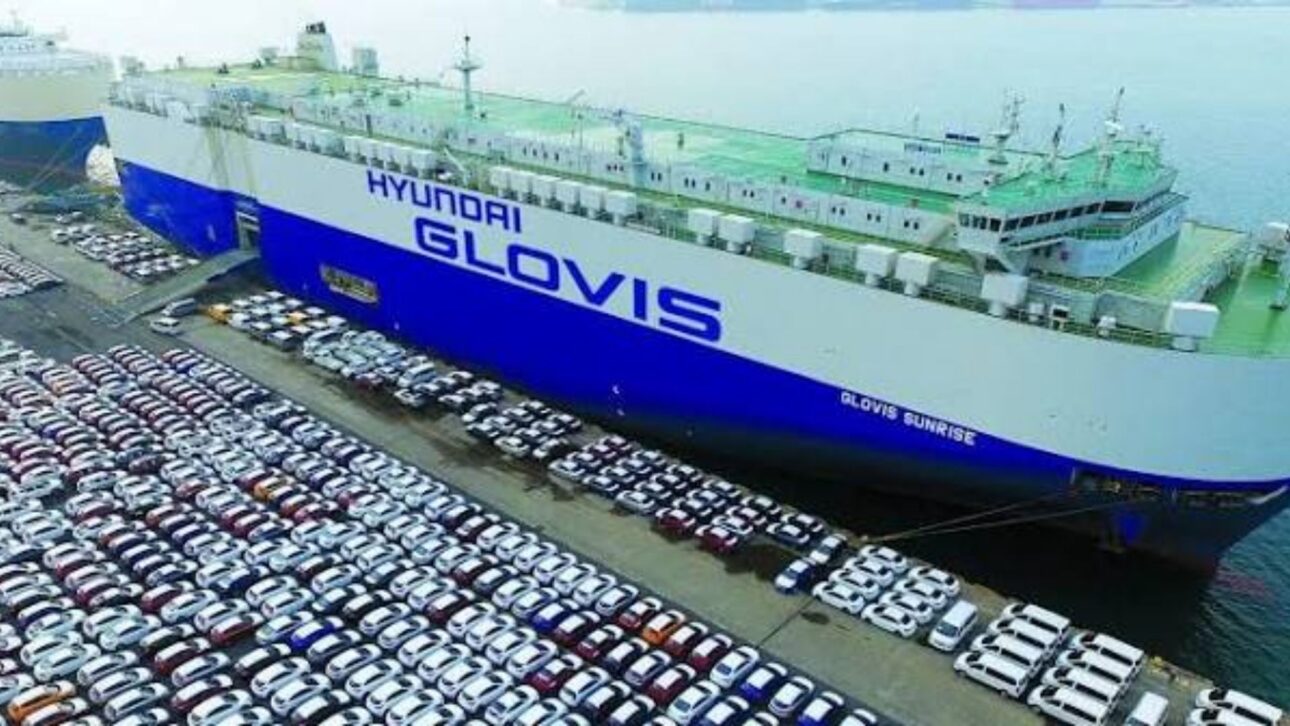
The shipyard behind the feat is Guangzhou Shipyard International, a subsidiary of the state-owned China State Shipbuilding Corporation (CSSC), one of the biggest names in maritime transport in the world.
-
The same Namibian desert that swallows ships hides one of the greatest fortunes on the planet: the region is one of the world’s largest diamond treasures, and the country extracts more than a million carats from the seabed.

-
Each kit sold pays for a donation: students from a public school created the collective ‘Garotas de Vermelho’ to combat menstrual poverty, providing support and sanitary pads to more than 30 schools in Rio Grande do Sul, and ended up presenting the project at an innovation event in Madrid.

-
After decades of theory, researchers trapped molybdenite inside an insulating nanotube and managed to manufacture the smallest semiconductor nanotube in the world, with only 1 nanometer in diameter and the potential to pave the way for much smaller transistors.
-
Scientists detect sugar in space for the first time, 26,745 light-years from Earth


The company delivered the third ship in a series of “megaships” designed to transport 10,800 vehicles per trip.
The series began with the Glovis Leader, delivered at the end of April 2026 according to the publication The Maritime Executive, the first ship in the world to surpass the mark of 10,000 cars in a single crossing. The third ship, whose name has not yet been revealed, was delivered at the end of June 2026.
Curiously, these giants built in China will not sail under the Chinese flag: they operate under the management of the South Korean shipping company Hyundai Glovis, following the same path as their sister vessels.
What is a PCTC: a floating parking garage
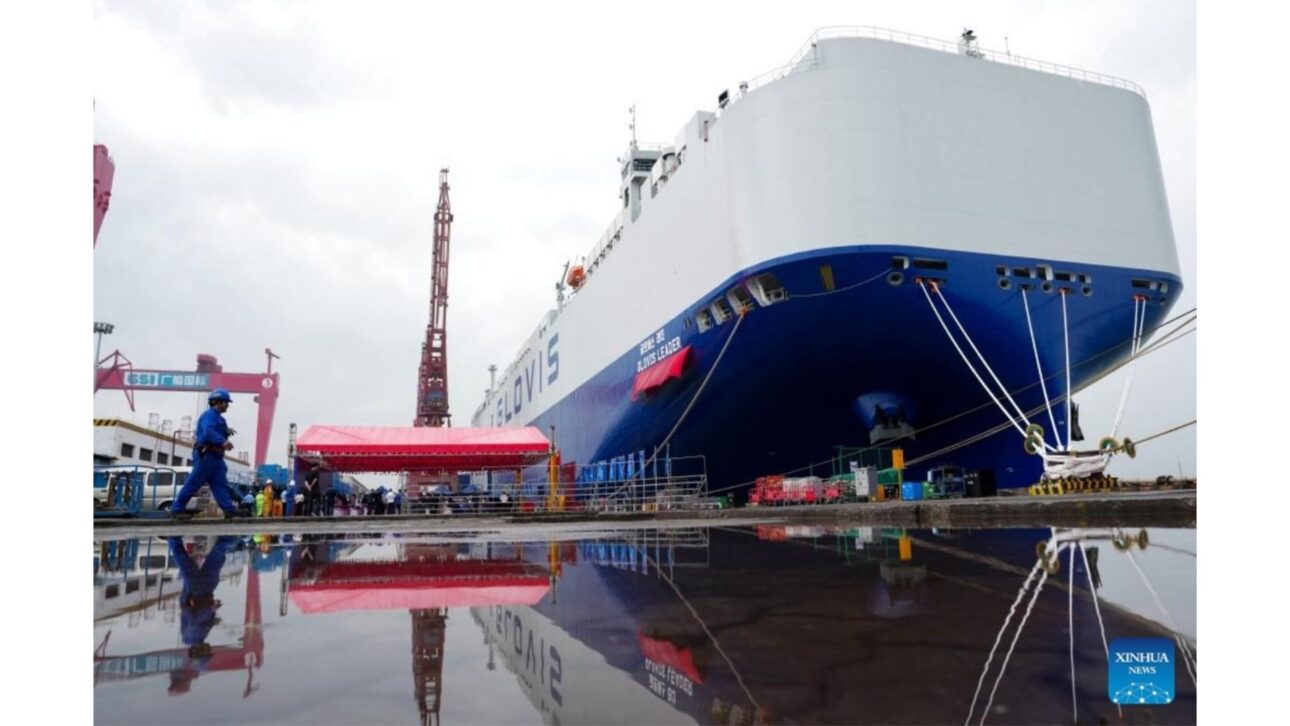
These vessels belong to a specific category, the PCTC (Pure Car and Truck Carriers), or pure car and truck carriers. As the name suggests, they are made exclusively to carry vehicles, no cranes or containers.
The operation is much like a parking lot. Cars enter through a rear ramp and are parked inside, like in a multi-story parking garage.
This mega ship measures 230 meters in length and 40 in width, with the cargo distributed over 14 decks five of them movable, to fit larger items like buses, trailers, and heavy machinery. It can also be powered by liquefied natural gas (LNG) or conventional fuel.
From dependence on Korea and Japan to its own fleet
It wasn’t always this way. Until recently, a large part of the maritime transport of Chinese cars depended on foreign carriers, mainly South Korean, Japanese, and Norwegian.
The problem arose with the explosion in demand. As China became the world’s largest car exporter, there simply weren’t enough ships to transport everything.
The shortage caused freight rates to skyrocket, and the solution was for China to build its own fleet to avoid being dependent on anyone.
How China became the largest car exporter
The backdrop to all this is the rise of the Chinese automotive industry. The country became the largest exporter of automobiles on the planet, driven especially by new energy vehicles, such as electric ones, which roll off the production lines at a rapid pace.
This growth was reflected in the size of the ships. In just a decade, the average capacity of these vessels has jumped: while a typical ship in 2014 transported 6,000 to 7,000 vehicles, Chinese shipyards today routinely deliver models that exceed 10,000 units.
The race for records between shipyards and automakers
Chinese shipyards are engaged in a fierce competition among themselves. Before the Glovis Leader and its sisters, the record belonged to the twins Anji Soundness and Anji Ansheng, with a capacity for 9,500 vehicles, operated by Anji Logistics, the logistics arm of automaker SAIC Motor.
The manufacturers themselves have joined the dance. BYD, the largest electric vehicle manufacturer in China, already has its own fleet of eight ships, allowing it to export more than one million vehicles per year, according to CnEVPost. Having their own mega-ships has become a strategic advantage in the global competition.
Chinese ships for the world, including Korean cars
Here is one of the most curious points of the story. The Glovis Leader and its sister vessels will operate on routes connecting South Korea to Southeast Asia, North America, and Europe, mainly serving Hyundai and Kia. In other words, these are ships made in China, but they transport South Korean cars.
This shows the new role of the country. Just GSI alone has secured more than 40 orders and made 26 deliveries, more than 95% of them to foreign clients. China has shifted from being a client to becoming the reference shipyard for other automotive powers that also struggle with capacity shortages.
What’s coming: more ships and records until 2028
The queue keeps growing. GSI alone has another eleven vessels under construction, with deliveries scheduled until 2028, according to Shippax, a sign that the demand for mega-ships is far from cooling down.
And the record of 10,800 cars is not expected to last long. The Norwegian company Wallenius Wilhelmsen announced plans to expand four of its “Shaper” series ships to 11,700 vehicles.
On the Korean side, Hyundai Glovis aims to reach 128 ships by 2030, proving that the fight for capacity is just beginning.
Why this changes the global trade game
In the end, the race for mega-ships is about much more than naval engineering. Whoever controls the ships that carry the cars also controls part of the bargaining power in global trade—something that China has understood in practice by shifting from dependency to self-sufficiency.
By mastering both ends—the car factory and the shipyard that transports them—the country is rewriting global automotive logistics. And while competitors catch up, each new giant delivered reinforces the message: in the sea of automobiles, China now calls the shots.
And you, did you imagine a ship with almost 11,000 cars?


From a dependent client to a powerhouse building the largest car ships in the world, China shows that mastering logistics is as important as mastering production.
Did you imagine that a single ship could carry almost 11,000 cars? Do you think Brazil should invest in a naval industry like this? Leave your comment and tag that friend who loves ships, cars, and technology.


