






 Portuguese
  Spanish


The Longnecker family’s earth house uses the hyperadobe method, with local bagged soil to build walls of natural thermal insulation, while solar panels generate electricity and cisterns store the scarce rain from the Arizona desert
Imagine a house whose walls literally came from the ground around it, without a brick truck, without a light pole, and without a street pipe. This is what is rising in the Arizona desert. The Longnecker family is building a completely off-grid earth house, powered by solar energy and rainwater, using an alternative construction technique, according to Catraca Livre, in a report from July 11, 2026.
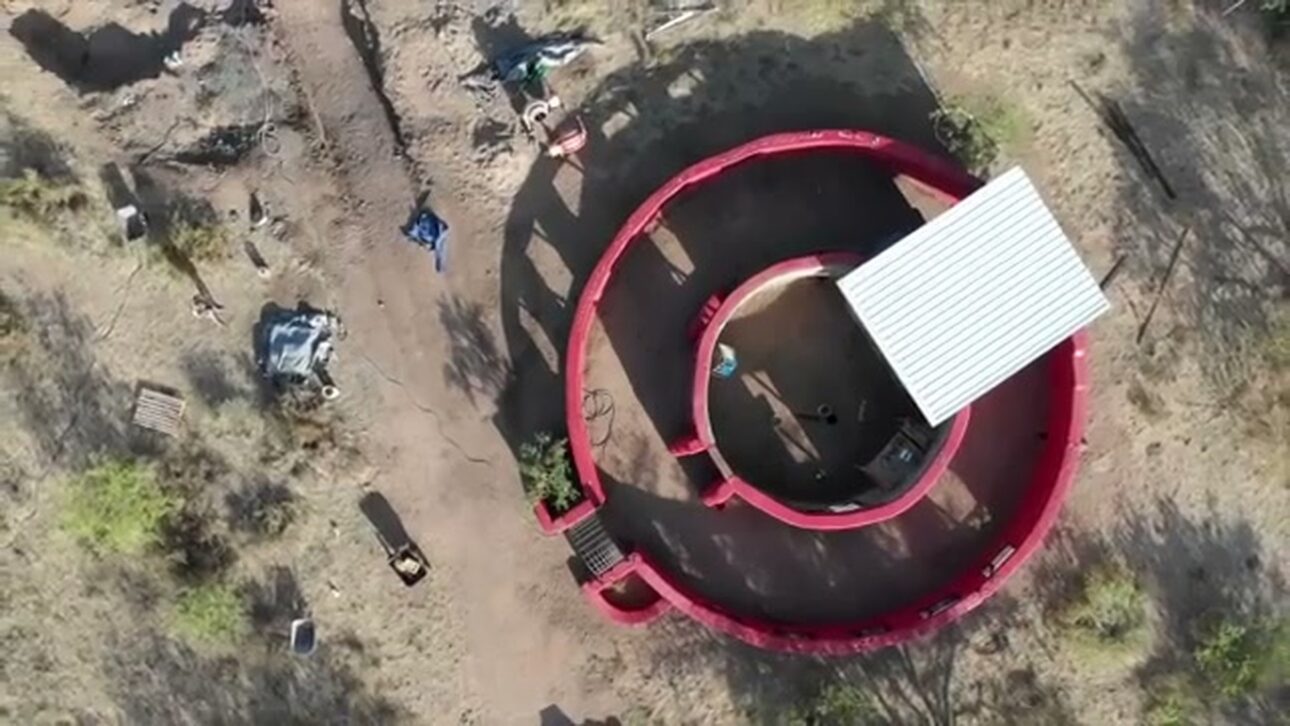
The building material is the cheapest there is: the soil itself. The chosen method is hyperadobe, which uses continuous mesh bags filled with local soil to create thick walls with natural thermal insulation against the region’s extreme climate, reports Catraca Livre. The wall emerges from the ground where the house stands.
The earth house and the hyperadobe technique
The name is technical, but the idea is simple and ancient. Hyperadobe stacks mesh bags filled with soil, dispenses with conventional bricks, and drastically reduces environmental impact, with the family itself shaping the structure, details Catraca Livre.
-
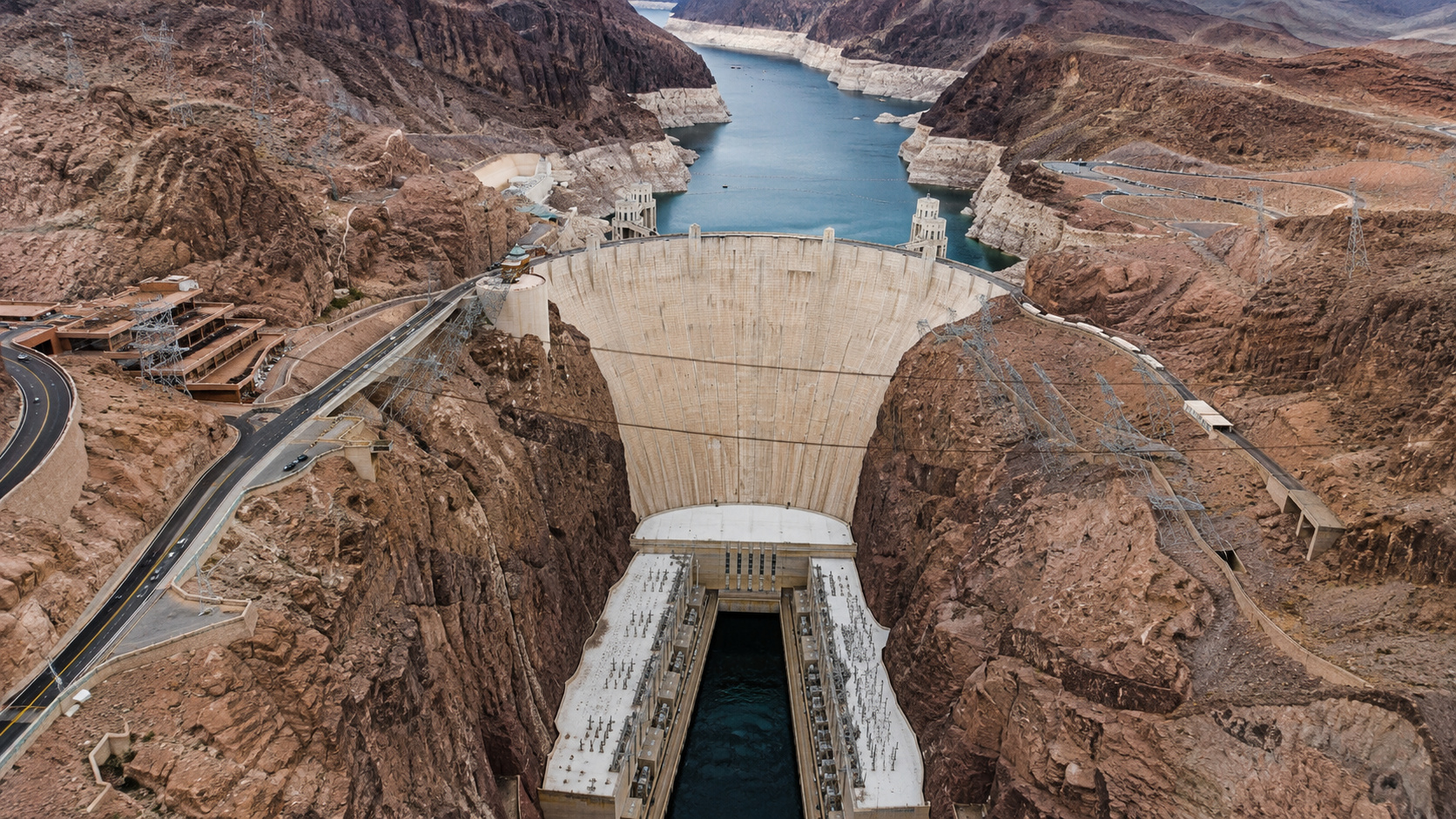
Few people know, but a dam in the USA required 5 million barrels of cement, 4.44 million cubic yards of concrete, and even an ice plant capable of producing 2 million pounds per day to prevent cracking during curing; discover the engineering behind the Hoover Dam.

-
They seemed sturdy enough to support a 222-meter tower, but three giant bolts broke because invisible hydrogen atoms had weakened the steel.
-
It seemed like just a futuristic metal facade, but curved panels turned into reflectors, heated sidewalks to around 60°C, hit apartments, and needed to be given a matte finish.
-
A giant printer erected each house in an entire neighborhood in southern Mexico in about 24 hours: 50 homes of 46 m² with two bedrooms delivered for $10,000 to families earning $3 a day and paying only $20 per month.




It’s worth understanding why this works in the desert, in reading this article, properly signaled. Thick earth walls are a natural thermal insulator: they keep the heat outside during the scorching day and return heat at the cold night, keeping the interior stable without air conditioning or heaters running all the time. It’s the same logic as the wattle and daub and adobe houses that have endured for centuries in the Brazilian hinterland and the interior of Mexico, now with the modern version of the mesh bag, which gives shape and strength to the earth walls.
Solar energy: the house that generates its own electricity
Without a pole at the door, the light comes from above. The couple installed a system that captures solar energy and stores enough electricity to keep appliances running without relying on utility companies, according to Catraca Livre.
In observation of this editorial, duly noted: this is where the earth house meets technology. The walls are prehistoric in design, but the energy heart is current, photovoltaic panels and batteries that store electricity from the abundant desert sun. The combination is powerful precisely because a well-insulated earth house uses little energy, and the little it uses the sun provides in abundance. It’s the perfect match for living off the grid.
And the cost of this independence works in favor of the builder, still in noted reading. Solar panels and batteries have an installation price that is daunting at first, but they pay off over the years precisely because the electricity bill ceases to exist. In a common, poorly insulated house, the solar system would need to be huge to handle air conditioning and heating; in an earth house, which already regulates temperature on its own, the system can be smaller and cheaper. The choice of wall material, therefore, is not just aesthetic or ecological: it reduces the energy cost of the entire construction.
Rainwater: how to supply in the middle of the arid desert
The biggest challenge in an arid region is precisely water, and the solution also comes from the sky. The house’s infrastructure captures rainwater from the desert and directs the entire volume to large reservoirs designed to withstand long periods of drought, reports Catraca Livre.
Capturing the little rain that falls and storing it for the dry months is survival engineering, in reading of this editorial, duly noted. In the Arizona desert, it rains little, so every drop that runs off the roof is directed to cisterns that function as a water savings account. It’s the same principle as the cisterns in the northeastern semi-arid region, where capturing rain during the wet period is what ensures water during drought. The Longnecker’s earth house applies this wisdom with reservoirs sized for the desert’s drought.
It is worth mentioning that the whole system only works because the three components interact with each other, as noted in observation. A poorly insulated earth house would require much more energy; a solar system without batteries would go out at night; a small cistern would dry up during drought. It is the combination of the three, a thick wall that saves energy, a panel that generates abundantly, and a generous reservoir, that allows living off the grid without hardship. Removing any one of the legs topples the stool. That is why the Longnecker’s earth house is not an isolated trick, but a system designed from start to finish.
What the Earth House Teaches Brazil
The connection with Brazil is more direct than it seems, as noted in this editorial. The country has plenty of sun, a tradition of building with earth, rammed earth, and adobe, and a semi-arid region that already masters rainwater harvesting in cisterns. In other words, the three technologies that support the Arizona house, earth wall, solar energy, and rainwater, exist and work on Brazilian soil. The article is not about an American whim, it is about a low-cost, low-impact housing model that resonates with what Brazil already knows how to do.
And there is the economic appeal, which interests any budget: a house that does not pay for electricity or water has an operating cost close to zero. The heavy investment is in construction, but the main material, earth, is free, and so are the sun and rain. In a country with expensive energy bills, the off-grid model becomes more than an ecological curiosity, it becomes an economic calculation. Tell us in the comments: would you live in an earth house powered only by sun and rain?
Watch: The Hyperadobe Technique Guide by the Longnecker Family


The step-by-step construction is documented on video by the family itself. The Tiny Shiny Home channel published “The Ultimate Guide to Hyperadobe Earthbags”, detailing the pros, cons, and cost savings of the earth wall technique, the same method described by Catraca Livre.


