






 Portuguese
  Spanish


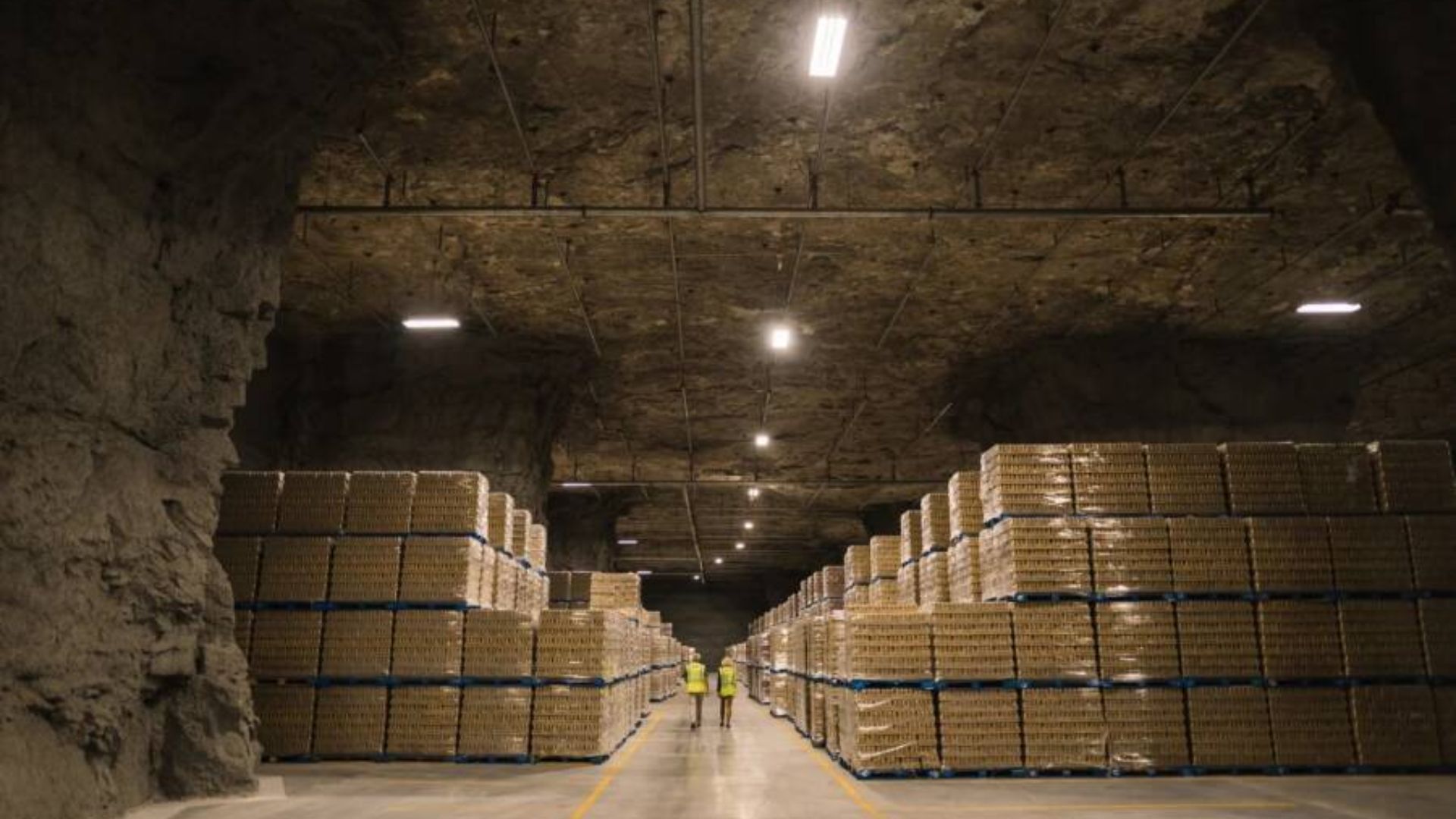


In Old Limestone Mines in Missouri, the United States Keep Hundreds of Millions of Kilograms of Cheese Stored Below Ground. The System Created Decades Ago Has Turned Into a Symbol of the Nation’s Agricultural Policy and Still Sparks Curiosity.
In old limestone mines in the state of Missouri, in the United States, lie more than 600 million kilograms of cheese stored under controlled conditions.
The underground caves, maintained at stable, cool temperatures, house part of the largest dairy stock in the country.
The system, created decades ago, is the result of agricultural policies aimed at balancing milk production and consumption.
-
How to Prevent Brown Recluse Spider Bites: Common Hiding Spots and Free Tips to Reduce Risks

-
Natto: The Unusual Japanese Superfood Gaining Popularity on Social Media and Driving Record Exports
-
Brazilian Mayor Goes Undercover as Homeless for 24 Hours to Assess Public Services

-
15-Year-Old Entrepreneur Malu Lira Publishes 20 Children’s Books on Financial Education, Earns $500,000, and Expands Her Project to the Amazon Rainforest




Origin of the Storage System
The storage of large volumes of cheese began in the 1970s, a time when the United States faced dairy shortages and high inflation.
According to historical records, then-President Jimmy Carter implemented a policy to support the dairy industry, with subsidies and financial incentives for producers.
The measure increased production but also generated a surplus.
The government, responsible for purchasing what was not absorbed by the market, began to accumulate butter, powdered milk, and cheese in large warehouses.
In 1981, reserves reached 227 million kilograms, spread across more than 150 warehouses in the United States.
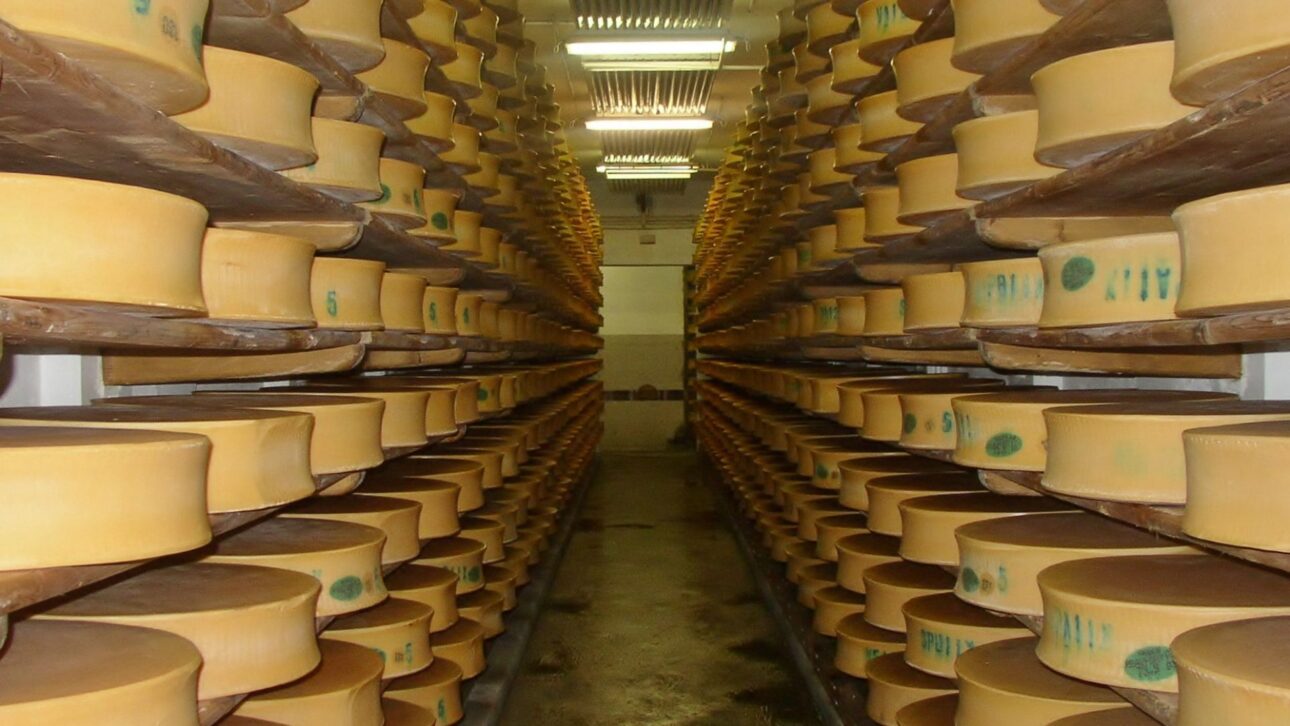
Criticism and Strategy Changes
The accumulation of perishable products raised concerns about <strongwaste and the cost of maintaining inventories.
At the time, families in vulnerable situations questioned the government’s decision to keep tons of cheese stored while part of the population struggled to feed themselves.
With the arrival of President Ronald Reagan in the White House in 1981, the program was re-evaluated.
The government launched an initiative to distribute the surplus cheese to low-income families and charitable organizations.
The measure helped to reduce the inventory and resolved the deadlock, but the central issue remained: overproduction in the dairy sector.
Cheese Caves and Temperature Control
The cyclical increase in milk production over the following decades led to the creation of new storage strategies.
To avoid losses and reduce energy costs, old limestone mines in Missouri and other states were adapted.
In these caves, the naturally cold climate helps to preserve cheese without the need for intense refrigeration.
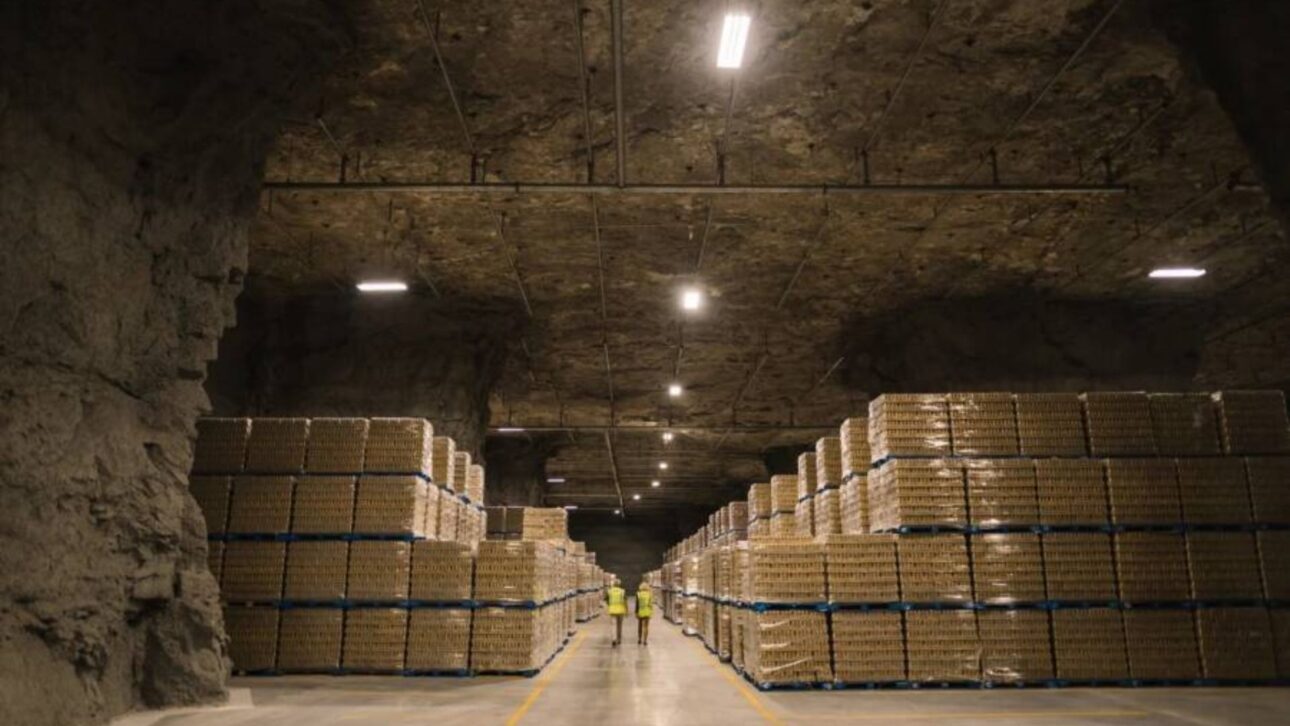
According to the United States Department of Agriculture (USDA), these facilities are part of a broader strategic food reserve system created to ensure supply during periods of crisis or price fluctuations.
The current volume, estimated at 635 million kilograms of cheese, reflects the storage capacity achieved by the country.
Costs and Environmental Impact
Agricultural economics experts point out that maintaining the caves requires continuous investment in temperature control and food safety.
According to analysts, while the method is effective in preventing waste, it also represents a high cost during a time of lower demand for dairy products.
Researchers affiliated with American universities assert that the dairy farming sector, the backbone of this production chain, has significant environmental impacts due to methane emissions and the intensive use of natural resources.
Therefore, there is ongoing debate within the sector about the balance between production, consumption, and sustainability.

Debate Over Subsidies and Market
Economists consulted by local outlets claim that the volume of stockpiles is a direct consequence of agricultural subsidy policies.
These incentives maintain production levels even when demand does not keep pace.
According to these specialists, this logic causes the government to act as a buyer and storehouse of surpluses, interfering with market dynamics.
Representatives from the dairy industry, on the other hand, argue that the storage system ensures economic stability for the sector and protects producers from financial losses during periods of low consumption.
For them, the stocks help to maintain jobs and the structure of the production chain.
A System That Reflects US Agricultural Policy
Currently, the United States continues to lead the global cheese production.
Part of the stored volume may be directed to food assistance programs or emergency exports, depending on market fluctuations.
The cave system, while sparking curiosity, is considered an extension of the American agricultural policy aimed at preserving self-sufficiency and reducing risks of shortages.
In the mines of Missouri, blocks of cheddar, mozzarella, and other types remain stacked under constant temperatures, forming a reserve that symbolizes both the strength and challenges of the United States’ agro-industrial model.
The main question now, according to researchers and sector analysts, is how long this type of storage policy will remain viable in the face of the economic and environmental pressures shaping the future of food production.







Muito bom, excelente tipo de governança