






 Portuguese
  Spanish


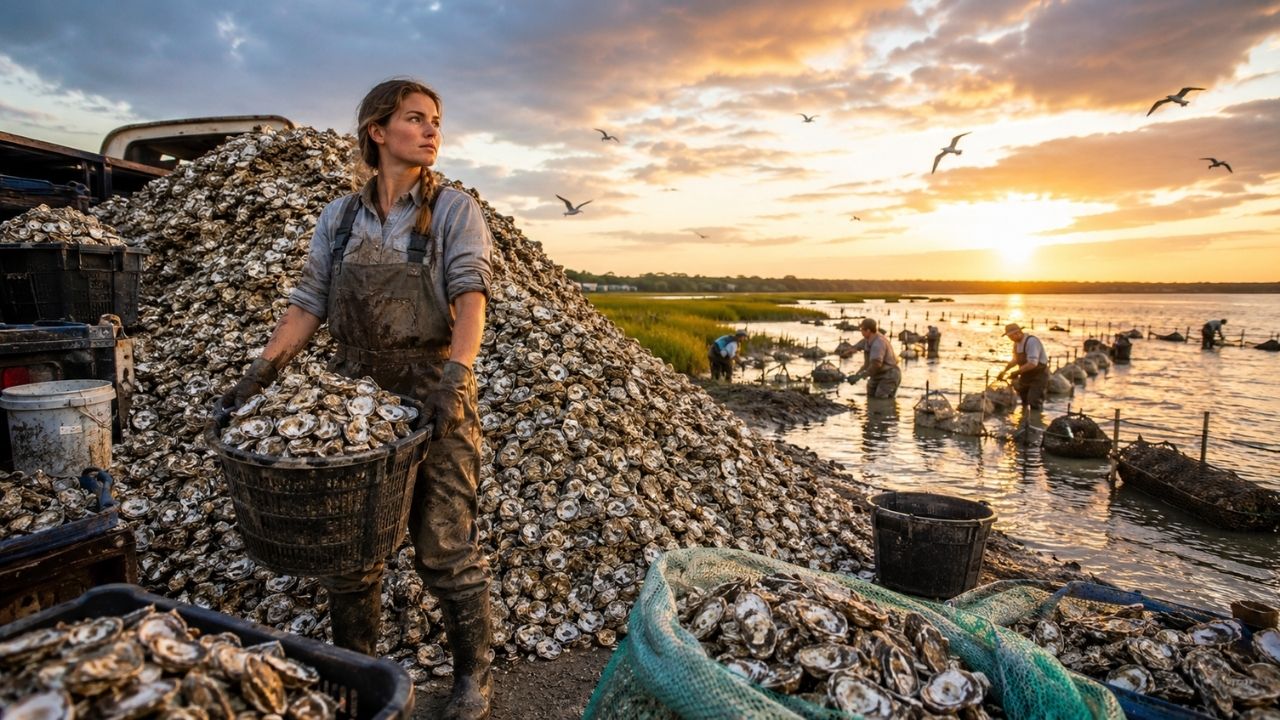


Oyster shells discarded in restaurants become recycling for oyster reefs in California, with Kaysha Kenney leading collection, curing, and reuse. The project strengthens coastal habitats, expands conservation, and shows how over 10 tons can help marine ecosystems previously discarded as common waste in coastal cities in the USA.
The oyster shells that used to go to waste in restaurants have become part of a marine restoration program led by Kaysha Kenney, a marine scientist and content creator. The work takes place in Southern California, with the involvement of Orange County Coastkeeper in Orange County and Long Beach.
According to a report by People, the case gained prominence on May 15, 2026, when the scale of the project drew attention: the program had already accumulated over 10 tons of used shells. The goal is to reuse this waste to help in the recovery of oyster reefs, strengthen coastal habitats, and show how ocean conservation can also start with something seemingly common.
From wooden boxes to a mountain of shells

Initially, the operation fit into a few wooden boxes. The oyster shells were collected in local restaurants, stored, and prepared for an environmental reuse process. Over time, the volume grew so much that the initial space was no longer sufficient.
-
Billionaire says the most valuable skill will help overcome job elimination caused by AI, following Bill Gates’ fears

-
A Dutchman created a ‘box’ that makes trees grow in the desert almost without water and without irrigation: the invention has already brought seedlings to dozens of countries and achieves up to 90% survival where common planting did not exceed 10%.

-
Abandoned warehouse hid a giant collection of rare computers, with over 2,000 artifacts from the 1930s to the 1980s.
-
Scientists warn that melting ice is triggering an alarming chemical transformation in preserved areas, and the first signs are already concerning researchers worldwide.




What seemed like a small action turned into a weekly operation of logistics, science, and environmental education. Today, the collected shells form a large storage area and continue to arrive through partnerships with seafood restaurants and markets.
The expansion shows how consumer waste can gain a new function when there is planning. Instead of ending up in landfills or common disposal, the shells are treated as raw material to restore degraded coastal environments.
This growth also helped transform the project into a story with great public appeal. The image of tons of accumulated shells draws attention because it visually reveals the size of a problem and the potential of a solution.
How oyster shell recycling works
The Shells for Shorelines program by Orange County Coastkeeper collects oyster shells used in partner restaurants and markets. The team organizes collections to pass through several establishments on the same route, reducing travel and making the process more efficient.
After collection, the shells are taken to a field where they undergo weighing, cataloging, and sun curing. This step is important because it helps prepare the material before reuse in restoration projects.
The process also requires cleaning the containers used in collections. Buckets, boxes, and other materials need to be sanitized so they can return to the restaurants and participate in the next collection round.
In practice, recycling involves more than just gathering shells. There is volume control, partner organization, transportation, curing time, and preparation to ensure the material can be safely used in reef recovery.
Why oyster reefs are important for the ocean

Oyster shells have environmental value because they help rebuild the physical base of reefs. These reefs serve as habitats for various marine and coastal species, providing shelter, food, and breeding areas.
Oyster reefs also contribute to water filtration and coastal protection. When well preserved, these environments can improve water quality and help reduce impacts in vulnerable coastal areas.
Another important point is the resilience of ecosystems. In regions subject to erosion, climate change, and urban pressure, healthy coastal habitats can function as natural barriers and points of biodiversity recovery.
Restoration, therefore, benefits not only oysters. It can strengthen an entire network of marine life, from small organisms to species that depend on these environments to survive.
Project went viral by showing the behind-the-scenes of conservation
Kaysha Kenney’s work gained traction on social media because it shows stages that many people never see: bins full of shells, fields covered with the material, teams organizing collections, and the slow work behind environmental recovery.
The virality helped turn a technical topic into something understandable for the public. Instead of just talking about marine restoration, the videos show the concrete path of oyster shells, from the restaurant to the coastal project.
This type of dissemination helps bridge conservation and everyday life. Many people consume oysters without imagining that the shells can return to the environment as part of a strategy to recover reefs.
The repercussion also broadens the debate about waste. What seemed like worthless waste is now presented as an environmental resource, provided there is an organized chain for collection, preparation, and reuse.
More than 10 tons show the scale of the challenge

The accumulation of more than 10 tons of oyster shells reveals the strength of the program but also points to the magnitude of the environmental problem. Reef restoration requires volume, time, technical knowledge, and continuous participation from partners.
According to the material released about the project, oyster reefs have suffered significant losses worldwide. This scenario makes restoration initiatives even more important, especially in coastal areas pressured by urbanization, pollution, and environmental changes.
The pile of shells serves as a symbol of reconstruction. Each collected batch represents waste that is no longer discarded and becomes part of a larger effort to recover the oceans.
At the same time, the project shows that conservation does not depend solely on large works or actions distant from the population. Restaurants, consumers, scientists, environmental organizations, and content creators can participate in a chain with real impact.
Ocean conservation starts before the sea


The story of oyster shells shows that ocean conservation does not start only within the water. It also involves decisions made in restaurants, collection programs, environmental education, and public communication.
When a restaurant separates shells for recycling, it participates in a chain that can help reefs and coastal habitats. When the public understands this process, the likelihood of supporting similar initiatives in other regions increases.
The case also reinforces the importance of local organizations. Orange County Coastkeeper acts as a bridge between commercial establishments, technical teams, and restoration projects, transforming dispersed waste into environmentally useful material.
This model can inspire other coastal cities, provided it respects local conditions, sanitary requirements, and technical criteria for restoration. It is not enough to throw shells into the sea; planning, monitoring, and a clear ecological purpose are needed.
The case draws attention because it combines science, logistics, and communication in an easy-to-visualize agenda: what is left on the plate can return to the ocean as a conservation tool. Do you think restaurants in Brazil should also have programs to reuse shells and other natural waste in environmental projects? Tell us in the comments.





Carla, thanks for writing about this. However your article, could have been much shorter and still more informative, specifically about how the shells help restore oceans. Too much repetitiveness about how good that is, yet you never explain or quantify how it helps.
Yes,I would like to meet you and join hands together in keeping the environment well conserved.
You should be very proud of your self love