






 Portuguese
  Spanish


In a laboratory in the interior of Australia, a small striped cub took its first steps and, with them, brought back to the world an animal that had been extinct for almost a century, in a feat that seemed impossible and rekindles an old dream of science.
Few animals carry as much symbolic weight as the Tasmanian tiger, or thylacine. This striped carnivorous marsupial, which resembled a mix of dog and tiger, was hunted to extinction, and the last known specimen died in a zoo in 1936. Since then, it has become the most painful portrait of a species that humans erased from the face of the Earth, remembered in old black-and-white photos and in a few seconds of film that still move those who watch them.
Now, in a laboratory in Australia, scientists have announced the birth of the first cub considered a substitute for the thylacine, the result of advanced genetic techniques aimed at recreating the animal. Seeing that small striped being taking its first steps is, for many people, like watching a dead person come back to life, and marks one of the most surprising chapters of so-called de-extinction.
Bringing back what seemed lost forever
The idea of resurrecting an extinct species always sounded like pure science fiction, like those dinosaur movies. But de-extinction has ceased to be fantasy and has become a real field of science, which mixes genetics, DNA editing, and reproductive biology. The strategy is not to exactly clone the ancient animal but to use living relatives as a basis to recreate a version very close to what was lost.
-
Smart Glass Revolutionizes Privacy: Touch-Activated Opacity Transforms Windows into Connected Home Features with App and Voice Control

-
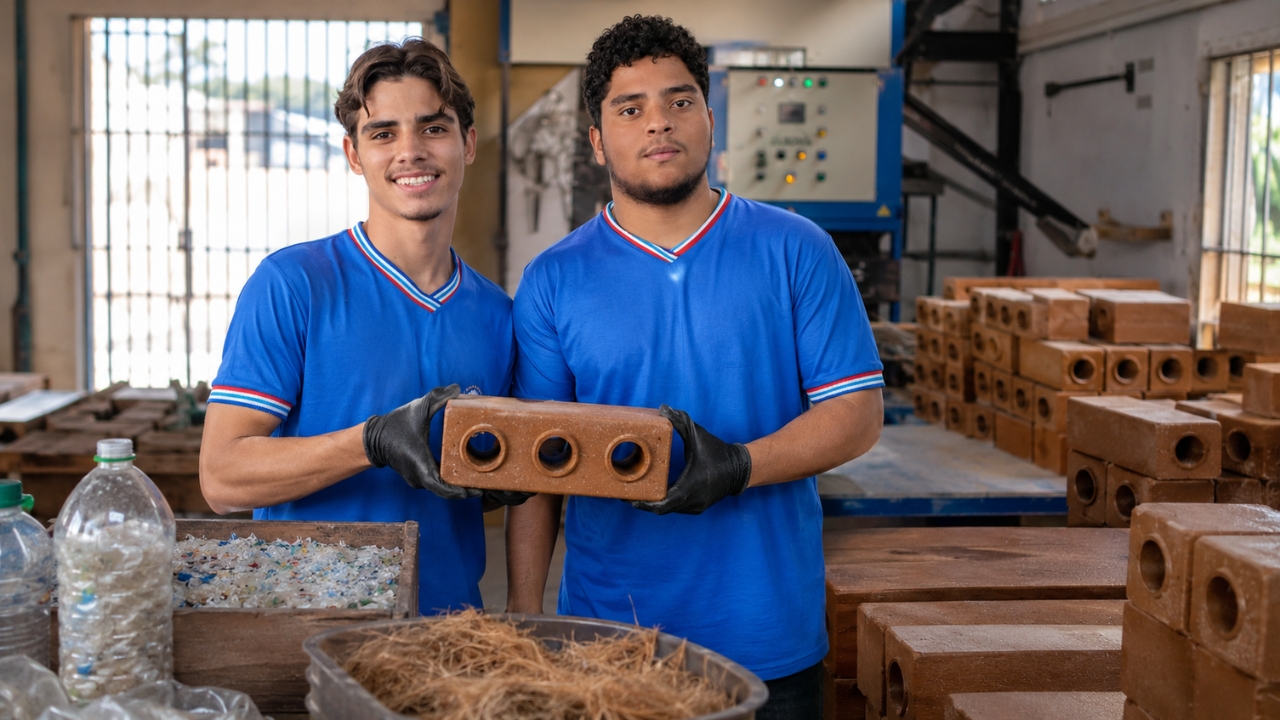
Young Innovators from Brazil Turn Discarded Plastic into Eco-Friendly Bricks Using Coconut Fiber, Offering a Sustainable Alternative for Construction
-
Brazilian Scientists Among Team Proposing to Turn Ocean Depths into Giant Gravity Battery Using Cargo Ships and Subsea Cranes

-
Chile’s Plan for a 20,000 km Undersea Cable to Hong Kong Halted by U.S. Pressure, Highlighting the Silent Data Control Battle in Latin America



I confess that I feel a mixture of enchantment and vertigo in the face of this. There is something profoundly moving in correcting, at least in part, a mistake we made by extinguishing a species. But there is also an enormous weight in this idea that we now have the power to decide who comes back and who stays behind. The birth of this Tasmanian tiger cub places this once-unthinkable power directly in the hands of humanity.

How to recreate an extinct animal
The process behind this feat is as complex as it is fascinating. Scientists start with the preserved DNA of the extinct animal, recovered from specimens kept in museums, and compare it with that of a close living relative. Then, they edit the genome of this relative to make it as close as possible to the thylacine, gradually recreating the characteristics that defined the lost species.
The result is not a perfect copy of the 1936 animal but a very similar substitute that fulfills much of the role the original had in nature. This type of approach is what makes de-extinction practically possible, circumventing the fact that no living thylacine remained to be cloned. It’s cutting-edge genetics in the service of an old dream, that of undoing a disappearance.
It’s worth understanding why the Tasmanian tiger was chosen as a candidate for this return, and not just any animal. It disappeared relatively recently, which means there is well-preserved DNA of it in museum collections, an essential ingredient for the work. Furthermore, there still exists in Australia a close marsupial relative that can serve as a genetic base and even as a surrogate mother to generate the cubs. Without these two factors, the undertaking would be practically impossible, and that’s why not every extinct species is a realistic candidate for de-extinction: science depends as much on what is left preserved in jars as on what still lives in nature.

The debate that comes with the miracle
As exciting as it is, bringing species back raises difficult questions. Does it make sense to spend so much effort and money to revive an extinct animal while so many living species today are at risk of disappearing? Will the recreated Tasmanian tiger find an environment where it can truly live, or will it return to a world that no longer has a place for it? These are questions that have no easy answers.
There are also those who fear that de-extinction sends a dangerous message, that extinction is not so serious since we could simply bring animals back later. Scientists who advocate for the technique respond that it is an additional tool for conservation, not an excuse to neglect nature. This delicate balance between hope and responsibility is at the heart of the entire debate.

A cub that carries a century of history
I imagine the emotional silence in the laboratory when that striped cub moved for the first time, carrying in its steps almost a century of absence and the weight of a human error being, in some way, revisited. It is the kind of scene that mixes science, emotion, and a bit of awe at what we have become capable of doing, a moment when decades of research condense into the fragile movement of a single little creature.
The return of the Tasmanian tiger, even as a recreated substitute, is a milestone that goes far beyond a single animal. It heralds an era in which extinction may no longer be necessarily definitive, opening extraordinary possibilities and equally great dilemmas. That small cub taking its first steps does not just bring back a species, but a huge question about the kind of power humanity now holds in its hands, and about the enormous responsibility that comes with the ability to undo the death of an entire species.
Bringing back an extinct animal: correcting a past mistake or tampering too much with nature?







What was the host mother?
One individual cub does not make a return of a species! This is just a live lab specimen, not a population.
Hard to imagine it took its first steps when they are the size of a jellybean at birth