






 Portuguese
  Spanish


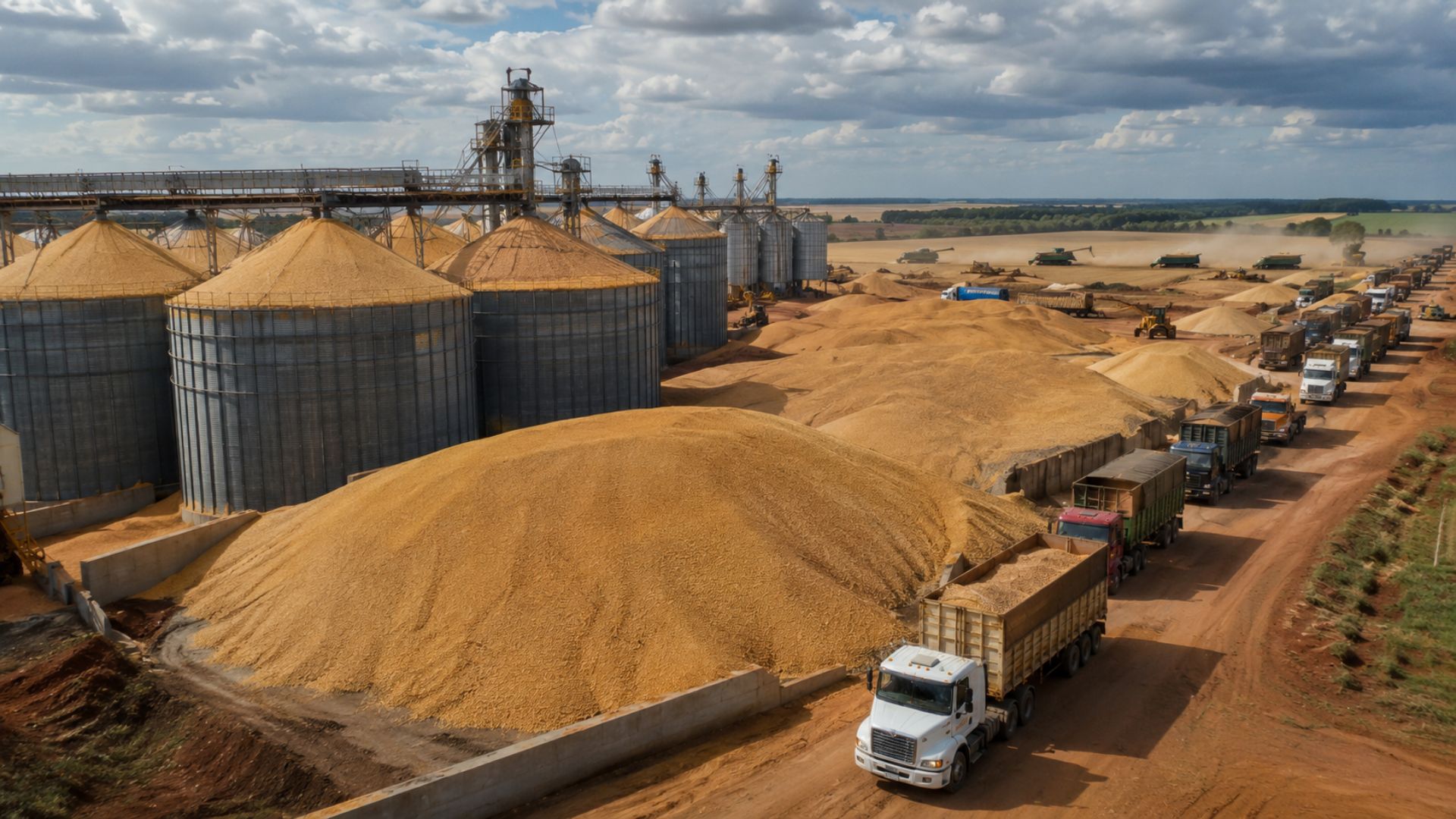


Brazil is expected to register an estimated production of up to 350 million tons of grains in the 2025/2026 harvest, but the country’s storage capacity is 225.26 million tons, covering only 59% of the harvested volume. According to information from the Itatiaia portal, the storage capacity deficit exceeds 124 million tons, equivalent to almost the entire agricultural production of Argentina. Data from the National Supply Company panel shows that the country has 12,116 storage units, with the bulk system accounting for 202.41 million tons and the conventional system for 22.84 million.
Brazil is about to harvest the largest grain crop in its history, but it has nowhere to store almost half of it. The country’s storage capacity reached 225.26 million tons in 2026, according to data from the National Storage Units Registration System compiled by Conab. The problem is that the estimated production for the 2025/2026 harvest reaches 350 million tons. The storage capacity deficit exceeds 124 million tons, the largest in Brazilian history, a volume equivalent to almost the entire agricultural production of Argentina, forcing producers to sell in a hurry or leave grains exposed to losses.
The gap between production and storage capacity is not new, but it has worsened in recent years because the harvest grows faster than investments in storage infrastructure. Storage capacity has increased by 60% since 2010, rising from 140.55 million to 225.26 million tons, with an average annual growth of 2.99%. In the same period, grain production more than doubled, widening the gap between what Brazil harvests and what it can store.
The storage capacity numbers in 2026

The Brazilian storage system is composed of 12,116 storage units and 18,752 Agricultural Deposit Certificates. Out of the total 225.26 million tons of storage capacity, the solid bulk system represents 202.41 million tons, while conventional storage accounts for 22.84 million tons.
-
Study of Brazil’s Tietê River Finds 25 Pesticides in Water, Including Cancer-Linked Substance Near Source

-
Young Entrepreneur Expands from 50 to 1,400 Chickens, Proving “Happy Hens” Can Be a Viable Business
-
Small Farm in Brazil’s Minas Gerais Produces 403 Liters of Milk Daily, Sets Benchmark for Rural Producers
-
Man Revives 1930s Abandoned Trout Farm, Learns from Scratch, and Earns $1.1 Million Annually Selling Fish to Michelin-Starred Restaurants


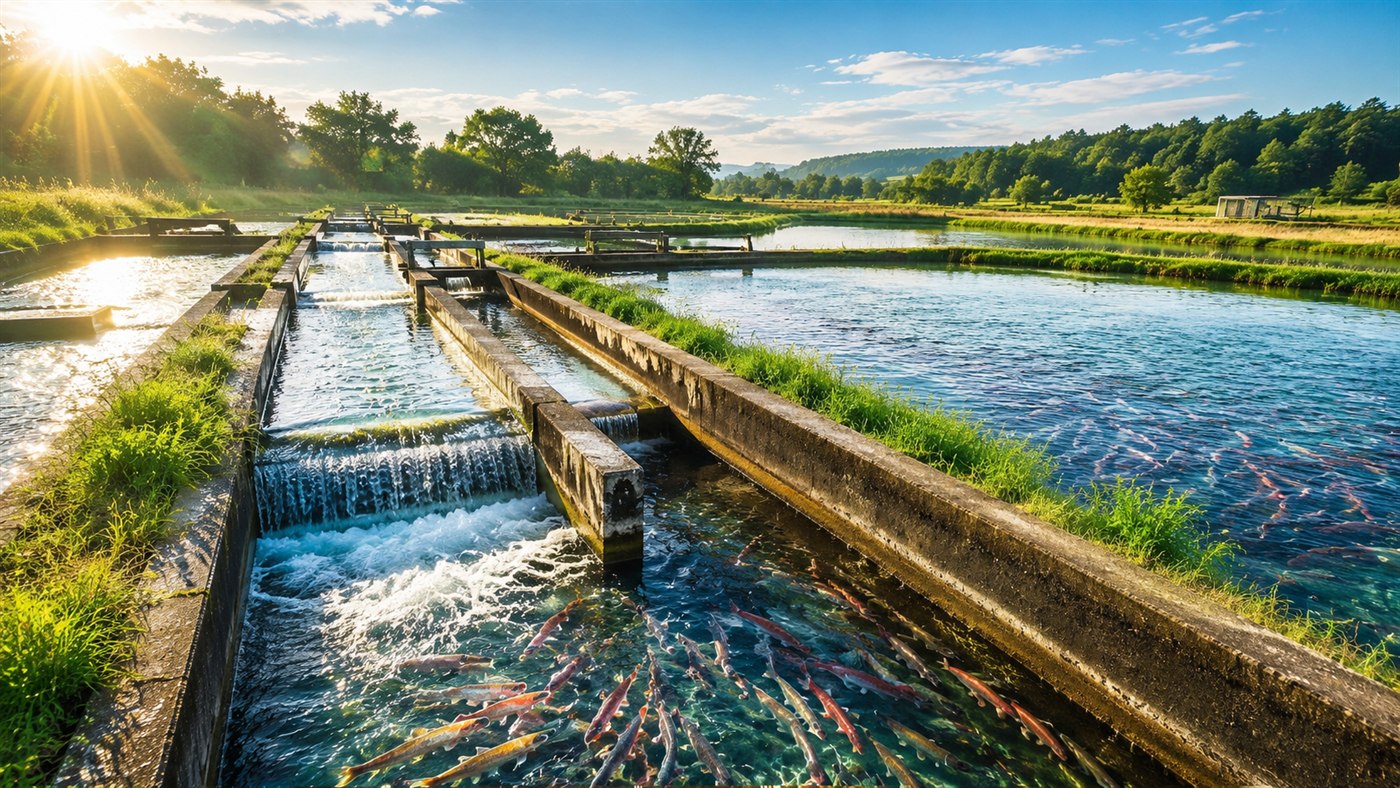
On-farm storage has advanced at a faster pace than the national average, with a growth of 3.65% per year. The volume stored on farms jumped from 20.98 million tons in 2010 to 37.25 million in 2026. The share of farms in total storage capacity also grew, reaching a peak of 17.01% in 2023 before slightly declining to 16.54% in 2026.
Where storage capacity is concentrated
The storage capacity infrastructure remains concentrated in the main producing regions. The Midwest leads with 92.63 million tons and 3,158 units, followed by the South region with 74.21 million tons and the largest number of storage units in the country, totaling 5,526.
The Southeast has 33.10 million tons of storage capacity, while the Northeast has 16.61 million and the North has 8.69 million. Among the states, Mato Grosso leads with 57.9 million tons, followed by Paraná with 35.9 million and Rio Grande do Sul with 33.4 million. The concentration reflects the geography of grain production but leaves expanding agricultural regions, like MATOPIBA, with insufficient infrastructure for the harvested grain volumes. Conab monitors the evolution of capacity through the storage panel, which highlights regional disparities.
What the storage capacity deficit causes in practice
When the producer harvests and has nowhere to store, they are forced to sell immediately, regardless of the market price. This supply pressure during the harvest period drives down prices and transfers bargaining power to buyers, reducing the income of the farmer who cannot wait for more favorable moments to market their grains.
In addition to financial loss, the storage capacity deficit causes physical losses. Grains stored in inadequate conditions suffer from moisture, pests, and contamination, reducing the quality and value of the product. Transportation is also affected: without storage, logistics are concentrated in the harvest months, overloading highways, railways, and ports in a short period and increasing freight costs.
What needs to change for storage capacity to keep up with the harvest
The annual growth of 2.99% in storage capacity is insufficient to keep up with the expansion of production. For the deficit to stop growing, the pace of construction of new silos and warehouses would need to at least double, requiring investments that the private sector alone has not been able to make at the necessary speed.
The federal government maintains subsidized credit lines for the construction of warehouses on rural properties, and Conab recommends that the ideal static capacity should correspond to at least 120% of production. However, adherence depends on financing conditions, licensing bureaucracy, and the producer’s investment capacity. The increase in the participation of farms in total storage capacity, from 14.93% in 2010 to 16.54% in 2026, shows that the movement exists, but it is far from solving a deficit that, according to Conab, already exceeds 124 million tons and grows with each record harvest.
Did you know that Brazil has nowhere to store almost half of the harvest it collects? Do you think the problem is a lack of investment, bureaucracy, or the rapid growth of production? Tell us in the comments.







Brazil should move the crop as fast as possible. Even if selling to poorer countries at a discount. The GMO is a scare tactic.
One wonders if the return on investment is good. And if there are any restrictions to export or price rise.
It’s very likely that the high harvest was ballooned by GMO seed. Now they are I. Deep mess