






 Portuguese
  Spanish


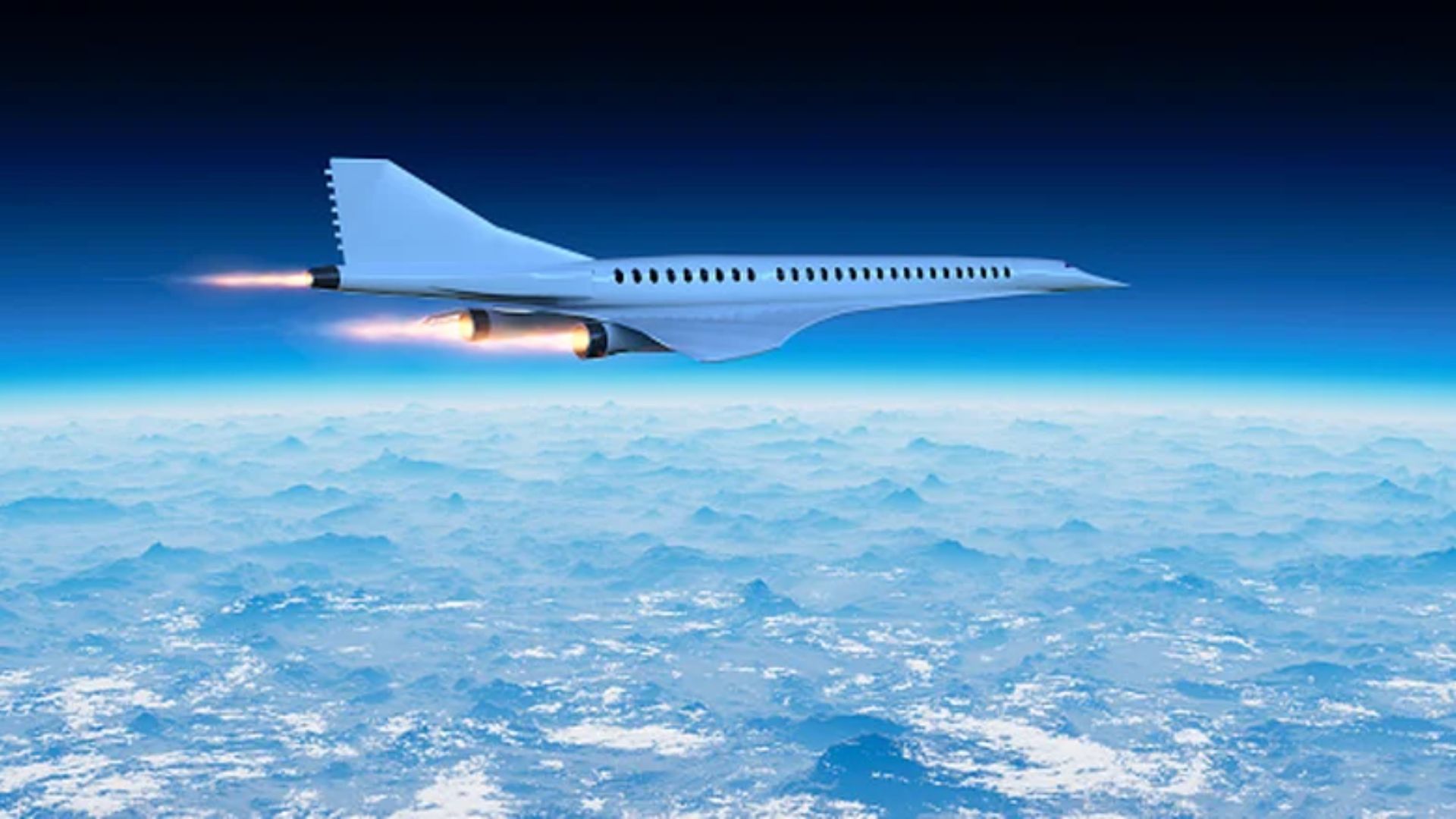


It is necessary to understand the magnitude of the achievement and its limits. The test took place on the ground, in a wind tunnel that simulates extreme speed, not in real flight. The approximately two-meter-long thruster burned hydrogen at temperatures close to 1,000 degrees, and the next step will be to mount the prototype on a sounding rocket.
Two and a half times faster than the Concorde and capable, in theory, of crossing the Pacific in about two hours, the hypersonic ramjet engine tested by JAXA, the Japan Aerospace Exploration Agency, successfully passed the combustion test at Mach 5. The result was announced on April 16, 2026, by Waseda University, in partnership with JAXA itself, the University of Tokyo, and Keio University, marking another advancement in the global race for ultrafast civil flight.
The experiment was conducted at the Kakuda Space Center in Miyagi Prefecture and marks an important step towards the dream of commercial flight at approximately 5,300 kilometers per hour, currently anticipated for the 2040s. Despite the enthusiasm on social media, it is important to note that the test occurred in a bench facility that simulates flight conditions at Mach 5, and not in an aircraft actually moving in the air, a fundamental distinction to understand the current stage of the project.
What was done at the Kakuda Space Center

Researchers installed an experimental vehicle about two meters long inside a specialized ramjet engine test facility, capable of simulating the extreme conditions of flight at five times the speed of sound. During the test, the prototype was exposed to external temperatures approaching 1,000 degrees Celsius, equivalent to about 1,832 degrees Fahrenheit, recreating the typical aerodynamic heating of hypersonic flight.
-
Spain Launches World’s Largest Floating Dry Dock: 56-Meter Giant Produces Massive Concrete Structures in A Coruña Using Technology Proven in Brazil

-
AI-powered toys that talk, recognize faces, and collect data face scrutiny from Brazilian government over children’s privacy concerns

-
4,000-Year-Old Child’s Skull Unveils Ancient Burial in 7,500-Year-Old Norwegian Rock Shelter, Impressing Archaeologists

-
Norway Defeats Brazil in World Cup but Invests Billions to Preserve the Amazon, Strengthens Amazon Fund, and Joins Brazil in Leading Global Effort Against Tropical Deforestation


The test validated three critical points: the combustion performance of the ramjet engine in hypersonic regime, the integrity of the thermal protection system, and the functioning of the aerodynamic control surfaces. According to JAXA, the thermal shield kept internal temperatures at near-normal levels, allowing the onboard electronic equipment to continue operating without failures. The data will be used to refine the thermal and structural models used in the design of future aircraft of this type.
Why the ramjet engine is so special

Instead of using a large front compressor, as in conventional jet engines, it takes advantage of the aircraft’s own movement at very high speed to compress the incoming air, which then mixes with the fuel and burns, generating thrust. This allows reaching hypersonic speeds with a more compact and potentially more efficient architecture in certain flight regimes.
In JAXA’s experiment, according to Waseda University, the fuel used was hydrogen, an option that aligns with the current debate on energy transition and decarbonization of the aviation sector. The combustion of hydrogen generates water vapor as the main byproduct, although the discussion on atmospheric impacts of hypersonic flight, including emissions in higher layers of the atmosphere, is still in its early stages and deserves technical monitoring in the coming years.
The dream of crossing the Pacific in two hours
If the technology reaches the commercial phase, it could transform the way we travel between continents. Currently, a direct flight between Tokyo and the West Coast of the United States takes around 12 hours on a regular aircraft. In a future hypersonic aircraft with a ramjet engine, this same route could be completed in approximately two hours, according to scenarios released by JAXA itself, at a speed about six times greater than that of a standard commercial jet.
For comparison, the legendary Concorde, which operated commercial flights until 2003, reached about Mach 2, or approximately twice the speed of sound. The Japanese concept, aiming for Mach 5, is about two and a half times faster. The planned operating altitude is around 25 kilometers, equivalent to about 90,000 feet, more than double the level at which passenger planes currently fly, in a much more rarefied atmospheric environment.
Be careful not to confuse bench with flight
Although encouraging, it is important to separate what has happened from what is yet to come. The result in April was a success in combustion and thermal protection in a controlled environment, in a facility that simulates the aerodynamic and thermal conditions of Mach 5. At no point did the prototype take off or actually fly, which means that several typical challenges of free flight, such as real stability, noise, safety certification, and operation in a variable atmospheric environment, are still ahead.
The next step, according to the team involved, should be to install the experimental vehicle on a sounding rocket or a similar launch vehicle for a real flight demonstration at Mach 5. This type of test is already approaching the effective conditions of use, but it is still far from a passenger plane ready to enter regular commercial operation, with all the logistical and regulatory complexity that this involves.
The 20-year horizon
The research team itself is cautious about the timeline. In an interview with the Japanese newspaper Mainichi, Professor Hideyuki Taguchi from the Tokyo University of Science explained that the development of a conventional aircraft usually takes about ten years. In the case of a hypersonic passenger aircraft, there are two demonstration phases, with an experimental aircraft followed by a passenger aircraft, a process estimated to take about 20 years from the first tests to commercial operation.
This places a potential entry into regular service in the 2040s, always depending on continuous funding, parallel technological advances, and consumer market acceptance. There are still doubts about operating costs, economic viability, noise at takeoff and landing, safety, and environmental impact, factors that have already contributed, in the past, to the end of the commercial operation of the Concorde in 2003.
The global race for ultra-fast flight
The Japanese effort is not solitary. Research in hypersonic propulsion is gaining strength in several countries, driven by a combination of civil and military interests. Private companies in the United States, Europe, and other Asian nations are developing their own projects for supersonic and hypersonic aircraft, and ramjet technology, along with its variant called scramjet, is at the center of these initiatives, alongside research in long-range missiles.
For readers who follow oil, gas, and energy, there is an extra point of interest. The use of hydrogen as fuel in hypersonic engines opens a window for discussion about the production and logistics chain of this energy vector, which is currently a central theme in green, blue, and white hydrogen projects in various countries, including Brazil. If hypersonic flight advances commercially, it will be another sector demanding significant volumes of this fuel on a global scale.
The success of the combustion test of JAXA’s hypersonic ramjet engine at the Kakuda Space Center is a real and important milestone, but it needs to be read with a cool head. We are facing a significant scientific advancement in a laboratory, not a passenger plane ready to sell tickets. If the technology proves itself in the next stages, the world could indeed shorten transoceanic flights to about two hours, but this, according to the Japanese researchers themselves, should take at least two decades to become a commercial reality.
And you, what do you think of this advancement by Japan in the race for hypersonic flights? Would you take a plane that crosses the Pacific at 5,300 km/h in two hours, or do you prefer to stick with traditional commercial flights? Leave your comment, share your expectations about the future of aviation, and share the article with those interested in aviation, technology, and science.








Two Hours to get through TSA, hour wait for baggage to appear on the carousel what is the point?
What Is A KM Or Kilometer???
Some overseas flights are ridiculously long. Not good to be sedimentary for 6, 8,10 hours. About time to do those flights in two hours. The sooner the better and at 90,000 feet a whole new view of the earth below and the edge of outer space. Less chance to be shot down by mistake by a rouge govenment!