





 Portuguese
  English
  Spanish
  3 min of reading
  0 comments


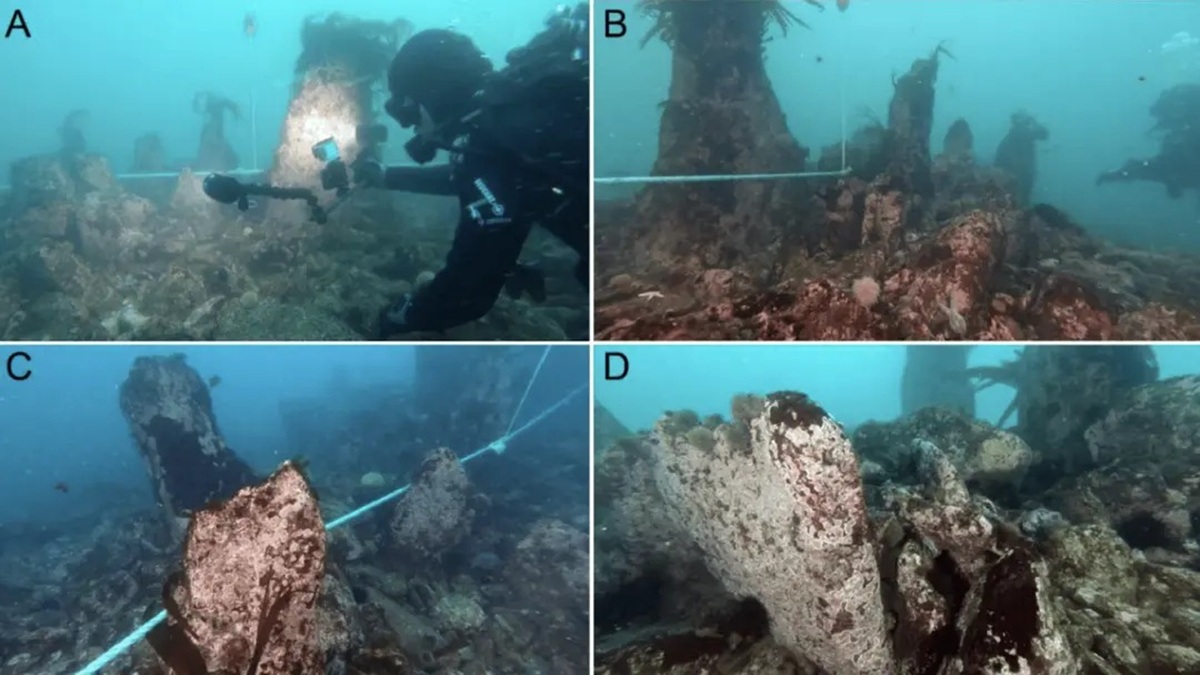
Granite Structure With 60 Monoliths Over 1.8 Meters Identified on the Seabed of Brittany, France, and Predates Neolithic Megalithism by About 500 Years, According to Recent Underwater Archaeological Analyses
An underwater archaeological discovery off the coast of Brittany, France, revealed monumental Mesolithic structures, identified between 2017 and 2024, including a 117-meter wall and 60 monoliths, altering the known timeline of human innovation prior to European agriculture.
Archaeologists identified the set of structures in 2017 during a mapping of the seabed and confirmed its extent following underwater explorations conducted between 2022 and 2024, revealing an engineering work built in a coastal environment now submerged.
The main documented structure is a 117-meter-long wall that crosses a valley, composed of stacked granite blocks and reinforced by 60 vertical monoliths, each measuring over 1.8 meters in height.
-
Climate change and pollution elevate heart risks: analysis with over 8 million people links extreme heat to 7.5% more complications and 9.5% more deaths, while pollutants already appear in 13% of cardiovascular deaths.

-
An online tool recreates the position of your house on Earth over up to 320 million years and shows how tectonic plates, lost continents, and geological collisions changed the planet’s map up to the present day.
-
China proposes to transform the rarefied atmosphere of Mars into electricity, heat, and fuel with CO₂, nuclear microreactors, and a Sabatier reactor, in a study that could reduce dependence on cargo sent from Earth and pave the way for more autonomous human missions.
-
The USA approves a 1,200 MW pumped-hydro plant with a 40-year license and prepares a hydro megabattery to store wind and solar energy for up to 12 hours in Washington.





These constructions stand out as there are no known parallels from the same period in France, classified as hundreds of years older than previously recorded megaliths in French territory, as noted by the researchers involved.
Submerged Structures and Technical Analysis
A morphotectonic analysis based on LIDAR data identified 11 submerged structures off Sein Island, positioned at a depth of 25.5 feet, according to a study published in the International Journal of Nautical Archaeology.
According to the publication, the remains exhibit a preservation level considered high for an environment described as hostile, surprising researchers during underwater exploration campaigns conducted in recent years.
“Archaeologists did not expect to find such well-preserved structures in such a hostile environment,” reported Phys, commenting on the results released in the scientific study.
The authors assert that the remains indicate human presence in the Mesolithic and demonstrate advanced construction skills, predating Neolithic megalithism in Brittany by approximately 500 years, as described in the academic article.
Distinct Construction Methods
The researchers identified two distinct construction methods among the analyzed structures. One group, classified as TAF2A, B, and 3, exhibits similarities to the 60 monumental monoliths identified in the main wall.
A second set of structures consists of narrower walls, built with smaller stones, apparently designed to block natural depressions in the terrain, according to a description published by the magazine Archaeology.
These smaller formations are interpreted as possible fish traps, while the larger monumental structures may have functioned as protective walls or territorial markers, according to the analysis presented.
Implications for the European Mesolithic
The authors highlight that fish weirs constituted a fundamental means of food supply for Mesolithic maritime populations in Europe, reinforcing the practical function of these structures in the coastal context.
While prehistoric fish traps have already been identified along the coasts of Brittany and Normandy, the submerged sites near Sein Island represent an unprecedented discovery in the region.
According to Archaeology Mag, these findings support increasing underwater evidence of complex stone construction traditions among coastal hunter-gatherer groups, long before the spread of agriculture across Europe.
The authors conclude that the remains, unique at this depth, provide valuable information about maritime societies during the Mesolithic-Neolithic transition, calling into question agriculture as the sole marker of human innovation during this historical period.





-

-

-

-

-

-

19 people reacted to this.