Portuguese
  Spanish


Solar energy advances in the Brazilian countryside with 325 thousand rural systems, reducing irrigation, storage costs, and grid dependence.
According to ANEEL, the rural sector accounted for 325,350 micro and mini-distributed generation plants in operation in Brazil until July 2025. This is equivalent to 8.64% of a total of 3.77 million systems connected to the distribution grid, gathering an installed capacity of 42.28 gigawatts. This number did not come from any Plano Safra, nor from a subsidized credit line created specifically for solar pivots, nor was it the result of a federal decree or an official rural energy transition goal. It came from rising electricity bills, from soybean bags increasingly pressured by costs, and from a direct calculation made on farms in Goiás, Mato Grosso, Mato Grosso do Sul, Piauí, Maranhão, and Bahia.
The panel pays for itself in about six years, lasts 25, and the surplus goes to the grid, generating credit on the next bill. It is the greatest demonstration of rural distributed energy that Brazil has ever produced, and it happened because producers decided to act without waiting for someone else to decide for them.
Why irrigation pivots, silos, and poultry houses have turned electricity into one of the biggest costs in Brazilian agribusiness
To understand why 325,000 rural properties adopted solar energy without government push, it is necessary to understand what an irrigation pivot represents in the economic logic of a grain farm in the Cerrado or MATOPIBA. A 100-hectare central pivot consumes between 100 and 200 kW per hour in continuous operation, depending on the water depth applied, system pressure, and motor efficiency.
-
Brazil’s Vitória Airport to Launch Solar Plant Covering Area of 10 Soccer Fields, Boosting Clean Energy and Cutting Costs

-
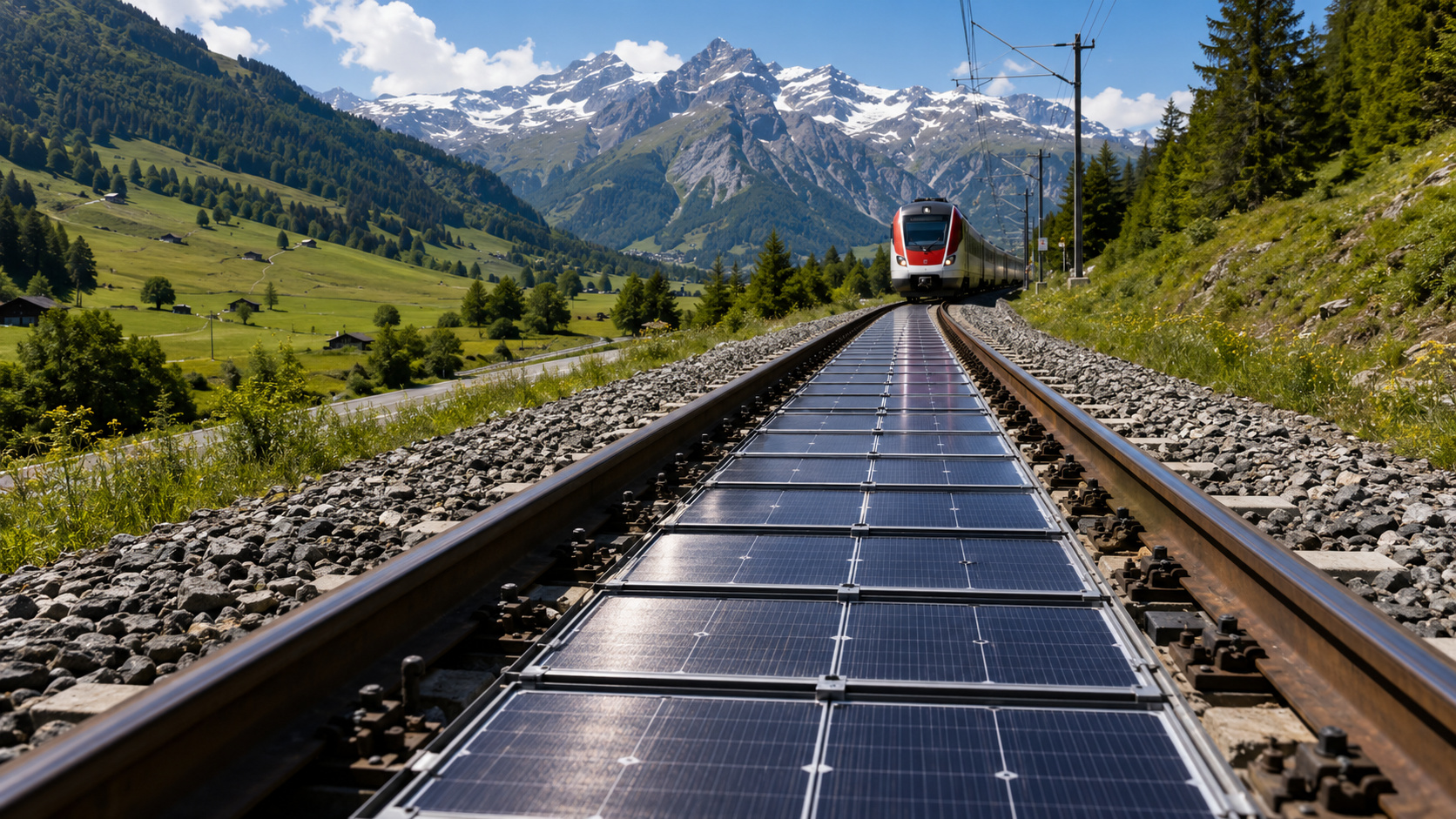
Switzerland Converts Train Tracks into Solar Power Plants with Removable Panels to Generate Energy Without Using Additional Land
-
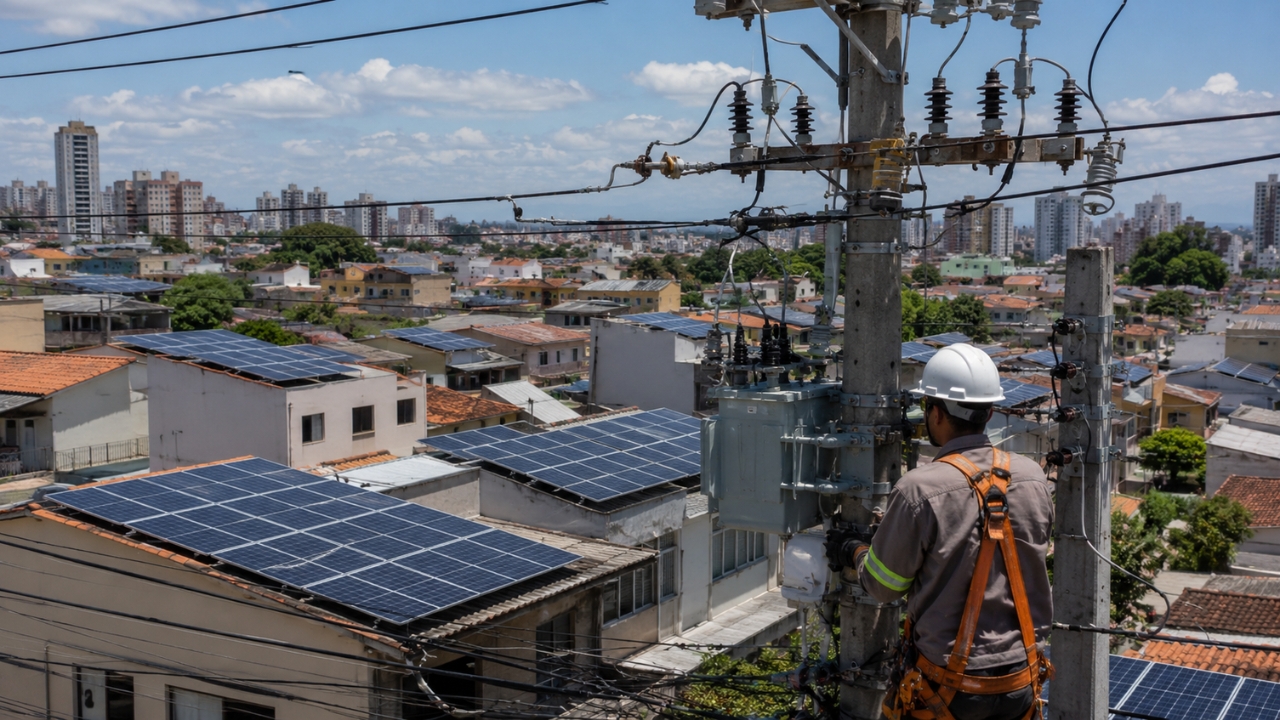
Surge in Solar-Powered Homes in Brazil Leads to Grid Strain and Connection Restrictions in Three States

-
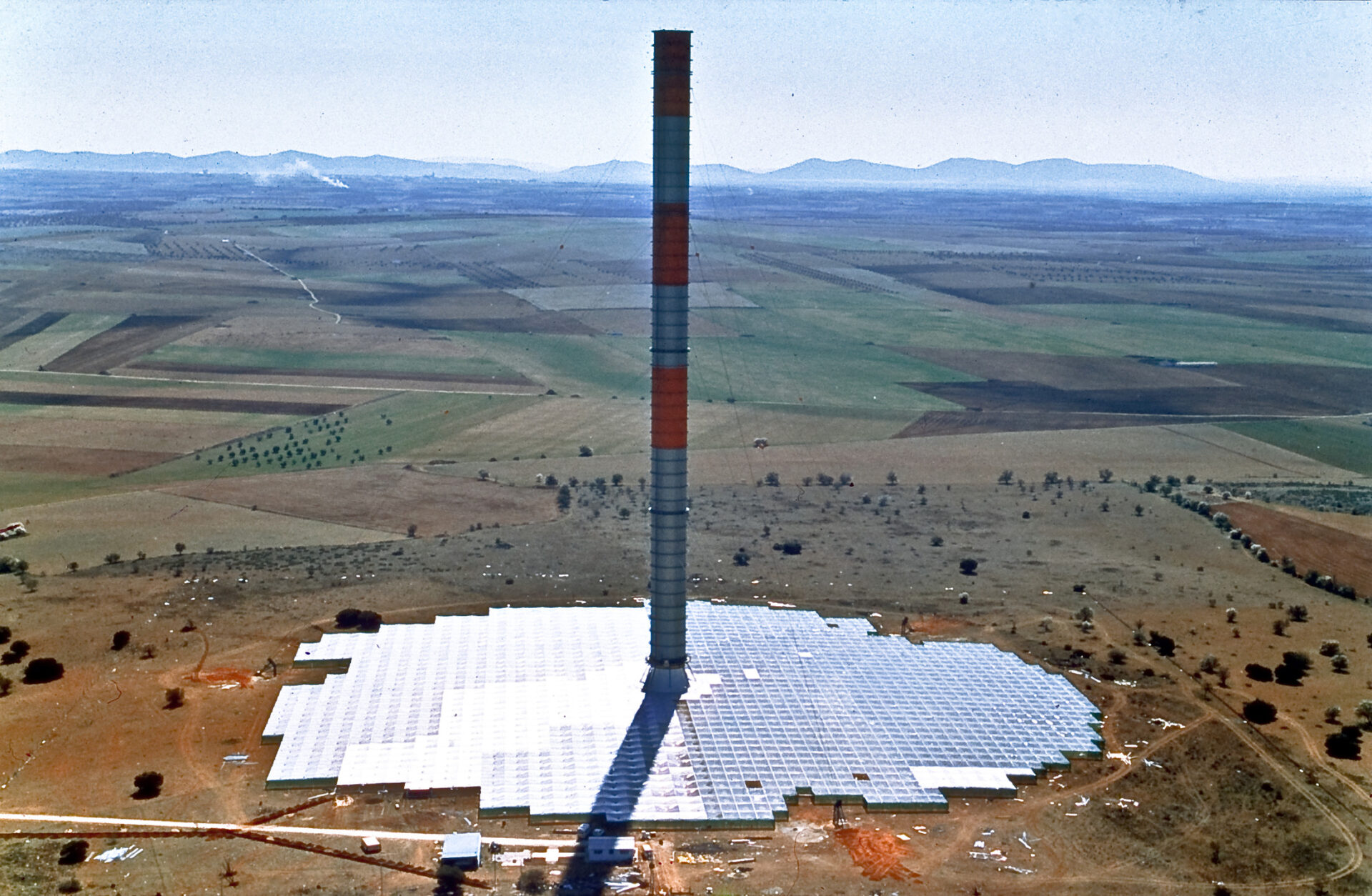
Solar Chimney in Spain Harnessed Sun to Generate Electricity for 7 Years Without Burning Fuel

Operating 18 hours daily during the dry season, this pivot consumes between 1,800 and 3,600 kWh per day. Multiplied by three months of intensive irrigation, the annual consumption of a single pivot can exceed 300,000 kWh, more than the average annual consumption of 300 low-income Brazilian households.
For a farm with five or ten pivots, a common configuration in large properties in the Cerrado and MATOPIBA, the energy bill can range from R$ 200,000 to R$ 800,000 per year. In years of tight margins, when soybeans, diesel, fertilizers, and freight pressure cash flow, electricity becomes one of the most visible and assailable inputs on the farm.
Rural solar energy grows because electricity has come to define irrigation, storage, milk, poultry houses, and connectivity in the countryside
The Energy Research Company documented that rural electricity load grows above average in agricultural expansion regions, especially in the Central-West and MATOPIBA. These are areas where properties are far from large consumer centers and distribution infrastructure, increasing the weight of energy in daily operations.
“Today, electricity has become one of the main inputs for rural properties. Producers depend on it for irrigation, milk cooling, grain storage, climate-controlled poultry houses, and even for connectivity. A power outage of just a few hours, in certain activities, already means direct loss,” said Isan Rezende, president of the Institute of Agribusiness and the Federation of Agronomists of Mato Grosso.
When the energy bill reaches this size, any technology capable of reducing spending by 70%, 80%, or 95% starts to have a quick return. With the cost of photovoltaic panels falling by more than 90% in the last decade, the calculation that previously took fourteen years to break even now closes in five or six.
How distributed solar generation works on the farm and reduces dependence on the distributor
The distributed solar generation system on a farm operates in three simultaneous layers, making the investment more robust than just cutting the electricity bill. The first layer is direct self-consumption: during daylight hours, the panels power pivot motors, storage sheds, drying silos, and other equipment in operation.

During these hours, the farm does not buy energy from the distributor; it uses what it produced. The second layer is grid injection: when generation exceeds instantaneous consumption, such as on weekends with pivots stopped or during off-season periods, the surplus energy flows into the distributor’s grid.
Under the Legal Framework for Distributed Generation, regulated by Law 14.300 of 2022, the producer does not receive money for this energy. They receive credits that can offset consumption in subsequent months, valid for 60 months. This is the energy compensation system, also known as net metering.
Hybrid systems with batteries begin to gain ground in remote MATOPIBA farms
The third expanding layer is hybrid systems with batteries. In these, excess energy generated during the day is stored in lithium-ion batteries for nighttime use, reducing or almost eliminating dependence on the grid during sunless hours.
According to the IEA, the price of lithium-ion batteries fell by more than 85% between 2010 and 2023. This drop made storage more attractive for properties where the electricity grid is unstable, expensive, or far from the farm’s main consumption points.
This model is especially relevant in remote regions of MATOPIBA, where the distribution infrastructure still presents irregular quality.
For producers who depend on irrigation, cooling, storage, and connectivity, the battery ceases to be a technological accessory and becomes an operational safety tool.
Cerrado and MATOPIBA became solar frontiers because they combine high irradiance, prolonged drought, and intensive irrigation
The Cerrado and MATOPIBA do not lead in installed distributed generation capacity in Brazil, a position occupied by São Paulo, Minas Gerais, and Rio Grande do Sul, where there is a higher density of consumers. But they are among the regions where rural growth is most accelerated and where the economic logic of solar energy is most direct.
The reason is geographical and climatic. The Cerrado has one of the highest solar irradiances in Brazil, between 5.5 and 6.0 kWh per square meter per day in most productive areas, according to the Brazilian Solar Atlas. This is almost double the average irradiance of Central Europe, which built its solar industry with much less sun.
Furthermore, the Cerrado has a prolonged dry season, precisely the period when pivots most need energy and panels produce the most. The seasonality of irrigation and the seasonality of solar generation align almost perfectly, creating an operational advantage difficult to ignore.
Solar pivots, Cuiabá, and Campo Grande show how the agricultural frontier also became a distributed generation frontier
The case of the 30 pivots from the partnership between Bauer and a solar energy company, irrigating 7,000 hectares in the interior of Brazil entirely powered by solar energy, shows a rapid transition. What was at the forefront in 2022 became routine on medium and large properties by 2025.
The CEO of Bauer summarized the change: “Bauer had a limitation in pivot growth, in accessing the market, which was the lack of energy in some regions. And we managed to deliver distributed energy to those without a power grid.” The phrase explains why solar energy entered not just as a cost reduction, but as an expansion of productive capacity.
Cuiabá is currently the second municipality with the largest distributed generation capacity in Brazil, behind only Brasília, with 423 MW installed. Campo Grande ranks third, with 375 MW. The Central-West totals 7 GW of distributed generation, almost double that of the North. The country’s newest agricultural frontier also became one of the new solar frontiers.
Agrivoltaics advances by combining elevated solar panels, agricultural crops, and pastures on the same land
In addition to solar on shed roofs and farm substations, a more recent technology is beginning to advance in the Cerrado: agrivoltaics. The concept combines elevated solar panels with agricultural crops or pastures under the structures.
Panels installed between 3 and 5 meters high allow sunlight to be divided between electricity generation and agricultural production. Some crops, especially those that thrive under partial shade, such as coffee, bananas, vegetables, and pastures, can benefit from protection against excessive radiation and high evapotranspiration.
The panels also benefit from the cooling produced by plant transpiration, which can increase their efficiency. In the São Francisco Valley, the agrivoltaic model already operates in grape and mango crops, high-value and high-water-consumption crops that take advantage of both partial shade and the energy generated to pump irrigation.
Goiás and Mato Grosso Cerrado test agrivoltaics in pastures and new productive configurations
In the Goiano and Mato Grosso Cerrado, agrivoltaics is still in the demonstration stage on pastures. Companies like MTR SOLAR have held events in agricultural cities to show producers how the system works and which models can be adapted to the Brazilian countryside.
The logic is to use the same area to produce energy, maintain vegetation cover, and reduce thermal stress on crops or animals. In regions with high insolation, this model can transform the shade from the panels into a productive asset, rather than a loss of agricultural area.
There are still technical challenges, such as the cost of elevated structures, machine management, crop selection, and adaptation to the scale of properties. Nevertheless, agrivoltaics expands the debate on rural solar energy beyond the electricity bill, bringing together electricity generation, irrigation, thermal comfort, and efficient land use.
The cross-subsidy for rural distributed generation has already entered the debate of ANEEL, Congress, and the electricity bill
The accelerated expansion of rural distributed generation has a hidden side that rarely appears in communications from producer associations: the energy compensation system is sustained by a cross-subsidy paid by other consumers on their electricity bills.
NeoFeed documented that subsidies for distributed generation cost over R$ 10 billion in 2024 alone, paid by the average consumer via tariffs. The mechanism works because when a producer injects energy into the grid and receives credits for the full tariff value, including transmission and distribution charges, other consumers proportionally cover a portion of these costs.
This structure benefits those who can afford the initial investment, such as large producers, businesses, and higher-income consumers, more than small consumers without capital to install panels. The debate on compensation reform is underway at ANEEL and in Congress, especially after the 2022 Legal Framework established a gradual transition in credit reduction.
Rural solar energy has become a silent revolution without a decree, without a ribbon-cutting, and without an official announcement
What is happening in the Brazilian countryside with solar energy does not have the drama of a federal program, nor the visibility of a presidential ribbon-cutting. It happens farm by farm, pivot by pivot, electricity bill by electricity bill, over years of individual decisions made by thousands of producers.
Isan Rezende summarized the shift in producers’ logic: “Solar energy, biogas, and hybrid systems are not being adopted solely for savings on the electricity bill. The main reason is to ensure operational predictability. The producer needs to know that irrigation will happen at the right time, that milk will not lose quality, and that grain will not deteriorate in the silo. Today, energy security is part of farm management.”
That’s it: security. Not ideology, not abstract environmental commitment, not centralized public policy. Operational security translated into financial calculation, which became viable when the cost of panels dropped enough for the return to fit within a farm’s planning cycle.
Brazil is heading towards 75.9 GW in distributed generation and needs to regulate a revolution that has already reached the countryside
Brazil currently has 3.97 million connected distributed generation systems, with a projection to reach 75.9 GW accumulated by the end of 2026. It is the largest market in Latin America and one of the ten largest in the world.


The rural sector accounts for less than 9% of the plants, but it appears as one of the most important segments in strategic regions for food production. In the Cerrado, the Center-West, and MATOPIBA, solar energy has ceased to be an environmental alternative and has become production infrastructure.
The government, which did not plan, finance, or announce this transformation on the scale at which it occurred, will have to decide how to regulate its effects. The revolution has already happened. The question now is who will pay for the grid, for the credits, and for the next stage of the energy that powers the Brazilian countryside.